
Top 5 Ayurvedic Remedies for Skin Care: Your Complete Guide to a Natural Glow
Does your skin feel dull and lifeless from the daily grind of pollution, high-stress levels, and a modern diet that lacks essential nutrients? You’re not alone. Many of us have spent years searching for a solution in expensive, chemically formulated bottles, only to find temporary fixes.
This is where Ayurvedic Remedies for Skin Care offer a refreshing, ancient alternative. Ayurveda is more than a beauty routine; it is a sacred, holistic system that views your skin as a mirror of your inner physical and emotional health, especially the health of your gut. By achieving dosha balance among the three vital energies—Vata, Pitta, and Kapha—you can unlock a sustainable, natural radiance from the inside out.
Choosing an Ayurvedic approach means harnessing powerful, plant-based ingredients known for their natural anti-inflammatory and antibacterial properties. Whether you are battling persistent acne, seeking deep hydration, or wanting to boost skin brightness, these remedies provide effective results without the risk of side effects or burning a hole in your pocket. Time-tested ingredients like turmeric, sandalwood, and neem work in harmony with your body’s unique constitution to purify the blood, reduce inflammation, and soothe irritation.
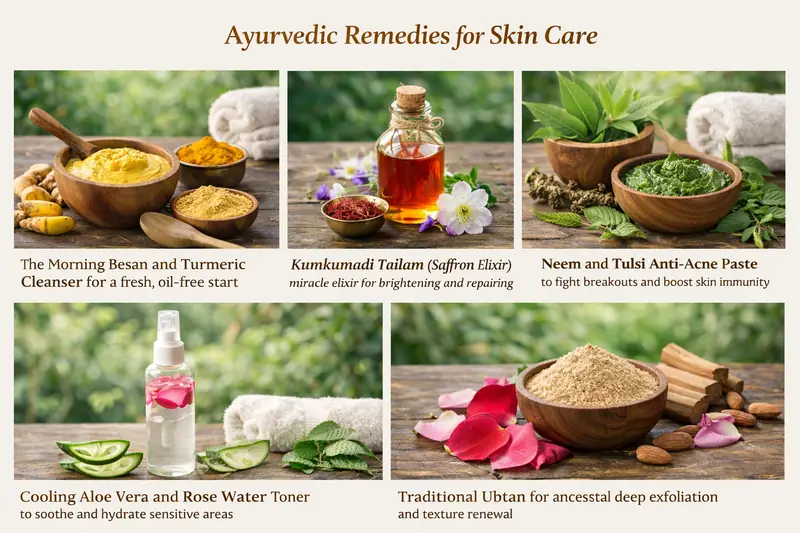
In this guide, we will dive into the top five time-tested rituals to transform your complexion:
- The Morning Besan and Turmeric Cleanser for a fresh, oil-free start.
- Kumkumadi Tailam (Saffron Elixir), known as the Kumkumadi “miracle elixir” for brightening and repairing.
- Neem and Tulsi Anti-Acne Paste to fight breakouts and boost skin immunity.
- Cooling Aloe Vera and Rose Water Toner to soothe and hydrate sensitive areas.
- Traditional Ubtan for ancestral deep exfoliation and texture renewal.
These DIY face packs and routines are designed to help you achieve glowing skin using simple items found right in your kitchen. By the end of this article, you will gain actionable recipes, daily routines, and expert tips tailored specifically to your unique skin type, empowering you to nourish your beauty naturally and affordably.
What Are Ayurvedic Remedies for Skin Care?
Ayurveda is a sacred, 5,000-year-old system of ancient Indian medicine that views beauty as a reflection of your inner health. Instead of just treating the surface, it uses a holistic approach that combines natural ingredients, diet, and lifestyle changes to keep you healthy and glowing. The main goal of Ayurvedic remedies for skin care is to achieve dosha balance—the three biological energies that govern your body and mind.
The Three Doshas and Your Skin

In Ayurveda, every person has a unique skin type based on their dominant dosha. To get the best results, you must customize your routine to meet your skin’s specific needs.
Vata Skin (The Wind Energy): If your skin feels thin, dry, or rough, you might be a Vata type. This skin type gets cold easily and might show wrinkles sooner if it is not kept moist. Vata skin needs lots of hydration and warm, nourishing oils.
Pitta Skin (The Fire Energy): Does your skin get red, itchy, or sweaty?. Pitta skin is often sensitive and can break out in acne or rosacea. It feels warm to the touch and needs cooling ingredients like aloe vera to stay calm.
Kapha Skin (The Earth and Water Energy): Kapha skin is usually thick, oily, and very smooth. While it stays hydrated and soft, it can have large pores and get whiteheads or blackheads easily. This skin type needs deep cleaning and regular scrubbing to stay clear.
| Dosha | Skin Traits | Key Needs |
|---|---|---|
| Vata (Wind) | Thin, dry, and rough skin that is prone to early wrinkles and cold to the touch. | Needs deep nourishment from moisturizing oils (like sesame or almond) and warm hydration. |
| Pitta (Fire) | Sensitive, oily, or reddish skin that is prone to acne, inflammation, and heat. | Needs cooling herbs and soothing ingredients like aloe vera, sandalwood, and rose water. |
| Kapha (Earth) | Thick, oily, and smooth skin that tends to attract congested or clogged pores. | Needs purifying scrubs, deep cleansing, and regular exfoliation to remove excess oil. |
Why Ayurvedic Herbs Work
These remedies are powerful because they use natural ingredients that have been tested for centuries to heal and protect the skin.
- Turmeric (Haldi): Often called “liquid gold,” turmeric is full of antioxidants that lighten scars and help rejuvenate the skin, promoting a natural glow and supporting skin renewal.
- Neem: This herb is a “Godsend” for acne because it is a strong antibacterial and antifungal agent. It works by fighting the bacteria that cause breakouts while soothing skin irritation.
By using these plant-based allies, you can treat the root causes of skin issues rather than just covering them up.
Top 5 Ayurvedic Remedies for Skin Care
These standout remedies target common issues like acne, dullness, and aging. Each includes a full recipe, benefits, and tips. Start with one that matches your dosha for quick wins. Here are five powerful Ayurvedic remedies for skin care to transform your routine.
1. Turmeric (Haldi) Brightening Face Pack
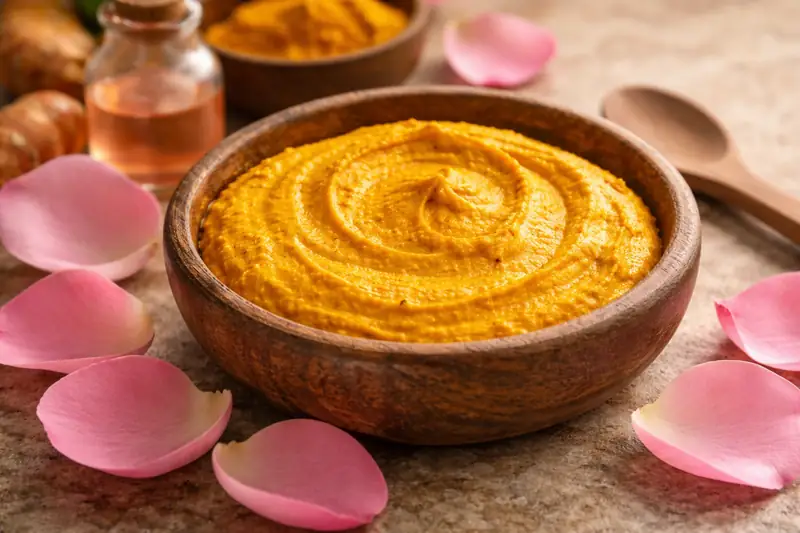
Turmeric is known as “liquid gold” in Ayurveda because it is packed with antioxidants and anti-inflammatory properties. It is one of the most effective herbs for bringing out a natural glow and repairing the skin.
- The Recipe:
- 1 teaspoon of Turmeric powder.
- 1 tablespoon of Yogurt (curd) or Rose water.
- How-to-Apply: Mix the ingredients into a thick paste. Apply it uniformly to your face and neck and leave it on for 15 minutes (or just before it dries completely). Rinse it off with lukewarm water.
- Dosha Suitability:
- Pitta & Kapha: Excellent for soothing irritation and managing oil.
- Pro-Tip for Vata: Since Vata skin is often dry and thin, use cold milk or cream instead of rose water to provide deeper nourishment and moisture.
- Benefits: This pack brightens the complexion, reduces the appearance of acne scars, and helps manage pigmentation. It also has antiseptic properties that help prevent new pimples.
- Precautions: Turmeric can slightly stain your skin or clothes; use a cotton ball dipped in milk to remove any yellow tint from your face after washing.
Turmeric FAQ:
- Q: Can I use this pack every day?
- A: It is best to use this remedy 3 times a week to avoid over-stimulating the skin while still seeing bright results.
2. Neem and Tulsi Anti-Acne Paste
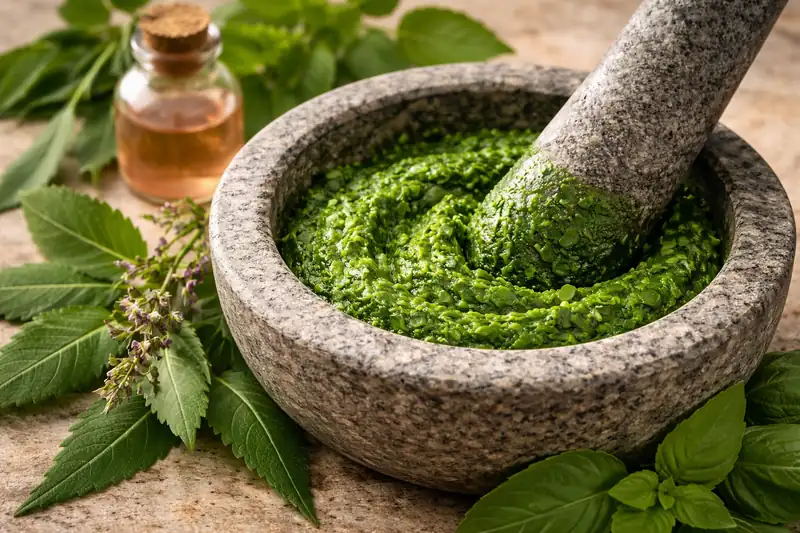
This combination is a “Godsend” for anyone struggling with regular breakouts or skin irritations. Neem is a powerful antibacterial and antifungal herb, while Tulsi boosts skin immunity to clear infections.
- The Recipe:
- 10 fresh Neem leaves.
- 10 fresh Tulsi (Holy Basil) leaves.
- A few drops of Rose water.
- How-to-Apply: Grind the fresh leaves into a smooth paste and add rose water. Apply it to your face for 20 to 30 minutes (or up to 40 minutes for deep cleansing) and rinse with cool water.
- Dosha Suitability: Best for Kapha (thick/oily skin) and Pitta (acne-prone skin).
- Benefits: This paste clears clogged pores, reduces redness, and treats active pimples directly. It is specifically designed to soothe oily and inflamed skin.
- Precautions: Neem is very potent; always perform a patch test on your inner arm to ensure your skin does not react to the strength of the herbs.
Neem-Tulsi FAQ:
- Q: Can I use this as a spot treatment?
- A: Yes! You can apply the paste directly onto a pimple the moment you see it peeking out to help it heal faster.
3. Soothing Aloe Vera Gel Treatment
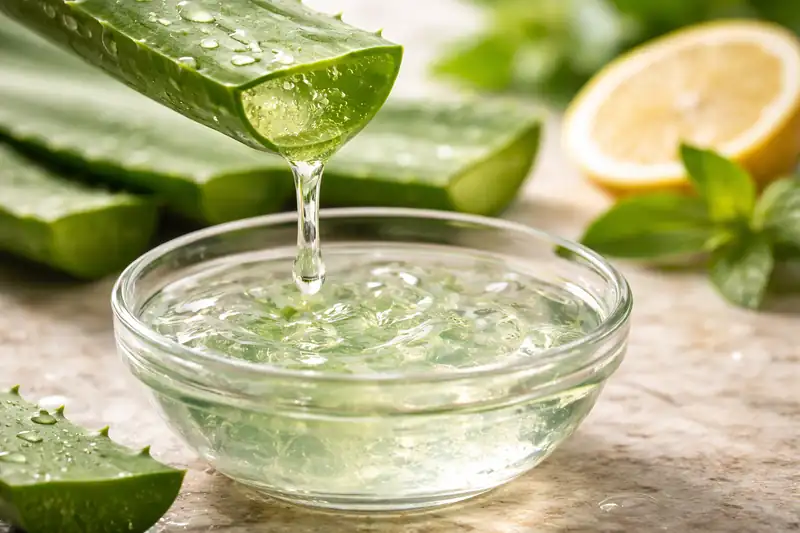
Aloe Vera is a “super-succulent” that cools the body’s internal heat (Pitta) and hydrates the skin without clogging pores.
- The Recipe:
- 3 tablespoons of fresh Aloe Vera gel.
- 1 tablespoon of Lemon juice.
- How-to-Apply: Mix the gel and juice. You can apply a thin layer as an overnight moisturizer to hydrate and brighten, or leave it on for 10 to 15 minutes as a quick cooling mask before rinsing with lukewarm water.
- Dosha Suitability: Perfect for Pitta types who have sensitive, reddish skin that reacts strongly to the sun.
- Benefits: It hydrates and firms the skin while reducing inflammation. The addition of lemon helps brighten dullness and provides vitamin C.
- Precautions: Ensure you use pure aloe vera without synthetic fragrances or dyes, as these can irritate sensitive skin.
Aloe Vera FAQ:
- Q: Does aloe vera help with sunburns?
- A: Yes, its cooling properties make it an excellent choice for relaxing itches and irritation caused by rashes or sun exposure.
4. Traditional Ubtan Exfoliating Scrub
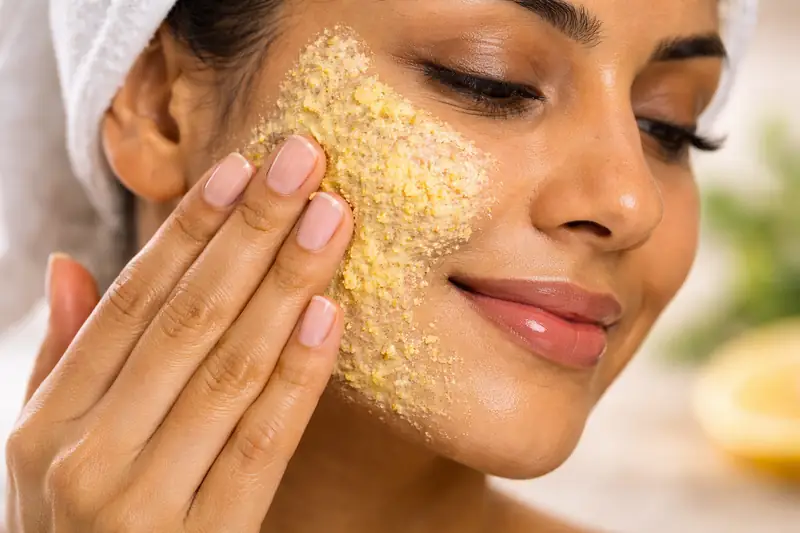
Ubtan is an ancestral “skincare treasure” used for generations to prepare brides for a radiant wedding glow. It is a natural alternative to chemical exfoliants.
- The Recipe:
- Gram flour (Besan).
- Turmeric and Sandalwood powder (Chandan).
- A bit of Milk or Yogurt.
- How-to-Apply: Mix the ingredients into a paste and apply to the face. Leave it for 10 minutes as a pack. Upon drying, wet your hands and gently scrub in circular motions using a little water to exfoliate before rinsing.
- Dosha Suitability: This is suitable for all skin types. Kapha skin benefits from its deep cleansing, while Vata skin benefits from the nourishment of the milk.
- Benefits: It smooths skin texture by gently removing dead skin cells and excess oil (“gunk”). Regular use can clear blemishes and add instant brightness.
- Precautions: Be very gentle when scrubbing, especially if you have sensitive Pitta skin, to avoid creating redness.
Ubtan FAQ:
- Q: How often should I use Ubtan?
- A: Use it once a week (such as “Self-Care Sunday”) to maintain smooth skin without over-exfoliating.
5. Kumkumadi Oil (Saffron) Nightly Massage
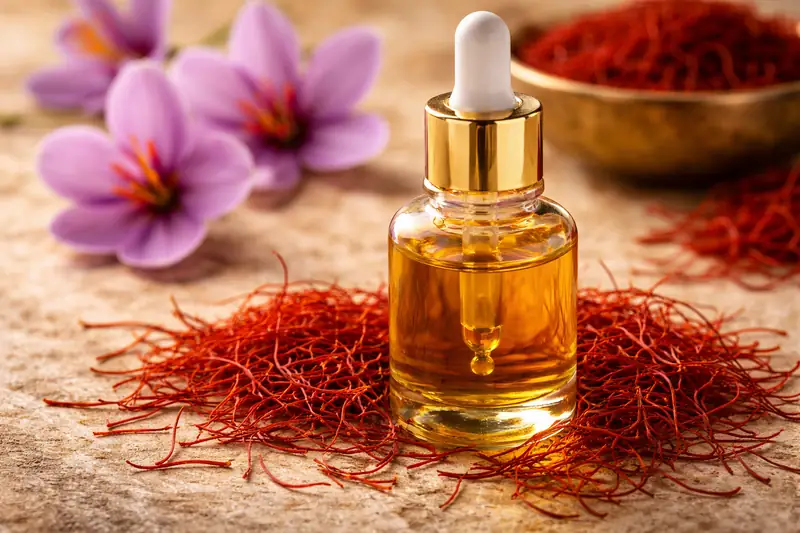
Kumkumadi Tailam is renowned as the “miracle elixir of Ayurveda”. It is a luxurious blend of saffron, sandalwood, and over 20 rare herbs designed to brighten the skin.
- The Recipe:
- 3 to 5 drops of Kumkumadi Oil (or a blend of warm Sesame/Coconut oil infused with saffron strands).
- How-to-Apply: After washing your face at night, apply a few drops to your face and neck. Massage gently in upward, circular motions (known as a Facial Abhyanga) to stimulate blood flow. Leave it on overnight for deep nourishment.
- Dosha Suitability: Excellent for Vata (to prevent early wrinkles) and Pitta (to treat pigmentation).
- Benefits: It fades pigmentation, reduces dark spots, and provides anti-aging benefits by minimizing fine lines and wrinkles. It restores lost moisture and restores a youthful luminosity to dull skin.
- Precautions: If you have very oily Kapha skin, you may want to wash the oil off after 30 minutes instead of leaving it overnight to avoid clogging pores.
Kumkumadi FAQ:
- Q: Can Kumkumadi oil help with dark circles?
- A: Yes, the saffron and other herbs in the blend are traditionally used to minimize dark circles and even out the skin tone under the eyes.
Analogy for Your Routine: Think of your skin like a classic car. You wouldn’t just paint over the rust to make it look new; you would clean the engine, oil the parts, and polish the surface. These Ayurvedic remedies for skin care work the same way—they “oil the parts” from the inside out and “polish” the surface naturally, ensuring your beauty lasts for years to come.
How to Incorporate Ayurvedic Remedies into Your Routine
To truly transform your skin, you must view Ayurvedic remedies for skin care as a journey of internal and external balance. Since Ayurveda focuses on your internal health to improve your outward appearance, it is best to start slow and build a daily flow that matches your specific dosha (Vata, Pitta, or Kapha).
Building a routine involves more than just topical applications; it requires a holistic approach, including diet and lifestyle. Below is a sample weekly schedule to help you balance your skin’s natural needs while ensuring you don’t overwhelm your pores.
Skin Care Routine: Sample Weekly Schedule
| Day | Morning Remedy | Evening Remedy |
|---|---|---|
| Mon/Wed/Fri | Aloe Vera Gel: Hydrates and firms for a fresh start. | Turmeric Pack: Brightens skin and reduces scars overnight. |
| Tue/Thu | Ubtan Scrub: Gently removes dead skin and “gunk”. | Neem Paste: Purifies pores and targets active breakouts. |
| Sat/Sun | Gentle Cleanse: Use a mild herbal cleanser or milk. | Kumkumadi Massage: A “miracle elixir” to restore glow while you sleep. |
| Daily | Warm Water + Lemon: Sips throughout the day to purify from within. | Oil if Dry: Apply sesame or almond oil if skin feels rough. |
Analogy for Your Routine: Think of your skin routine like tending a fire. If the fire is too low (Vata), you need to add fuel and oil to keep it burning. If it is too hot (Pitta), you need to cool it down so it doesn’t burn out. If it is smoky and heavy (Kapha), you need to clear the air to let it breathe. By matching your remedies to your dosha, you are keeping your internal and external fire perfectly balanced.
Enhancing Your Glow: The Ayurvedic Lifestyle
In Ayurveda, beautiful skin is not just about what you put on your face; it is a reflection of your inner physical and emotional health, especially the health of your gut. While herbal pastes provide quick solutions, a lasting glow comes from a lifestyle that balances your internal energies. By following these daily habits, you can support your Ayurvedic remedies for skin care from the inside out.
Internal Hydration: Water as a Purifier
Keeping your skin plump and smooth starts with how you hydrate. Ayurveda suggests that insufficient fluid intake leads to dry and dehydrated skin. To keep your tissues hydrated from within, follow these simple tips:
- Drink Warm Water: Start your morning with a cup of warm water and continue to sip room-temperature or warm water throughout the day.
- The Golden Rule: Aim to drink half your body weight in ounces of water daily (for example, if you weigh 120 lbs, drink 60 oz of water).
- Herbal Teas: You can also sip warm herbal teas made with tulsi or ginger to support your “digestive fire” and keep your skin clear.
Dietary Support: Eating for Your Dosha
Your diet has a massive impact on your skin’s appearance. Ayurveda recommends eating foods that balance your specific skin type or dosha:
- For Vata (Dry/Rough Skin): Focus on “warm and moist” foods that are easy to digest. Enjoy sweet fruits like bananas and mangoes, soft vegetables like sweet potatoes, and healthy fats like ghee.
- For Pitta (Sensitive/Oily Skin): Focus on “cooling and bitter” foods to reduce inflammation. Choose non-starchy vegetables, cooling grains like basmati rice or barley, and refreshing herbs like mint and cilantro.
- For Kapha Boosts: Use spicy and acidic foods or ginger tea to stimulate the system and clear congestion.
Progress Tip: Keep a skin journal. Ayurveda is a spiritual and emotional journey as much as a physical one; track your changes and you may notice softer, more radiant skin in just 7 days.
Daily Massage (Abhyanga): The Secret to Circulation
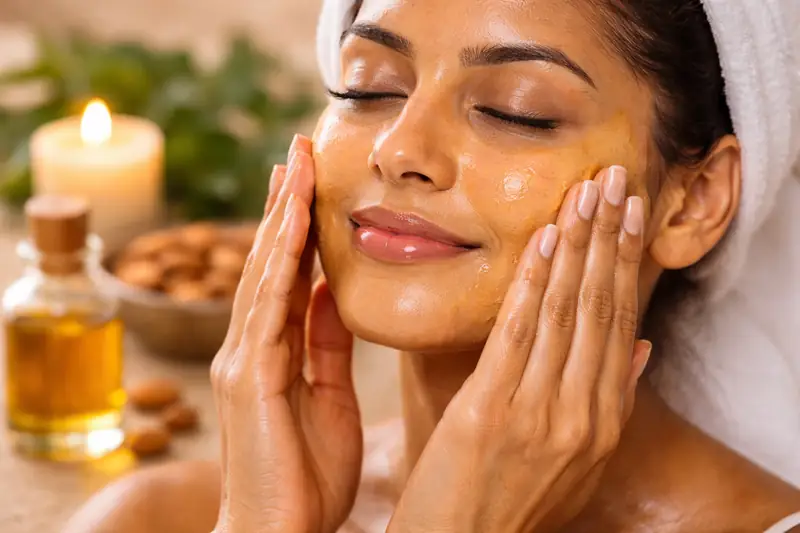
A daily self-massage, known as Abhyanga, is a staple for healthy skin. A facial massage, or Facial Abhyanga, helps improve circulation, lymphatic drainage, and skin elasticity.
- Choose Your Oil: Sesame oil is recommended for all skin types, while almond oil is best for Vata and Pitta types.
- Stimulate Marma Points: Massaging your face focuses on Marma points (like the temples, center of the chin, and base of the nostrils), which act as “doors” to the inner body for healing and relaxation.
- The Technique: Apply warm oil and massage in large circular motions over the whole face, with smaller circles on the cheeks and around the eyes. Doing this just a few times a week can give you a natural face-lift and leave you feeling refreshed.
Tips & Variations for Best Results
To maximize your natural glow and avoid common pitfalls, keep these expert tips in mind:
- Patch Test Always: Ayurvedic herbs can be very potent. Always apply a small amount to your inner forearm for 24 hours before full use, especially with ingredients like camphor or neem.
- Hydrate from the Inside: Insufficient fluid intake leads to dehydrated skin. Sip warm water throughout the day; a good goal is to drink half your body weight in ounces.
- Lifestyle Hacks: Complement your remedies with 7–8 hours of quality sleep to allow for skin renewal. Incorporate anti-inflammatory foods like turmeric or fresh amla juice for a vitamin C boost.
- Common Mistakes to Avoid: Do not over-exfoliate or overuse astringent toners, as this can dry out the skin and lead to more irritation. Stick to the recommended weekly schedule.
- Variations by Season:
- Winter: Use more warm oils like sesame or almond and rich treatments like Kumkumadi tailam to combat low humidity.
- Summer: Switch to cooling gels like aloe vera or cucumber masks to pacify heat-related redness.
- For Moms & Kids: Ayurveda is safe for the whole family, but children’s skin is delicate. Use milder versions like pure aloe vera or a gentle Ubtan diluted with milk or almond oil.
- Consult the Experts: For major skin conditions like psoriasis or severe eczema, it is essential to consult an Ayurvedic practitioner for a personalized plan. These time-tested remedies are powerful, but professional guidance ensures the best results for chronic issues.
Think of your body like a luxury fountain. If the water inside is dirty or the pipes are clogged (poor diet and hydration), the fountain won’t look beautiful, no matter how much you polish the outside stone. By drinking warm water and eating the right foods, you are cleaning the water; by practicing Abhyanga, you are clearing the pipes so the beauty can flow naturally to the surface.
Takeaway
Achieving beautiful, healthy skin does not have to be expensive or complicated. By using these Ayurvedic remedies for skin care, you are choosing a path that is kind to your body and the environment.
Remember, the secret to Ayurvedic beauty is consistency. These natural ingredients work slowly but surely to heal your skin from the deep layers up to the surface.
Your journey starts now. Pick one remedy today—maybe turmeric for that quick brightening win.
- A Complete Guide to Ayurvedic Skin Care
https://www.healthline.com/health/beauty-skin-care/ayurvedic-skin-care - 6 Effective Ayurvedic Beauty Rituals For Healthy, Glowing Skin
https://theayurvedicclinic.com/6-effective-ayurvedic-beauty-rituals-for-healthy-glowing-skin/ - Ayurvedic Skincare: The Key to Glowing Skin
https://ayurveda.com/blog/ayurvedic-skincare-the-key-to-glowing-skin/ - Herbs Effective as Ayurveda Skin Care
https://vrindavanchikitsalayam.com/blog/ayurveda-skin-care - AYURVEDIC WINTER SKINCARE TIPS: ANCIENT REMEDIES FOR MODERN SKIN
https://www.himaira.com/blogs/news/ayurvedic-winter-skincare-tips-ancient-remedies-for-modern-skin - Skin Wellness
https://krishnaayurved.com/collections/skin-wellness - 6 effective ayurvedic beauty rituals for healthy, glowing skin
https://www.theayurvedicclinic.com/6-effective-ayurvedic-beauty-rituals-for-healthy-glowing-skin/ - Ayurvedic Dermatology
https://vrindavanchikitsalayam.com/ayurvedic-dermatology - The Ultimate Ayurvedic Winter Skincare Routine for Soft and Glowing Skin
https://lalaherbal.com/blogs/news/the-ultimate-ayurvedic-winter-skincare-routine-for-soft-and-glowing-skin - Ayurvedic Oil for Skin Brightening- Nalpamaradi Keram
https://keralaayurveda.com/blogs/news/ayurvedic-oil-for-skin-brightening-nalpamaradi-kerum
Trust in your purchase:
Every product featured on our site has been carefully researched and selected based on quality, customer ratings, and positive reviews to ensure you receive excellent value for your money.
Please note:
This post contains affiliate links. If you make a purchase through these links, we may earn a small commission at no additional cost to you. This helps support our site and allows us to continue bringing you valuable content. Thank you!
Thank you for your precious time spent with NobleHomeRemedies.
You may also like:

Acne Face Mask DIY – Acne Natural Remedies
Acne Face Mask DIY – The Best Acne Natural Remedies What is acne and what…

Jojoba Oil for Skin Lightening
Jojoba Oil for Skin Lightening: Best 7 DIY Recipes Have you ever wished for a…
How to Get Rid of a Pimple on Lip?
How to Get Rid of a Pimple on Lip?: Best 9 Remedies Pimples can appear…

Jamaican Black Castor Oil for Hair Growth
Jamaican Black Castor Oil for Hair Growth: + 4 Top Recipes Wish your hair would…

Benefits of Jamaican Black Castor Oil
Benefits of Jamaican Black Castor Oil: What You Need to Know Castor oil has been…
How to Get Rid of Pimples on Nose
How to Get Rid of Pimples on Nose: 6 Best Home Remedies Pimples are the…