
Beetroot Juice Benefits: The Ultimate Anti-Inflammatory Drink!
The Power of the Purple Pour
If you walk into a health food store or a trendy gym today, you might notice something interesting. Instead of everyone carrying bright blue sports drinks or giant cups of coffee, many people are holding bottles filled with a liquid so dark and purple it almost looks like ink. This isn’t a magic potion; it is beetroot juice.
For a long time, people only ate beets as a side dish at dinner. But lately, this “purple pour” has become the superstar of the morning routine. People are drinking it to wake up their brains, soothe their sore muscles, and even help their hearts. But the biggest reason everyone is talking about it is its ability to fight inflammation.
Why Is Everyone Drinking Their Beets?
You might be wondering, “Why should I drink my beets instead of just eating them?” That is a great question! While eating a whole beetroot is very healthy, drinking the juice is like taking the “express lane” to health.
Imagine you are trying to put out a small fire in your backyard. You could carry water one cup at a time from the kitchen sink (this is like eating the whole vegetable). It works, but it takes a while. Or, you could hook up a high-powered garden hose and blast the fire with a lot of water all at once. Beetroot juice is that garden hose. Because the juice is a liquid, your body doesn’t have to spend a lot of time breaking down tough fibers. Instead, the healing nutrients can zip right into your bloodstream and get to work cooling down inflammation in your joints, your heart, and your muscles almost immediately.
The “Ultimate” Anti-Inflammatory Drink
In this guide, we are going to find out if beetroot juice really deserves the title of the “Ultimate Anti-Inflammatory Drink.” We aren’t just looking at the color; we are looking at the results.
We will explore:
- How this juice helps athletes recover from “muscle fire” after a workout.
- It acts like a natural “flush” to help your liver stay clean.
- The best ways to drink it so you get the most “bang for your buck.”
If you have been looking for a natural way to feel less stiff, more energetic, and more “balanced” inside, you are in the right place. Grab a glass, and let’s look at why this vibrant juice is changing the way we think about home remedies.
Why Juice? Bioavailability in a Glass
When you are fighting inflammation, speed and strength matter. If your joints are throbbing or you feel a “heavy” kind of fatigue, you want relief as soon as possible. This brings us to a very important concept called bioavailability. Even though it’s a big word, it has a simple meaning: It is a measure of how much of a nutrient actually makes it into your bloodstream, where it can go to work.
Think of it like a “delivery service.” If you order a package, it doesn’t do you any good if it sits in the delivery truck forever. You need it at your front door! Beetroot juice is like the “priority overnight shipping” of the vegetable world.
1. The Power of Concentration
Have you ever tried to eat three or four whole, raw beetroots in one sitting? It would take a long time to chew, and your stomach would feel very full very quickly.
When you turn beets into juice, you are taking all the “medicine”, the betalains and the nitrates, and concentrating them into one single glass. This means that in just a few sips, you are getting the anti-inflammatory power of several whole beets. It is a concentrated blast of healing that your body can use to start “cooling down” inflammation right away.
2. Removing the “Fiber Filter” (For a Moment)
Usually, fiber is the hero of health. We need it for our gut and to keep us full. But when it comes to fighting inflammation quickly, fiber acts like a “speed bump.” It slows down how fast your body can absorb nutrients because your stomach has to work hard to grind up all that tough plant material.
By juicing the beet, you are temporarily removing those speed bumps. This allows the anti-inflammatory compounds to hit your system almost instantly.
- The “Fast-Track” Effect: Without the fiber to hold them back, the betalains move quickly through your stomach wall.
- Direct Delivery: The nutrients don’t get “trapped” in the digestive process; they head straight to your liver, heart, and joints.
3. The Liquid Nitric Oxide Boost
As we learned in our Health Benefits of Beetroot for Inflammation article, beets are famous for nitrates. These are the natural chemicals that turn into Nitric Oxide in your body to help your blood vessels relax and open up.
When you drink beetroot juice, the process of turning nitrates into Nitric Oxide actually starts in your mouth! Special bacteria on your tongue begin the transformation the moment the liquid touches them. Because the juice stays in contact with your mouth and throat as you swallow, the “healing message” is sent to your blood vessels much faster than if you were slowly chewing a solid piece of beet.
4. Less Work for Your Body
Sometimes, when we have chronic inflammation, our digestive systems feel a bit tired, too. Breaking down a hard, raw root vegetable takes a lot of energy.
By drinking the juice, you are doing the “chewing” and “grinding” for your body using a juicer or blender. This gives your digestive system a little break. Instead of spending energy on digestion, your body can spend that energy on repairing damaged tissues and reducing swelling. It’s like giving your body a helping hand so it can focus on the most important job: making you feel better.
Top Beetroot Juice Benefits
Benefit #1: The Athlete’s Secret for Muscle Inflammation
If you have ever gone for a long walk, spent a day working in the garden, or tried a new exercise class, you know that “heavy” feeling the next day. Your muscles feel stiff, sore, and sometimes even a little warm to the touch. This is called DOMS (Delayed Onset Muscle Soreness), but you can just think of it as “muscle fire.”
Inside your body, those sore muscles are actually experiencing tiny amounts of inflammation. Your muscle fibers have worked hard, and now your body is sending “repair crews” to fix them. While this is a natural process, too much inflammation can make you feel miserable and keep you on the couch for days.
How Beetroot Juice “Cools” the Muscle Fire
This is where beetroot juice becomes a “secret weapon” for anyone who likes to stay active. It helps in two very specific ways:
- Faster Repair: The betalains in the juice act like a soothing balm. Instead of the inflammation staying “high” and painful for 48 hours, beetroot juice helps bring that inflammation down much faster. This means you can move around comfortably again, much sooner.
- Less “Rust” (Oxidative Stress): When we move our bodies, we produce things called “free radicals.” Think of these like tiny sparks that can cause damage to our cells. The antioxidants in beetroot juice catch these sparks before they can start a bigger fire of inflammation.
Why “Liquid” Nitrates Matter for Recovery
Remember those nitrates we talked about? When you drink them in juice form, they help your blood vessels open up wide. This is very important for recovery because:
- Oxygen Delivery: It brings fresh oxygen to the tired muscles.
- Waste Removal: It helps “flush out” the waste products (like lactic acid) that make your muscles feel heavy and achy.
You would have heard of people talking about “Pre-workout” or “Post-workout” drinks. Many athletes drink a small glass of beetroot juice about two hours before they start moving.
By drinking it early, the “fire extinguishers” are already in your bloodstream by the time you start your activity. It’s like wetting down the grass before a campfire start. It prevents the “fire” of inflammation from getting out of control in the first place!
A Pro Tip for Your Busy Days: You don’t have to be a marathon runner to use this trick. If you know you have a big day of cleaning the house or walking around a theme park, try a small glass of beet juice in the morning. Your muscles will thank you the next day!
Benefit #2: Flushing the System (Detox & Liver Support)
In the world of home remedies, we often hear the word “detox.” While it sounds like a fancy buzzword, it actually refers to a very important job your body does every single day. Your liver is the main “filter” of your body. It works like the oil filter in a car, catching dirt and “trash” in your blood so the rest of your system stays clean.
When your body has too much “trash”—from processed foods, pollution, or even stress—your liver can get overworked. When the liver is overwhelmed, it gets hot and inflamed. This “liver fire” can make you feel sluggish, cause skin breakouts, and lead to more inflammation in your joints.
1. Beetroot Juice: The Liver’s Best Friend
Beetroot juice is special because it contains a compound called betaine. Think of betaine as a “cleaning crew” specifically for your liver cells.
- Breaking Down Fat: Betaine helps the liver break down fats so they don’t get “stuck” and cause inflammation.
- Speeding Up the Filter: It helps the liver move toxins through the filtering process more quickly, so they can be flushed out of your body.
2. Hydration + Healing
One of the best things about drinking your beets is that you are getting hydration at the same time as your medicine. Water is essential for moving waste products out of your body through your kidneys and skin.
When you drink a glass of beetroot juice, you are giving your kidneys the fluid they need to “flush the pipes.” This is much more effective than eating dry food alone. It’s like using a bucket of soapy water to scrub a floor instead of just using a dry brush. The liquid helps carry the “inflamed waste” out of your body.
3. The “Pure” Advantage
Because beetroot juice is a liquid, it reaches the liver very quickly. Unlike heavy, fatty foods that take hours to process, the nutrients in beet juice are absorbed and sent straight to the “filtering station.”
A Note for Your Pinterest Board: Many people on an anti-inflammatory diet use a “Morning Beet Flush.” They drink a small glass of juice first thing in the morning to “wake up” the liver and start the cleaning process early. This helps keep your systemic inflammation low all day long.
Benefit #3: Cooling the Heart and Arteries
When we think of inflammation, we often think of a sore knee or a red scrape. But the most dangerous kind of inflammation is the kind we can’t see—the inflammation inside our heart and arteries.
Scientists call this “vascular inflammation.” When the lining of your blood vessels gets inflamed, it becomes rough and sticky, which can lead to high blood pressure and heart trouble. Beetroot juice is one of the most powerful natural tools we have to “cool down” the heart.
1. Silky Smooth “Inner Pipes”
The nitrates in beetroot juice turn into Nitric Oxide, which tells your blood vessels to “relax and open up.” When your vessels relax, the blood flows smoothly like water through a wide, clean pipe. This prevents the “friction” that causes inflammation in the first place.
2. Lowering the “CRP” Marker
As we mentioned in our first article, CRP is the marker doctors use to see how much “fire” is in your body. Studies have shown that people who drink beetroot juice regularly see a significant drop in their CRP levels.
- For your heart: This means there is less stress on your cardiac tissues.
- For your arteries: This means the walls of your vessels stay flexible and young, rather than becoming stiff and “rusty” with inflammation.
By drinking beetroot juice, you aren’t just helping your muscles feel better; you are protecting the most important muscle in your body: your heart.
Tips for the Perfect Anti-Inflammatory Drink
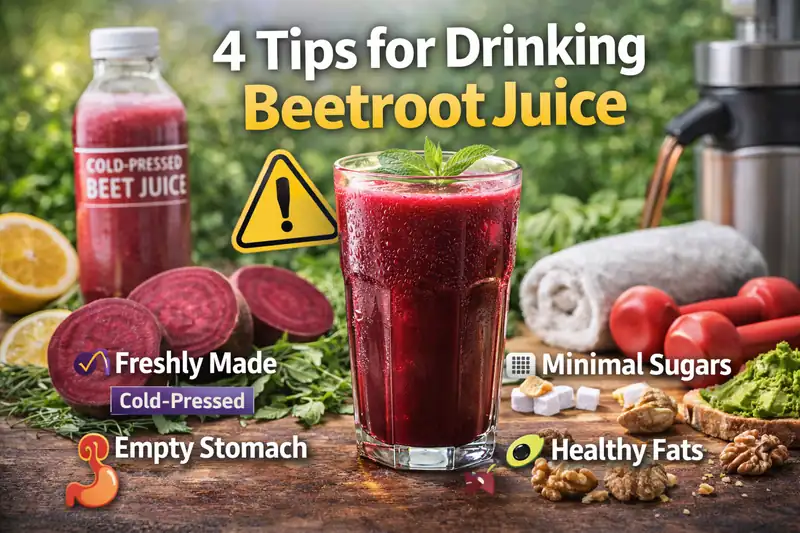
Now that you know how much power is hidden in that deep purple liquid, you might be ready to run to the kitchen. But wait! To get the absolute best results for your inflammation, there are a few “pro tips” you should follow. Not all beetroot juice is created equal, and how you drink it can make a big difference.
1. Fresh is Always King
If you go to a regular grocery store, you will see bottles of beet juice sitting on the shelf. While these are okay in a pinch, they are often pasteurized. This means they have been heated to a very high temperature so they can stay on the shelf for a long time.
As we learned before, heat is a thief! High heat can destroy the betalains (the fire extinguishers). To fight inflammation effectively:
- Cold-Pressed is Best: If you buy it at a store, look for “cold-pressed” juice in the refrigerated section. This means it was made without high heat.
- Make it at Home: Using your own juicer or blender ensures you get 100% of the live nutrients.
2. Watch Out for “Hidden Sugars”
Some companies mix beetroot juice with a lot of apple juice or grape juice to make it taste sweeter. While this tastes good, too much sugar can actually cause inflammation!
- The Rule of Thumb: Look for juices that are mostly beetroot, or mix your beet juice with water or lemon instead of sugary fruit juices.
3. Timing Your “Anti-Inflammatory Dose”
When should you drink it? Most experts recommend:
- The Empty Stomach Advantage: Drinking your juice in the morning on an empty stomach (or 20 minutes before a meal) allows the nutrients to be absorbed the fastest.
- The 2-Hour Window: If you are drinking it to help your muscles during exercise, try to drink it about two hours before you start. This gives your body enough time to turn those nitrates into the “Nitric Oxide” that helps your blood flow.
4. Don’t Forget the “Lipid Trick”
Remember the “Fat Factor” we talked about earlier? Even though you are drinking a liquid, some of those vitamins still need a little bit of healthy fat to be absorbed.
- The Tip: Have a few walnuts, a piece of avocado toast, or a spoonful of almond butter shortly after your juice. This “unlocks” the nutrients so they don’t just pass through you.
Making It Better: Anti-Inflammatory Add-Ins
If you want to turn your beetroot juice from a “super drink” into an “ultimate healing elixir,” you can add a few extra ingredients. These “boosters” work together with the beets to create a synergy that inflammation can’t stand.
- Lemon or Lime: The Vitamin C in citrus helps your body absorb the iron in the beets. Plus, it adds a bright flavor that cuts through the “earthy” taste of the root.
- Ginger: Ginger is famous for reducing swelling and settling the stomach. A small “zing” of ginger in your beet juice makes it twice as powerful for joint pain.
- Turmeric & Black Pepper: If you add a pinch of turmeric and a tiny crack of black pepper, you are adding the world’s most famous anti-inflammatory spice to your drink.
- Cucumber: If the beet juice feels too “heavy,” juicing a cucumber with it adds extra hydration and helps flush out toxins even faster.
Conclusion: The Verdict
So, is beetroot juice the Ultimate Anti-Inflammatory Drink?
When we look at the science, the answer is a resounding yes. There are very few things you can pour into a glass that can lower your blood pressure, repair your muscles, clean your liver, and protect your heart all at the same time. It is a natural home remedy that is easy to find, affordable, and backed by real results.
By making beetroot juice a part of your daily “Anti-Inflammatory Diet,” you aren’t just drinking a beverage. You are sending a team of specialists deep into your body to cool down the heat, clear out the rust, and help you move with ease again.
Your journey to a “cooler,” happier body starts with just one purple glass. Cheers to your health!
- Effects of Beetroot Juice on Recovery After Exercise-Induced Muscle Damage https://www.ncbi.nlm.nih.gov/pmc/articles/PMC4836012/
- Beetroot Juice: An Ergogenic Aid for Exercise and the Cardiovascular System https://pubmed.ncbi.nlm.nih.gov/28067135/
- The Potential Benefits of Red Beetroot Supplementation in Health and Disease https://www.ncbi.nlm.nih.gov/pmc/articles/PMC4425174/
- Acute Effects of Beetroot Juice on Blood Pressure of Healthy Workers https://www.nature.com/articles/jhh2014100
- Nitric Oxide and Inflammation: The Role of Dietary Nitrates https://www.sciencedirect.com/science/article/pii/S089158491500361X
- Betalains as Antioxidants and Anti-inflammatory Agents in Human Health https://www.ncbi.nlm.nih.gov/pmc/articles/PMC7911661/
- Understanding C-Reactive Protein (CRP) and Its Link to Beetroot Intake https://www.healthline.com/health/c-reactive-protein-diet
- The Impact of Juicing on Bioavailability of Plant Phytonutrients https://www.medicalnewstoday.com/articles/juicing-vs-whole-fruit-and-vegetables
Trust in your purchase:
Every product featured on our site has been carefully researched and selected based on quality, customer ratings, and positive reviews to ensure you receive excellent value for your money.
Please note:
This post contains affiliate links. If you make a purchase through these links, we may earn a small commission at no additional cost to you. This helps support our site and allows us to continue bringing you valuable content. Thank you!
Thank you for your precious time spent with NobleHomeRemedies.
You may also like:
7-Day High Blood Pressure Diet Plan
The 7-Day High Blood Pressure Diet Plan (DASH Approved) Medical Disclaimer: The content provided in…

Is Popping Fordyce Spots Safe
Is Popping Fordyce Spots Safe?: 4 Potential Dangers Exposed Every now and then, our skin…

High-Protein Meal Prep for GLP-1
5-Day High-Protein Meal Prep for GLP-1 and Fitness Support The High-Protein Revolution In the world…

Poop Health – What Does Poop Taste Like?
What Does Poop Taste Like?: 7 Poop Secrets and Your Health What Does Poop Taste…

Black Mold on Window Sills: Removal and Prevention
Black Mold on Window Sills: Removal and Prevention Have you ever noticed the black mold…
High Casein Foods
High Casein Foods | The Top 5 Foods with Protein Casein Most people are familiar…