
Beetroot Powder vs. Fresh Beets: Better for Managing Inflammation?
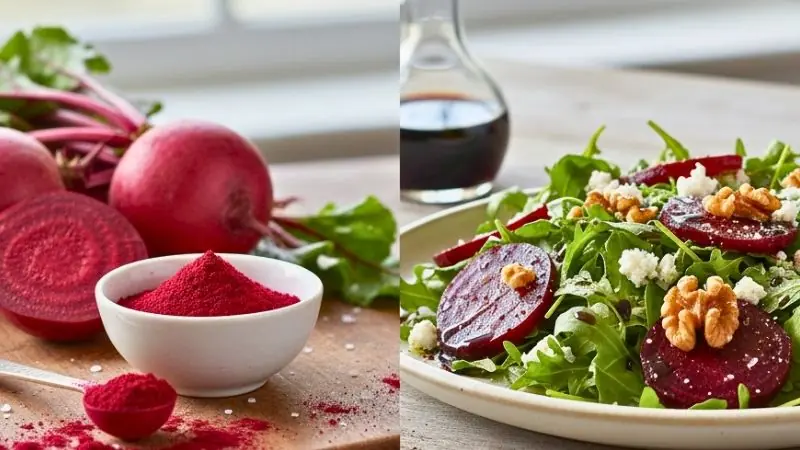
Swollen joints, aches, or low energy can feel defeating. If you’ve heard that beetroot can help, you’re not alone. People use both fresh beets and beetroot powder to try to reduce inflammation and boost recovery.
Quick promise: This article will give a clear, easy comparison so you can pick the form that fits your life and simple ways to use beetroot powder in lattes, oats, and baking.
Bold takeaway: Both forms help, powder wins for convenience; fresh beets win for fiber and whole-food benefits.
Quick Snapshot: Powder vs. Fresh
- Beetroot powder: Small, dry, and very convenient. Easy to store, quick to mix into drinks or oats, and great for travel. Powder often has less fiber and variable nitrate levels depending on processing.
- Fresh beets: Whole-food power: fiber, consistent antioxidants, and more natural volume per serving. You get the whole-food matrix that helps gut health and steadier blood sugar. But preparation takes time, and they spoil faster.
Bold takeaway: Choose powder for ease and consistency in daily habits; choose fresh beets for fiber and fuller whole-food benefits.
What in Beets Helps Inflammation? (Simple Science)
Beets work because of a few powerful natural compounds. Together, they help the body manage inflammation and support healthy blood flow. Studies suggest these nutrients may lower oxidative stress and support recovery, especially when used consistently.
Why Nitrates Matter
Beets are rich in natural nitrates. Your body turns nitrates into nitric oxide.
Nitric oxide helps:
- Relax blood vessels
- Improve circulation
- Support oxygen delivery to tissues
Better blood flow can help calm inflammation and reduce stiffness over time.
Antioxidants That Fight Stress
The deep red color of beets comes from betalains. These are antioxidants.
They help by:
- Fighting free radicals
- Supporting the body’s natural anti-inflammatory response
- Protecting cells from damage
The Role of Fiber in Fresh Beets
Fresh beets contain dietary fiber, which beetroot powder often lacks.
Fiber helps:
- Feed healthy gut bacteria
- Reduce gut-driven inflammation
- Keep blood sugar stable
Bold takeaway: Beetroot powder delivers key compounds fast, while fresh beets add fiber that supports long-term inflammation control.
Nutrient Differences: Beetroot Powder vs. Fresh Beets
Both forms come from the same root, but processing changes what you get. Here’s how they compare in real life.
Bold takeaway: Fresh beets offer complete nutrition, while beetroot powder trades fiber for speed and convenience.
| Feature | Beetroot Powder | Fresh Beets |
|---|---|---|
| Fiber Content | Very low (most fiber removed during processing) | High in natural dietary fiber |
| Nitrate Levels | Varies by brand and drying method | More consistent per whole serving |
| Antioxidants | Concentrated, but depends on quality | Naturally balanced and stable |
| Natural Sugar | Low per small serving | Higher, especially when juiced |
| Gut Health Support | Limited due to low fiber | Strong support from fiber |
| Convenience | Very convenient and quick to use | Requires washing, peeling, and cooking |
| Shelf Life | Long shelf life, easy to store | Short shelf life, spoils faster |
| Best For | Busy routines, travel, daily consistency |
Processing Matters
Not all beetroot powders are equal. Higher-quality powders are:
- Freeze-dried (better nutrient retention)
- Single-ingredient (no fillers or added sugar)
- Third-party tested for purity
Lower-quality powders may lose nitrates due to heat processing.
Convenience vs. Efficacy: When Beetroot Powder Wins
Life gets busy. That’s where beetroot powder really shines.
Why Many People Choose Beetroot Powder
- No prep needed: just scoop and stir
- Portable: easy for work, travel, or the gym
- Shelf-stable: lasts months without spoiling
- Easy portion control: consistent daily habits
For people who struggle to eat fresh beets regularly, powder makes consistency possible.
But There’s a Trade-Off
Because beetroot powder is processed:
- Fiber is mostly removed
- Nitrate content can vary between brands
- Some powders lose nutrients from heat drying
This means efficacy depends on quality and how you use it.
How to Choose a Good Beetroot Powder
Use this quick checklist:
- Freeze-dried or low-heat processed
- No added sugar or fillers
- Third-party tested when possible
- Clear serving size on the label
Bold takeaway: Beetroot powder works best when it’s high-quality and used consistently and not as an occasional boost.
How to Use Beetroot Powder (Recipes): Easy Daily Ideas

One of the biggest benefits of beetroot powder is how easy it is to add to everyday foods. You don’t need fancy recipes or special tools.
Beetroot Latte (Warm & Comforting)
A beetroot latte is smooth, slightly sweet, and caffeine-free.
How to make it:
- Warm 1 cup milk or plant milk
- Stir in 1 teaspoon of beetroot powder
- Add cinnamon or vanilla for flavor
This works well in the morning or evening.
Stir Into Oats or Smoothies
Beetroot powder blends easily with breakfast foods.
Simple ideas:
- Mix ½–1 teaspoon of beet powder into oatmeal
- Add to smoothies with banana, berries, or citrus
- Pair with yogurt for balance
Citrus fruits help support nitrate absorption.
Baking With Beetroot Powder
Beetroot powder adds color and mild sweetness to baked goods.
Try it in:
- Muffins or pancakes
- Energy bites
- Homemade bread
Tip: Replace 1–2 tablespoons of flour with beetroot powder. Add a little extra liquid to keep baked goods moist.
Easy Daily Habit
For best results:
- Use beetroot powder daily, not randomly
- Keep the dose small but consistent
- Pair with meals to avoid stomach upset
Bold takeaway: Beetroot powder fits easily into drinks, breakfasts, and baking. Therefore, making daily use realistic.
Dosage & Timing: Practical Guidance

There’s no single “perfect” dose of beetroot powder. Amounts depend on the product, how it’s made, and your body. Studies suggest benefits come from regular, moderate intake, not large one-time doses.
Typical Beetroot Powder Dosage
Most brands recommend:
- 1–2 teaspoons per day
- This equals about 3–6 grams of powder
Always check your product label first.
How This Compares to Beet Juice
- Many studies use beetroot juice, not powder
- Juice provides more predictable nitrate levels
- Powder varies, so follow serving guidance carefully
Think of powder as a daily support, not a medical treatment.
Best Time to Take Beetroot Powder
- With meals: gentler on digestion
- Before activity: 1–3 hours before exercise may support blood flow
- Daily consistency matters most
Start small for a few days to see how your body reacts.
Bold takeaway: Start low, follow the label, and focus on daily consistency rather than high doses.
Side Effects & Precautions (Who Should Be Careful)
Most people tolerate beetroot powder well. Still, it’s important to know when to be cautious.
Common and Mild Effects
- Pink or red urine/stool (beeturia): harmless and temporary
- Mild stomach upset: if taken on an empty stomach
These usually stop when you lower the dose.
Who Should Be Careful or Avoid It
- People with low blood pressure or taking BP medications
- Those with kidney stones or sensitive to oxalates
- People on nitrate-related medications
- Pregnant or breastfeeding individuals (check with a doctor first)
If you feel dizzy, weak, or unwell, stop using it and seek medical advice.
Sugar & Calories Note
- Fresh beet juice can raise blood sugar if taken in large amounts
- Beetroot powder, used in small doses, usually has less impact
Bold takeaway: Beetroot powder is safe for many, but not for everyone. Medical guidance matters.
Which Should You Choose?: A Practical Decision Guide
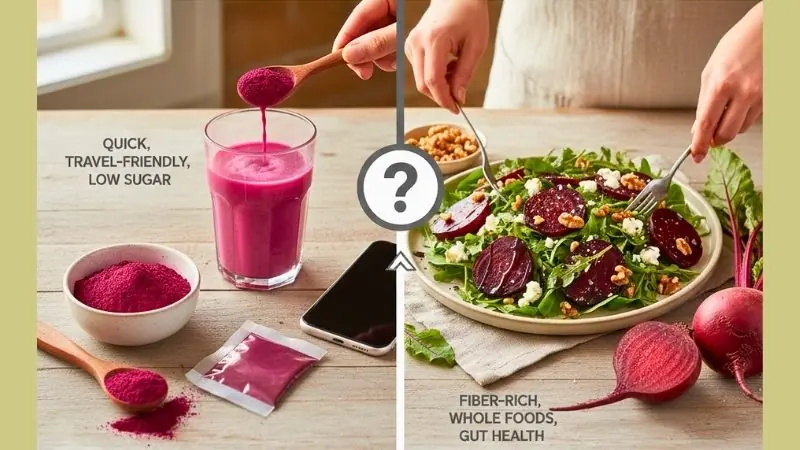
Both forms can support inflammation management. The best choice depends on your lifestyle, goals, and health needs.
Choose Beetroot Powder If You:
- Want a quick, no-prep option
- Travel often or have a busy schedule
- Prefer easy mixing into foods and drinks
- Want lower sugar in small daily servings
Choose Fresh Beets If You:
- Want fiber for gut health
- Enjoy cooking or juicing
- Prefer whole foods over supplements
- Are you managing digestive inflammation
For Athletes or Active People
- Fresh beets or standardized beet juice may offer more reliable nitrates
- High-quality beetroot powder works well when used consistently
A Simple 3-Day Plan to Try Beetroot Powder Safely
If you’re new to beetroot powder, this short plan helps you start gently and notice how your body responds.
Day 1: Start Small
- Add ½ teaspoon beetroot powder to warm milk or plant milk
- Drink it with breakfast or lunch
- Notice digestion, energy, and how you feel
Day 2: Build the Habit
- Increase to 1 teaspoon
- Try it in oats, a smoothie, or yogurt
- Stay hydrated throughout the day
Day 3: Find Your Routine
- Use 1–2 teaspoons (stay within label guidance)
- Pick your favorite method: latte, oats, or baking
- Pay attention to swelling, stiffness, or energy levels
Keep a simple note of how you feel. Small changes matter.
Bold takeaway: Slow, steady use helps you find your ideal dose without side effects.
Frequently Asked Questions
Takeaway — Powder or Fresh?
Beetroot powder offers speed, ease, and daily consistency. Fresh beets deliver fiber and full, whole-food benefits.
Best strategy: Use the form you’ll stick with or mix both into your routine.
Conclusion: Beetroot Powder or Fresh Beets? Here’s the Smart Way to Choose
Inflammation doesn’t come from one bad meal, and it won’t disappear with one “superfood” either. What truly makes a difference is daily, realistic nutrition choices you can stick with.
Beetroot powder shines when life is busy. It’s easy to store, simple to use, and fits smoothly into lattes, oats, smoothies, and even baking. For many people, that convenience is exactly what helps them stay consistent, and consistency is where benefits begin.
Fresh beets, on the other hand, deliver the full whole-food package. Their natural fiber supports gut health, steady digestion, and long-term inflammation balance. If you enjoy cooking or juicing, fresh beets are a powerful and nourishing option.
The real win? You don’t have to choose just one.
Using beetroot powder on busy days and fresh beets when you have time gives you the best of both worlds of convenience and complete nutrition.
Key takeaway:
➡️ The best anti-inflammatory habit is the one you’ll actually maintain.
Start small. Stay consistent. Listen to your body. Over time, these gentle choices can support better circulation, calmer inflammation, and a stronger daily routine.
Medical disclaimer: This article is for general information only and not medical advice. If you have health conditions, take medications, are pregnant, or are unsure about starting supplements like beetroot powder, talk with your healthcare provider first.
- Healthline – Beetroot Benefits and Nutrition
https://www.healthline.com/nutrition/beetroot-benefits - NCBI – Dietary Nitrate and Nitric Oxide
https://www.ncbi.nlm.nih.gov/pmc/articles/PMC5452224/ - WebMD – Beetroot: Uses and Side Effects
https://www.webmd.com/diet/health-benefits-beets
Trust in your purchase:
Every product featured on our site has been carefully researched and selected based on quality, customer ratings, and positive reviews to ensure you receive excellent value for your money.
Please note:
This post contains affiliate links. If you make a purchase through these links, we may earn a small commission at no additional cost to you. This helps support our site and allows us to continue bringing you valuable content. Thank you!
Thank you for your precious time spent with NobleHomeRemedies.
You may also like:

Owala Water Bottle – FreeSip
Staying hydrated is crucial for our overall health and well-being. Yet, with our busy lives,…

Does Schizophrenia Get Worse As You Age
Does Schizophrenia Get Worse As You Age – Check Symptoms Schizophrenia is a complex psychological…

COVID-19 CoronaVirus Symptoms: Prevention, and Awareness
Discvoer: COVID-19 CoronaVirus Symptoms: Prevention, and Awareness The outbreak of the COVID-19 Coronavirus is a…

Home Remedies for Body Odor
10 Best Home Remedies for Body Odor Mild body odor is common in people; however,…
Insulin Injection Sites – Learn how to Inject – Type1 & Type2 Diabetes
Insulin Injection Sites – Learn how to Inject – Type1 & Type2 Diabetes What are…

Stomach Acidity Test
Relief Through Stomach Acidity Test: Stop Suffering in Silence Are you feeling bloated, experiencing frequent…