
Beetroot Salad Recipes: For Gut Health & Reduce Swelling
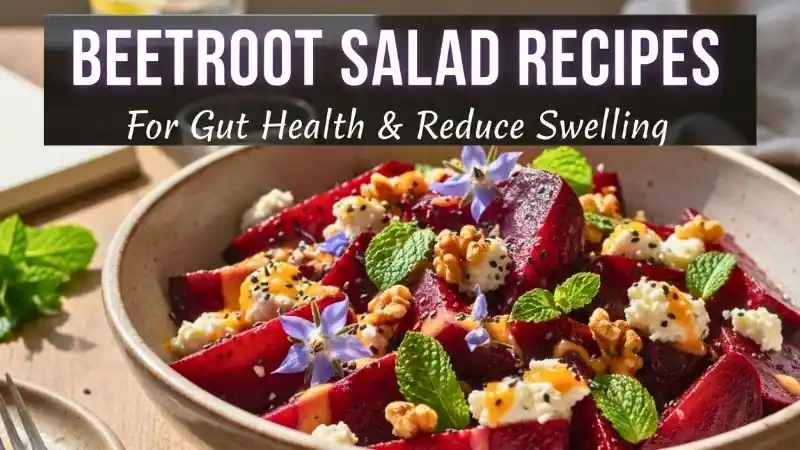
Key takeaway: Beetroot salads can support gut health and comfort when eaten as part of a balanced diet, not as a cure or treatment.
If you often feel bloated, heavy, or puffy, you’re not alone. Many people struggle with digestion and mild swelling after meals, even when eating “healthy” foods.
The good news? Beetroot salad recipes are a simple, refreshing way to support gut health. Beets are rich in fiber and antioxidants, and studies suggest they may help reduce inflammation and support digestion when eaten regularly.
In this guide, you’ll find:
- Raw grated beet salads for daily fiber
- Mediterranean-style beet salads with feta and walnuts
- Gut-friendly fermented beet options for natural probiotics
All recipes are easy, gentle on digestion, and made with real, whole foods.
Why Beets? Quick Science for Real People
Beets may look simple, but they are packed with nutrients that support your gut and overall comfort.
What’s in beets that helps your body?
Beets contain natural compounds that work together to support digestion and reduce swelling.
- Dietary fiber: Helps feed good gut bacteria and supports regular bowel movements.
- Betalains (antioxidants): Give beets their deep red color. Studies suggest these compounds help calm inflammation in the body.
- Natural nitrates: Support healthy blood flow, which may help reduce fluid buildup and puffiness.
- Prebiotics: Raw and lightly cooked beets help nourish beneficial gut bacteria.
What research suggests (in simple terms)
Research shows that beetroot is rich in antioxidants and fiber, which are linked to:
- Better digestion
- Reduced oxidative stress
- Improved gut environment
Perfect — continuing.
How to Use Beetroot Salads for Gut Health (Easy Tips)
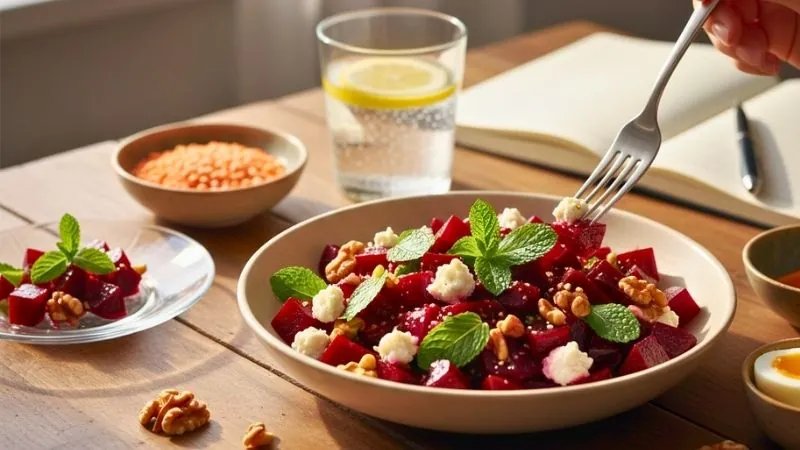
Beetroot salads work best when eaten the right way. Small changes can make them gentler on your stomach and more effective for gut support.
Simple tips for better digestion
- Start with small portions: Too much fiber at once may cause gas or bloating.
- Chew slowly: This helps your stomach break down raw vegetables more easily.
- Add healthy fats: Olive oil, walnuts, or feta help your body absorb antioxidants.
- Pair with protein: Eggs, lentils, fish, or chickpeas make the salad more balanced.
- Drink water: Fiber needs fluids to move smoothly through your gut.
Best time to eat beetroot salads
- Lunch or early dinner works best for most people.
- Avoid large raw beet salads late at night if you have a sensitive stomach.
Pro tip:
If raw beets feel too strong, lightly roast or steam them first — they are still very gut-friendly.
Raw grated beetroot salads (bright + crunchy)
Raw grated beets are crunchy, sweet, and full of fiber. They keep more enzymes and give you a fresh texture that helps digestion.
Recipe 1 — Simple Grated Beet & Apple Salad
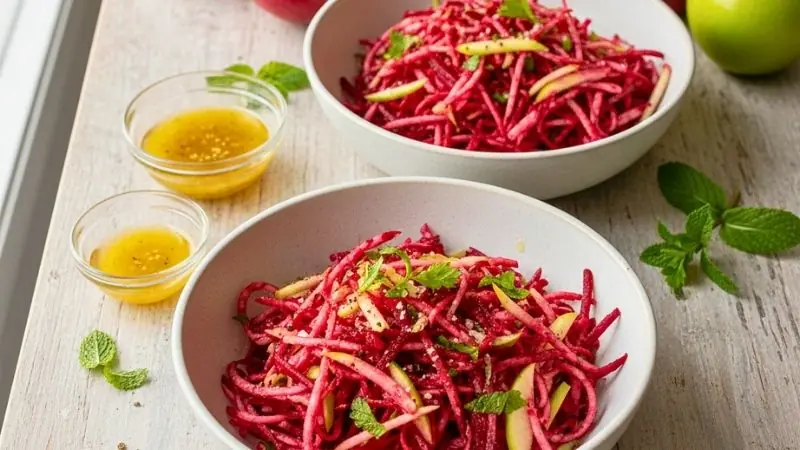
Ingredients (serves 2)
- 2 medium beets, peeled and grated
- 1 crisp apple (Granny Smith or Fuji), grated or thinly sliced
- 1 tablespoon lemon juice
- 1 tablespoon olive oil
- 1 teaspoon honey or maple syrup (optional)
- Pinch of salt and black pepper
- Fresh parsley or mint, chopped (small handful)
Steps
- Toss the grated beet and apple in a bowl.
- Whisk lemon, olive oil, honey, salt, and pepper.
- Pour dressing over salad and toss gently.
- Sprinkle parsley or mint and serve right away.
Why this works: The apple adds gentle sweetness and fiber, making raw beets easier on the stomach. Key takeaway: Start with a small serving.
Recipe 2 — Beet-Carrot-Lemon Crunch
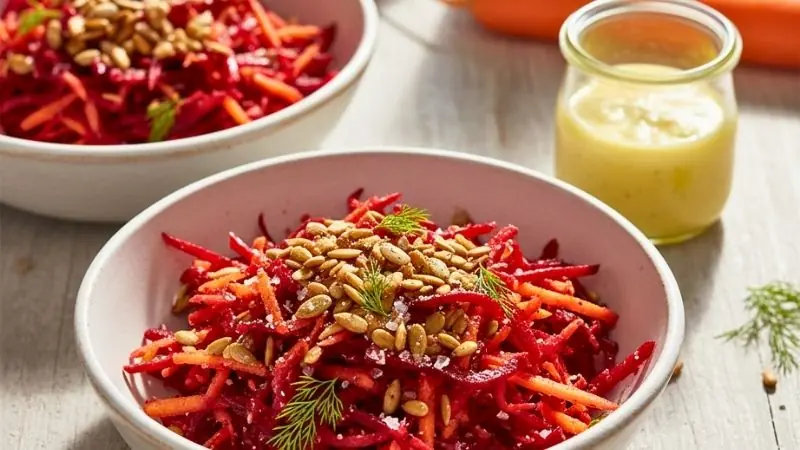
Ingredients (serves 2)
- 2 medium beets, peeled and grated
- 1 large carrot, grated
- 1 clove garlic, very finely minced (optional)
- 2 tablespoons lemon juice
- 1 tablespoon extra virgin olive oil
- 1 tablespoon toasted seeds (pumpkin or sunflower)
- Salt and pepper to taste
Steps
- Combine grated beets and carrots in a bowl.
- Mix lemon juice, olive oil, and garlic in a small jar.
- Shake dressing and pour over the vegetables.
- Top with toasted seeds and a pinch of salt and pepper. Serve chilled or room temp.
Why this works: Carrots add mild sweetness and beta-carotene. Seeds give healthy fats for better nutrient absorption.
Quick tips & swaps (short and useful)
- Soften beets: If raw is harsh, soak grated beets in cold water for 10 minutes or briefly steam for 3 minutes.
- Kid-friendly swap: Use maple syrup instead of raw honey.
- Make it heartier: Add cooked chickpeas or shredded chicken for protein.
- Texture hack: Use a food processor for fine-grating or a box grater for coarse crunch.
Mediterranean-style beetroot salads (feta, walnuts & herbs)
Mediterranean beetroot salads are gentle, satisfying, and anti-inflammatory. They combine beets with healthy fats, herbs, and protein to support digestion and reduce swelling.
Recipe 3 — Roasted Beet, Feta & Walnut Salad
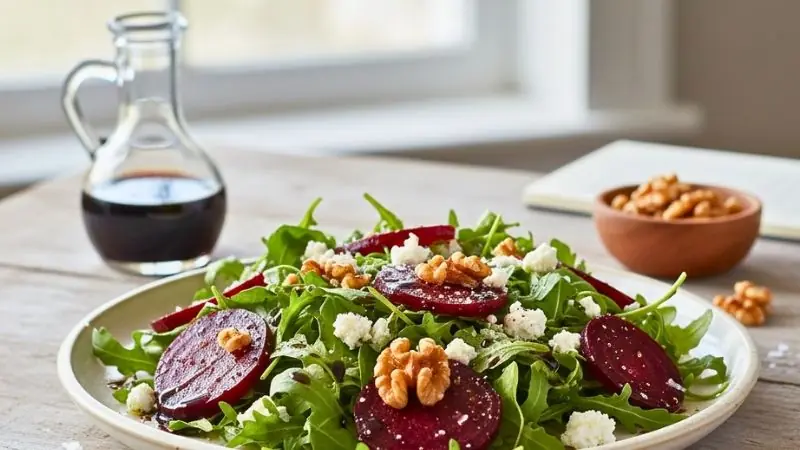
Ingredients (serves 3–4)
- 3 medium beets, roasted and sliced
- ½ cup crumbled feta cheese
- ¼ cup walnuts, lightly toasted
- 2 cups fresh arugula or mixed greens
- 2 tablespoons olive oil
- 1 tablespoon balsamic vinegar
- Pinch of salt and black pepper
Steps
- Roast beets at 200°C (400°F) for 40–45 minutes until tender. Cool and slice.
- Arrange greens on a large plate. Add sliced beets on top.
- Sprinkle feta and toasted walnuts evenly.
- Drizzle olive oil and balsamic vinegar.
- Season lightly with salt and pepper. Serve warm or cold.
Why this works:
- Walnuts provide omega-3 fats linked to reduced inflammation.
- Feta adds protein and helps slow digestion for better gut comfort.
Recipe 4 — Arugula, Beet & Citrus Feta Bowl
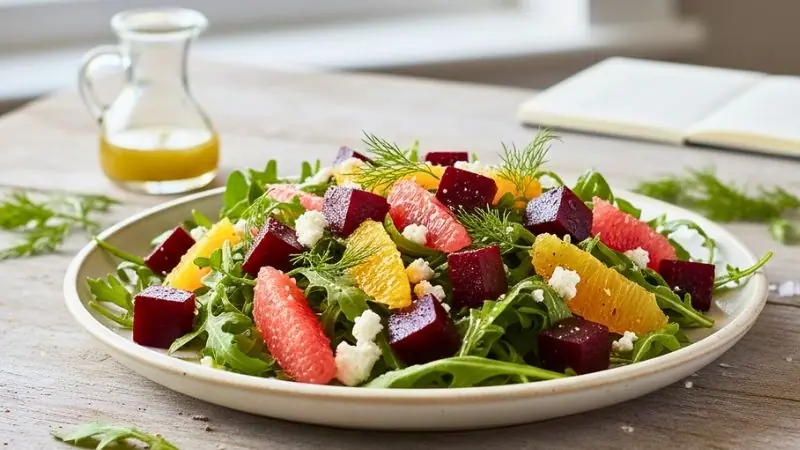
Ingredients (serves 2)
- 2 medium beets, cooked and diced
- 2 cups fresh arugula
- ¼ cup feta cheese
- 2 tablespoons orange or grapefruit segments
- 1 tablespoon olive oil
- 1 teaspoon lemon juice
- Fresh dill or basil (optional)
Steps
- Add arugula to a bowl and top with diced beets.
- Scatter citrus pieces and feta over the salad.
- Whisk olive oil and lemon juice.
- Drizzle dressing and garnish with herbs.
Why this works:
Citrus helps iron absorption from beets, while greens add magnesium for digestion support.
Easy Mediterranean dressing ideas
Use these with any beetroot salad:
- Classic lemon olive oil: 2 tbsp olive oil + 1 tbsp lemon juice
- Balsamic glaze: 1 tbsp balsamic vinegar + 1 tsp honey
- Herb vinaigrette: Olive oil + chopped parsley + garlic (optional)
Serving tip:
Pair these salads with whole grains or grilled fish for a complete, gut-friendly meal.
Gut-friendly fermented beet options (probiotic power)
Fermenting beets adds friendly bacteria that can help your gut. Fermented beets taste tangy and can be a gentle way to add probiotics to meals.
Key takeaway: Fermented beets are a natural probiotic food — start small and keep an eye on safety.
Recipe 5 — Easy Lacto-Fermented Beet Cubes
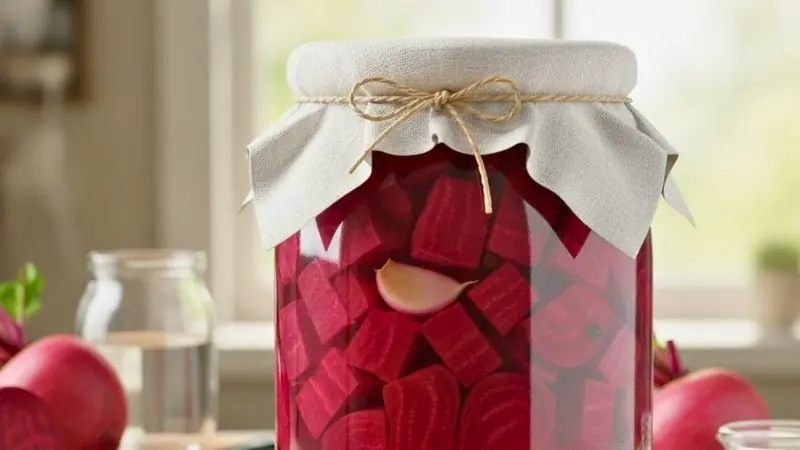
Ingredients (1 jar, makes about 2 cups)
- 3–4 medium beets, scrubbed and cut into 1–2 cm cubes
- 2 cups (500 ml) filtered water
- 1 tablespoon sea salt (dissolved in the water) — this makes a safe brine
- 1 small garlic clove (optional)
- 1 bay leaf or a few peppercorns (optional)
Steps
- Clean a glass jar and lid well.
- Pack beet cubes into the jar, leaving about 2–3 cm headspace.
- Make brine: stir 1 tablespoon salt into 2 cups (500 ml) water until dissolved.
- Pour brine over beets so they are fully covered. Push a clean weight (a small jar or fermentation weight) so beets stay under the brine.
- Cover the jar with a loose lid or cloth (to allow gases to escape).
- Ferment at room temperature (ideally 18–22°C / 64–72°F) for 3–7 days. Taste on day 3 and once per day after until it’s tangy enough for you.
- When ready, seal with a lid and move to the fridge. Chill to slow fermentation.
Storage & timeline: Keep in fridge up to 2–3 months. The flavor will keep developing slowly.
Safety pointers:
- Bubbles and cloudy brine are normal. That means fermentation is working.
- If you see fuzzy mold or a bad, rotten smell, discard. (White film called kahm yeast is common and not toxic, but you can scoop it off.)
- Always use clean hands and utensils to avoid contamination.
Recipe 6 — Quick Beet Kvass (sip or dressing booster)
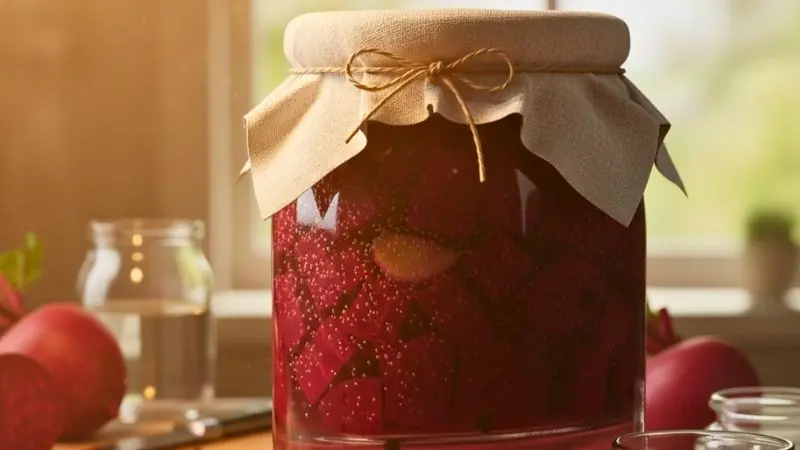
Ingredients (1 small jar)
- 2 medium beets, chopped (no need to peel)
- 1 teaspoon sea salt
- 2 cups (500 ml) filtered water
- 1 tablespoon whey or 1–2 tbsp mature kvass (optional starter)
Steps
- Place chopped beets into a jar and add salt. Add whey or a spoonful of mature kvass if you have it (this helps start fermentation faster).
- Cover with water and leave a little headspace.
- Cover loosely and ferment at room temp for 2–4 days. Taste daily — when it’s pleasantly sour, strain and refrigerate.
- Use kvass as a small sip, a splash in dressings, or mixed with sparkling water.
Taste & use: Kvass is earthy, tangy, and slightly fizzy. Use 1–2 tablespoons in dressings or sip 50–100 ml as a probiotic shot.
Fermentation safety & taste notes (short & clear)
- How to tell it’s good: Pleasant sour smell, slight fizz, and tangy taste.
- When to worry: Fuzzy mold in bright colors or a rotten, putrid smell = discard.
- Fermenting time: Short ferments (2–4 days) = mild flavor; longer (7–10 days) = stronger tang.
- Temperature: Cooler rooms slow fermentation; warmer rooms speed it up. Aim for 18–22°C when possible.
- Who should be cautious: If you are pregnant, immunocompromised, or on a very low-sodium diet, check with your healthcare provider before adding fermented foods regularly.
Side Effects & Precautions (Read This First)
Beetroot salads are safe for most people, but they aren’t right for everyone. Knowing what to watch for helps you enjoy them safely.
Possible side effects
- Red or pink urine and stools (beeturia): This is harmless and common. It’s not blood.
- Gas or bloating: Beets are high in fiber. Eating too much too fast may upset sensitive stomachs.
- Low blood pressure: Beets contain natural nitrates, which may slightly lower blood pressure.
- Kidney stone risk: Beets are high in oxalates. People with a history of kidney stones should limit their intake.
Who should be cautious or avoid beetroot salads
- People with kidney stones or oxalate sensitivity
- Those on blood pressure medication
- Anyone with digestive disorders (IBS, severe reflux)
- People following a very low-sodium diet (especially fermented beets)
Special note on fermented beets
Fermented foods are powerful. They may not be suitable for:
- Infants and young children
- Immunocompromised individuals
- Anyone new to probiotics — start with 1–2 tablespoons only
When to stop and talk to a doctor
- Severe stomach pain or cramping
- Allergic reactions (itching, swelling, breathing issues)
- Ongoing digestive discomfort after eating beets
Key takeaway:
Beetroot salad recipes support health best when eaten in moderate portions and suited to your body.
Storage, Make-Ahead & Meal-Prep Tips
Prepping beetroot salads ahead of time can save energy and make healthy eating easier. The key is storing each type the right way.
How Long Do Beetroot Salads Last
- Raw grated beet salads: Store in an airtight container in the fridge for 24–48 hours. Best eaten fresh.
- Roasted beet salads: Keep refrigerated for 3–4 days. Add greens and dressing just before serving.
- Fermented beets: Store sealed in the fridge for 2–3 months. Flavor deepens over time.
Smart make-ahead tips
- Prep beets separately: Store cooked or grated beets alone. Mix with dressing right before eating.
- Keep dressings separate: This prevents soggy salads and preserves texture.
- Use glass containers: Beets stain plastic and absorb odors.
- Label fermented jars: Write the start date to track fermentation time safely.
Freezing note (important)
- Raw beet salads do not freeze well.
- Cooked beets can be frozen for up to 6 months, then used in salads after thawing.
Key takeaway:
Fresh for crunch, cooked for convenience, fermented for gut support — store each the right way.
Frequently Asked Questions
Quick Summary
Beetroot salad recipes offer a simple, natural, and enjoyable way to support gut health and manage mild swelling—without complicated ingredients or strict food rules. Whether you choose a raw grated beet salad for fiber, a Mediterranean-style bowl with feta and walnuts for balance, or a fermented beet option for probiotics, each version brings unique benefits to your digestive system.
What matters most is how you eat them. Starting with small portions, chewing slowly, and pairing beets with healthy fats and protein can make a big difference in comfort. Studies suggest the antioxidants and natural nitrates in beets support healthy circulation and help calm inflammation, while fiber feeds beneficial gut bacteria over time. These effects build gradually, so consistency is more important than large servings.
It’s also important to listen to your body. Beets are powerful foods, and not everyone reacts the same way. If you have a history of kidney stones, low blood pressure, digestive conditions, or are new to fermented foods, follow the safety guidance and speak with a healthcare professional if needed. Gentle, steady changes are safer and more effective than extremes.
In the end, the best beetroot salad is the one you enjoy and can eat regularly. Choose one recipe, try it once or twice this week, and notice how your digestion feels. Pin this guide so you can come back, rotate the recipes, and build a gut-friendly habit that actually lasts.
- Beetroot as a functional food with huge health benefits
https://www.ncbi.nlm.nih.gov/pmc/articles/PMC8565237/ - Biological effects of red beetroot and betalains: A review
https://pubmed.ncbi.nlm.nih.gov/32171042/ - Current Knowledge on Beetroot Bioactive Compounds (nitrate & betalains)
https://www.ncbi.nlm.nih.gov/pmc/articles/PMC8229785/ - Nitrate Derived From Beetroot Juice Lowers Blood Pressure — Systematic Review & Meta-Analysis
https://pubmed.ncbi.nlm.nih.gov/35369064/ - Dietary oxalate and kidney stone formation — review
https://www.ncbi.nlm.nih.gov/pmc/articles/PMC6459305/ - Fermented Foods as Probiotics: A Review
https://www.ncbi.nlm.nih.gov/pmc/articles/PMC8588917/ - Beeturia: Why Beets Cause Pink Pee in Some People — Healthline
https://www.healthline.com/health/beeturia - Beet — Uses, Side Effects, and More — WebMD
https://www.webmd.com/vitamins/ai/ingredientmono-306/beet
Medical Disclaimer: This article is for educational purposes only. It shares general nutrition information and simple food ideas. It is not medical advice. Always talk to a qualified healthcare professional before making diet changes, especially if you have a medical condition or take medication.
Trust in your purchase:
Every product featured on our site has been carefully researched and selected based on quality, customer ratings, and positive reviews to ensure you receive excellent value for your money.
Please note:
This post contains affiliate links. If you make a purchase through these links, we may earn a small commission at no additional cost to you. This helps support our site and allows us to continue bringing you valuable content. Thank you!
Thank you for your precious time spent with NobleHomeRemedies.
You may also like:

Doctor Natural Remedies
Natural remedies have been a cornerstone of wellness for millennia, passed down through generations in…

Does Sprite Have Caffeine?
Does Sprite Have Caffeine? – How Safe Is It to Drink? The presence of caffeine…

Baby Making Gasping Sounds
Causes Why Baby Making Gasping Sounds But Breathing Fine You are not alone if you…

How to Kill Heavy Mind and Feel Good
Why Heavy Mind?: How to Kill Heavy Mind and Feel Good The first question is…

Salivating Before Vomiting
Why Do You Salivate Before Vomiting? – Nausea and Vomiting Have you ever felt that…

Epsom Salt for Hemorrhoids
Epsom Salt for Hemorrhoids: 4 Best Remedies to Treat at Home If you’re one of…