
Free Printable Blood Pressure Log & Tracker (PDF Download)
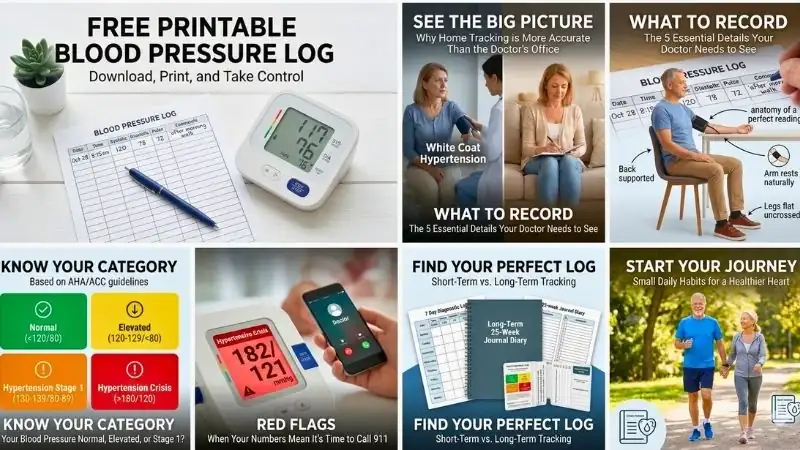
Did your doctor ask you to start tracking your numbers, but you keep losing your notes on scraps of paper? You aren’t alone. Nearly half of all adults in the United States have high blood pressure, but only about 1 in 4 has it successfully under control. Losing your health notes makes it hard to manage your heart health. That is why we created this free blood pressure log. You can download, print, and start tracking today to stay organized for your next check-up.
Why You Need a Blood Pressure Tracker

Using a blood pressure tracker is about more than just recording numbers. It helps you and your doctor see the “big picture” of your heart health over time.
See the “Big Picture” of Your Heart Health
A single reading at the doctor’s office is just a snapshot. A blood pressure log book shows how your heart behaves during your normal daily life. This helps your doctor decide if your medications are at the right dose or if you need to make lifestyle changes.
Avoid “White Coat Hypertension”
Many people feel stressed at the doctor’s office, which causes their blood pressure to spike. This is called “white coat hypertension”. Tracking at home shows your doctor what your numbers are like when you are truly relaxed.
Prevent Serious Health Problems
High blood pressure is often called a “silent killer” because it usually has no symptoms. If it stays high, it can lead to:
- Heart attack
- Stroke
- Kidney disease
- Dementia
How to Use Your Free Blood Pressure Log Sheet
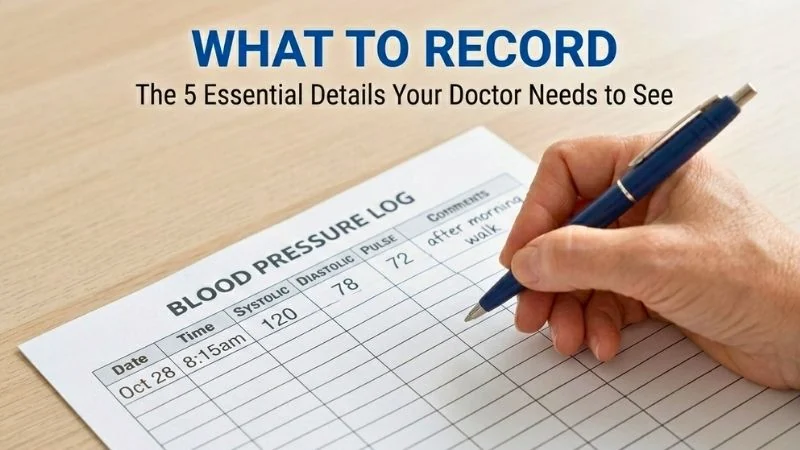
Using a blood pressure log sheet is a simple habit that only takes a few minutes a day. By keeping a neat record, you provide the “big picture” of your health that your doctor needs to see.
What to Record in Your Log Book
A good blood pressure log book should include more than just your pressure numbers. To get the most out of your tracking, make sure to include:
- Date and Time: Always record the exact date and whether it was a morning or evening reading.
- The Numbers: Write down both your systolic (top number) and diastolic (bottom number).
- Heart Rate: Most modern monitors also show your pulse, which is helpful for your doctor to know.
- Comments: Use this space to note if you were feeling stressed, had just exercised, or had eaten a salty meal.
How Often Should You Track Your Numbers?
Consistency is the key to a successful high blood pressure tracker. For the most accurate results, the sources recommend a “twice-a-day” rule.
Take your pressure once in the morning and once in the evening. It is best to do this at the same time every day so your results are easy to compare.
When you sit down to measure, experts suggest taking two or three readings about one minute apart. You should then record the average of those numbers in your log. If you have an upcoming doctor’s visit, try to track your numbers for at least 3 to 7 days before your appointment.
5 Tips for Accurate Home Readings
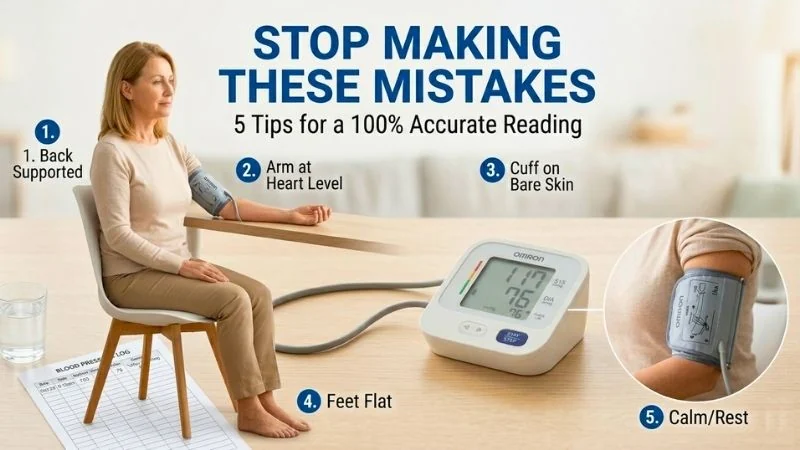
Taking your blood pressure at home is only helpful if the numbers are correct. Following these simple steps ensures your blood pressure tracker gives your doctor the most reliable information.
1. Use the Right Equipment
The best tool for the job is an automatic upper-arm cuff monitor. Experts recommend avoiding wrist or finger models because they are often less reliable. Look for a device that has been “validated” for accuracy by independent testing.
2. Prepare Your Body Beforehand
What you do before the test matters just as much as the test itself. Follow these rules for at least 30 minutes before you measure:
- Do not smoke, drink caffeine, or exercise.
- Empty your bladder; a full bladder can add 10 to 15 points to your reading.
- Rest quietly in your chair for at least 5 minutes before hitting the start button.
3. Get in the Correct Position
How you sit can completely change your results. For the most accurate reading:
- Sit in a chair with your back supported and feet flat on the floor.
- Keep your legs uncrossed; crossing your legs can raise your pressure by 2 to 8 points.
- Support your arm on a flat surface (like a table) so the cuff is at heart level.
4. Put the Cuff on Bare Skin
Never place the blood pressure cuff over your sleeve. Wrapping the cuff over clothing can add 10 to 40 points to your measurement. For the best “big picture” of your health, always place the cuff directly on your bare arm.
5. Stay Still and Silent
It is important to be as relaxed as possible while the monitor is working. Do not talk, scroll on your phone, or watch TV. Even a simple conversation can raise your numbers by 10 to 15 points. Stay silent and still until the measurement is finished.
Understanding Your Blood Pressure Numbers
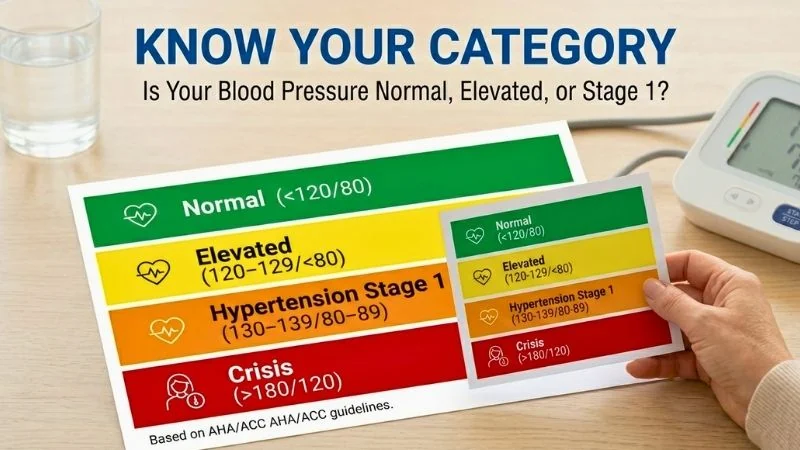
It is important to know what the numbers on your blood pressure log actually mean for your health. Blood pressure is the force of your blood pushing against the walls of your arteries.
Every time you use your blood pressure tracker, you will see two numbers measured in “mmHg” or millimeters of mercury.
Systolic vs. Diastolic: What’s the Difference?
The top number is your systolic blood pressure. This measures the pressure in your arteries when your heart beats and pumps blood.
The bottom number is your diastolic blood pressure. This measures the pressure in your arteries when your heart rests between beats.
Blood Pressure Categories Chart
General scientific consensus uses the following categories to help you understand your readings:
| Category | Systolic (Top) | and/or | Diastolic (Bottom) |
|---|---|---|---|
| Normal | Less than 120 | and | Less than 80 |
| Elevated | 120–129 | and | Less than 80 |
| Hypertension Stage 1 | 130–139 | or | 80–89 |
| Hypertension Stage 2 | 140 or higher | or | 90 or higher |
| Hypertensive Crisis | Higher than 180 | and/or | Higher than 120 |
Which Category Are You In?
If your systolic and diastolic numbers fall into two different categories, you are classified in the higher stage. For example, if your reading is 118/82 mmHg, you are in Stage 1 Hypertension because your bottom number is between 80 and 89.
Seeing consistent numbers in the higher categories on your blood pressure log sheet is a signal to talk with your healthcare provider about a treatment plan.
Choosing the right blood pressure tracker depends on what you and your doctor need to know. There are several different types of logs available, each designed for a different goal.
Types of Blood Pressure Logs
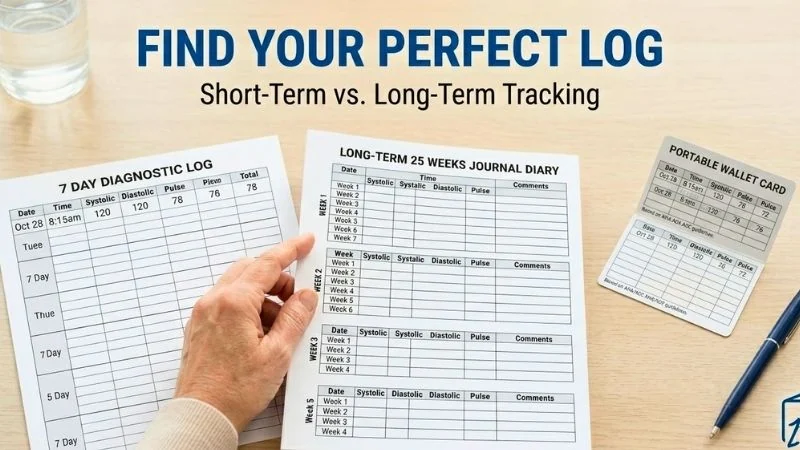
1. High-Density Diagnostic Logs
These logs are often used for 3 to 7 days right before a doctor’s visit. The American Medical Association (AMA) log, for example, tracks your pressure four times a day. This high-frequency tracking helps your doctor see a clear average that filters out temporary spikes from stress or caffeine.
2. Long-Term Management Diaries
If you want to see how your health changes over time, a long-term diary is best. The British Heart Foundation (BHF) provides a 25-week diary that includes a color-coded chart. These are perfect for seeing how lifestyle changes, like a new exercise plan or the DASH diet, help lower your numbers over several months.
3. Specialized Clinical Logs
Some medical centers use logs that track more than just blood pressure.
- Cleveland Clinic and Ohio State University logs include spaces for your heart rate (pulse), stress levels, and pain.
- Memorial Sloan Kettering (MSKCC) uses a log specifically for cancer patients, who may have different “target” numbers.
- These logs help your doctor understand the “why” behind your numbers, not just the “what”.
4. Portable Wallet Cards
Wallet-sized cards are simple and easy to carry. They are great for quick reference during a pharmacy visit or an unexpected check-up.
5. Digital Apps and Smart Trackers
Digital tools can store your history and even create visual charts of your health trends. If you use an app, experts say you must still use a validated arm-cuff monitor to ensure the numbers are accurate.
Which One Should You Use and Why?
- Use a Short-Term Log (3-7 days) if you are preparing for an upcoming appointment. This gives your doctor the most current data to see if your medication is working.
- Use a Long-Term Diary if you have just started a new diet or exercise plan. This keeps you motivated by showing your progress over many weeks.
- Use a Specialized Log if you have other health conditions or frequent pain. Recording your stress levels or pulse can show if your blood pressure spikes are caused by external factors.
No matter which log you choose, the most important step is to bring it to every doctor’s visit. This record is the best way for your healthcare team to give you the right treatment.
How to Choose Home Blood Pressure Monitors Considered Most Accurate?
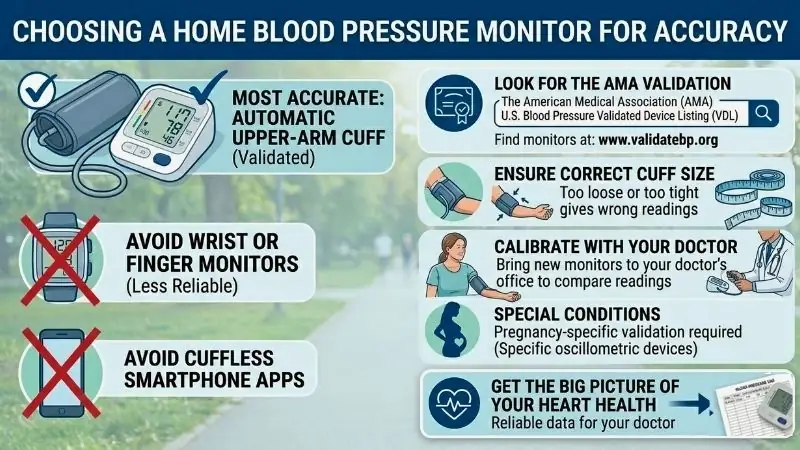
For the most reliable results at home, medical experts recommend using an automatic upper-arm cuff-style monitor. These models are considered significantly more accurate than wrist or finger monitors, which often produce less reliable readings. To ensure your device is truly trustworthy, you should look for one that has been clinically validated for accuracy.
The American Medical Association (AMA) maintains a U.S. Blood Pressure Validated Device Listing (VDL) at www.validatebp.org that identifies monitors meeting strict criteria for independent clinical accuracy. It is also vital to avoid using smartphone apps that claim to measure blood pressure using the phone’s camera or sensors without a cuff, as these technologies are not currently validated for clinical accuracy.
When choosing a monitor, consider these essential factors for accuracy:
- Correct Cuff Size: Ensure the cuff fits your arm properly; a cuff that is too large or too small can result in an inaccurate reading.
- Check with Your Doctor: Before using a new monitor, bring it to your doctor’s office for them to compare it to their professional model to confirm it is accurate.
- Special Conditions: If you are monitoring blood pressure during pregnancy, it is important to use specific oscillometric devices that have been validated for accuracy for that condition.
By using a validated upper-arm monitor, you ensure that the “big picture” of your heart health you share with your doctor is based on the most reliable data possible.
Side Effects & Precautions: When to Call Your Doctor
High blood pressure is often called a “silent killer” because it usually has no warning signs or symptoms. Even if you feel perfectly healthy, your blood pressure log may show numbers that are damaging your heart and brain.
Recognizing a Hypertensive Crisis
A hypertensive crisis is a medical emergency that requires immediate attention. You are in this dangerous category if your top number (systolic) is higher than 180 or your bottom number (diastolic) is higher than 120.
If you see a reading in this range, the sources suggest you follow these steps:
- Wait five minutes and try the test one more time.
- If the second reading is still higher than 180/120, contact your doctor immediately.
- Do not wait to see if the numbers go down on their own.
Other Warning Signs to Watch For
Different health conditions may have different “red flag” numbers. For example, some specialized health centers tell patients to call if their top number is over 150 or their bottom number is over 90 for two days in a row.
Monitoring is also critical during pregnancy. High blood pressure in pregnant individuals can lead to serious complications and requires a validated monitor for the most accurate results.
Always talk to your healthcare team to find out what your specific target blood pressure should be. Record any feelings of stress, pain, or unusual symptoms in the comments section of your blood pressure log book so your doctor can see how you were feeling.
Conclusion: Take Control of Your Heart Health Today

Starting a blood pressure log is a powerful first step in protecting your heart. It helps you manage a condition known as the “silent killer” because high blood pressure often has no warning signs or symptoms. By using a blood pressure tracker, you aren’t just taking notes; you are creating a “big picture” of your heart health over time. This information provides a more detailed look at your health than a single reading taken at a doctor’s office.
Why your tracker is a life-saving tool:
- Better Medical Care: It helps your doctor see if your medications are at the right dose or if you are taking them unnecessarily.
- See Your Progress: You can see exactly how healthy eating, like the DASH plan, or daily exercise, helps lower your numbers.
- Stop Serious Problems: Regular tracking is key to preventing life-changing events like heart attack, stroke, and kidney disease.
- Early Detection: Monitoring yourself at home can help find high blood pressure early, which is crucial for preventing future complications.
Always remember to bring your logbook to every appointment so your healthcare team can give you the best treatment plan. Download your free printable blood pressure log today and start building a healthier future for yourself.
- American Heart Association (AHA) https://www.heart.org
- Centers for Disease Control and Prevention (CDC) https://www.cdc.gov
- AARP https://www.aarp.org
- Cleveland Clinic https://my.clevelandclinic.org
- American Medical Association (AMA) https://www.ama-assn.org
- National Heart, Lung, and Blood Institute (NHLBI) https://www.nhlbi.nih.gov
- British Heart Foundation (BHF) https://www.bhf.org.uk
- Mayo Clinic https://www.mayoclinic.org
- Memorial Sloan Kettering Cancer Center (MSKCC) https://www.mskcc.org
- The Ohio State University (OSU) Wexner Medical Center https://wexnermedical.osu.edu
Trust in your purchase:
Every product featured on our site has been carefully researched and selected based on quality, customer ratings, and positive reviews to ensure you receive excellent value for your money.
Please note:
This post contains affiliate links. If you make a purchase through these links, we may earn a small commission at no additional cost to you. This helps support our site and allows us to continue bringing you valuable content. Thank you!
Thank you for your precious time spent with NobleHomeRemedies.
You may also like:
Is Coffee an Acid or a Base?
Is Coffee an Acid or a Base?: Does Morning Coffee Hurt You? Have you ever…

Oxytocin Benefits and Side Effects
Oxytocin Benefits and Side Effects You Ever Want to Know Everybody catches the love bug…

Keto Breakfast Recipes
Keto Breakfast Recipes: Easy & Delicious Ideas for Mornings Starting your day right is always…

Garlic Cabbage Steaks Recipe
Garlic Cabbage Steaks Recipe: Anti-Inflammation Superfood Turning Humble Cabbage into a Healing Meal Are you…

How to Kill Heavy Mind and Feel Good
Why Heavy Mind?: How to Kill Heavy Mind and Feel Good The first question is…

Daily Calorie Needs Calculator
The Ultimate Daily Calorie Needs Calculator – Calorie Check Maintaining a healthy weight requires you…