
The Best Blood Pressure Monitors for Home Use (Latest Guide)
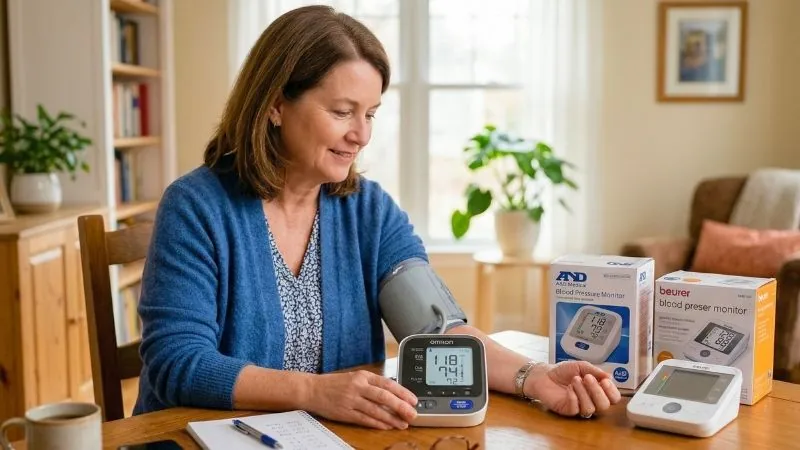
Monitoring your blood pressure at home is one of the most important steps you can take to manage your long-term health. High blood pressure often has no symptoms, yet it can lead to heart attacks, strokes, and kidney disease. By using a reliable home monitor, you can provide your doctor with accurate data that reflects your health in your natural environment, rather than just a single moment in a stressful clinic setting. Other reliable and high authority sources for
If you are looking for the most accurate and easy-to-use device available today, the A&beD Medical Premium Multi-User is the top-rated choice for this year. It has earned perfect scores for accuracy and is clinically validated by the American Medical Association (AMA). For those on a budget who still require high precision, the Omron 3 Series is the leading “simple” alternative.
Critical Selection Rule: Never buy a blood pressure monitor that has not been independently validated. Look for the BIHS (British & Irish Hypertension Society) logo or check the device against the AMA’s Validated Device Listing (VDL) at validatebp.org.
The Deep Science: How Blood Pressure Measurement Works
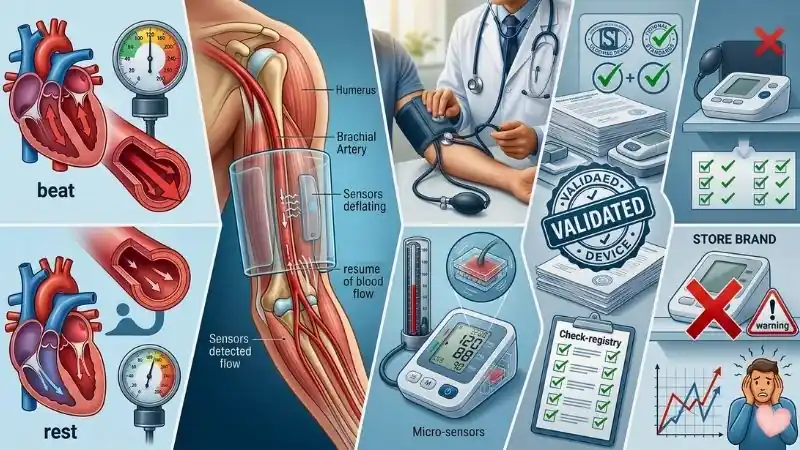
Understanding the “Deep Science” of blood pressure measurement is essential to ensure you don’t buy a “junk” machine. Accuracy depends on the device’s ability to mirror the exact biological pressures occurring within your arteries.
1. The Biological Mechanism: Systolic vs. Diastolic
Blood pressure measurement is the study of force. Every time your heart beats, it pumps blood through your body. The monitor records two specific numbers:
- Systolic Pressure (The Top Number): This measures the pressure in your arteries when your heart beats and pushes blood out.
- Diastolic Pressure (The Bottom Number): This measures the pressure in your arteries when your heart rests between beats.
The target for these numbers is established by clinical experts. For most adults, a “normal” reading is consistently below 120/80 mmHg. If your home monitor consistently shows numbers higher than this, it acts as an early warning system for hypertension (high blood pressure).
2. The Brachial Artery Focus
Most high-quality monitors are designed for the upper arm. The science behind this is anatomical: the brachial artery is the major blood vessel that supplies blood flow to your arm from your heart.
When the cuff inflates, it temporarily stops the blood flow through this artery. As the cuff slowly deflates, sensors (or a nurse using a stethoscope) detect the moment the blood begins to flow again. Upper-arm monitors are recommended by the American Heart Association because they are consistently more accurate than wrist or finger models, which are prone to errors caused by body position.
3. The “Gold Standard” vs. Digital Sensors
To understand if a machine is “junk,” you must understand how accuracy is verified in a lab.
- The Clinical Baseline: In a doctor’s office, a professional uses a manual cuff and a stethoscope. They listen for specific sounds of blood flow through the brachial artery to establish a baseline.
- Digital Mechanics: Home monitors use electronic sensors to detect the vibrations of your blood against the artery wall as the cuff deflates. These vibrations are then converted into the numbers you see on the screen.
4. What Does “Clinically Validated” Actually Mean?
A device labeled “clinically validated” has undergone rigorous, independent testing to prove its sensors match the accuracy of a trained medical professional using a manual cuff.
- Validation Protocols: Independent committees of experts review the device’s documentation to ensure it meets strict international standards, such as those set by the AAMI/ISO/ESH 2018.
- The VDL Criteria: The AMA manages a Validated Device Listing (VDL). This is a non-funded, independent registry. If a device is not on this list or a similar professional list (like BIHS or Hypertension Canada), its accuracy cannot be guaranteed.
5. Why Most “Store Brands” Fail the Science Test
Many unauthorized monitors are sold on online marketplaces. These devices often lack a 510(k) Premarket Notification from the FDA. Without this clearance, the manufacturer has not proven to the government that the device is safe and effective. Using an unauthorized device can result in “skewed results” and “unnecessary stress,” leading to incorrect medical decisions.
The Protocol: Selection and Preparation
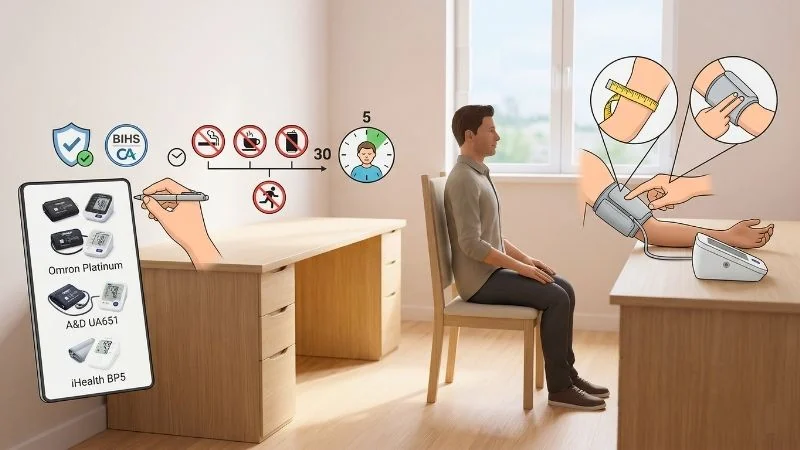
Choosing a blood pressure monitor is not like buying a standard household appliance. The selection process must be clinical and precise. A device that is off by just 5 mmHg could lead to a misdiagnosis or the unnecessary prescription of medication.
1. The Validation Search Protocol
Before looking at price or features, you must verify that the device is clinically validated. This means the machine has been tested by independent doctors to ensure its readings are truthful.
- The VDL Rule: Check the AMA Validated Device Listing (VDL). This is the primary resource used by healthcare organizations to ensure measurement accuracy across patient populations.
- The International Standard: Look for endorsements from the British & Irish Hypertension Society (BIHS) or Hypertension Canada.
- Avoid “Generic” Models: Many online retailers sell non-validated devices that have not passed these rigorous lab tests.
2. Blood Pressure Monitors: Device Specifications Table
The following models have been identified in lab and user tests for their accuracy, comfort, and ease of use.
| Brand | Recommended Models (Clinically Vetted) | Key Features |
|---|---|---|
| A&D / LifeSource | UA651, UA651BLE, UA767, UA1020CN | High reliability, Multi-user modes |
| Omron | 3 Series, 7 Series, 10 Series, Platinum | X7 Smart AFib, Bluetooth syncing |
| HoMedics | BPA-040-0CA, BPA-060-0CA, BPA-110-2CA | Ease of use, high comfort scores |
| Equate | 20457 (BP 3AC1-1), 20557, 20657 | Budget-friendly, standardized accuracy |
| iHealth | DOCK-BP 3, iHealth BP5 | Smartphone integration focus |
3. The “30-Minute” Preparation Rule
Accuracy starts long before you press the “Start” button. You must follow a strict preparation protocol to ensure your body is in a hemodynamic baseline state.
- Zero Stimulants: Do not smoke, drink caffeinated beverages (coffee, tea, soda), or exercise for at least 30 minutes before taking a measurement.
- Bladder Management: Ensure your bladder is empty. A full bladder can artificially inflate your systolic pressure by 10–15 mmHg.
- Physical Rest: You must sit quietly for at least five minutes before starting the test. During this time, do not check your phone, read the news, or talk to others.
- Environment: Choose a quiet space with a comfortable room temperature. Being too cold can cause your blood vessels to constrict, resulting in a falsely high reading.
4. The Cuff Sizing Protocol
The most common reason for inaccurate readings at home is an ill-fitting cuff.
- Upper Arm Only: The American Heart Association explicitly recommends using an automatic, upper-arm cuff-style monitor rather than wrist or finger models.
- The Measurement: Measure the circumference of your bare upper arm halfway between your elbow and shoulder.
- The Fit Check:
- Too Small: If the cuff is too tight, it will give a falsely high reading (overestimation).
- Too Large: If the cuff is too loose, it will give a falsely low reading (underestimation).
- The Two-Finger Rule: You should be able to slide exactly two fingertips between the cuff and your arm once it is positioned.
5. Environmental Calibration
Set up your “testing station” to meet these clinical requirements:
- A chair with a firm back (avoid soft sofas).
- A table or desk that allows your arm to rest at heart level.
- A floor surface that allows your feet to be flat (no crossing legs).
Application: The Clinical 7-Step Procedure
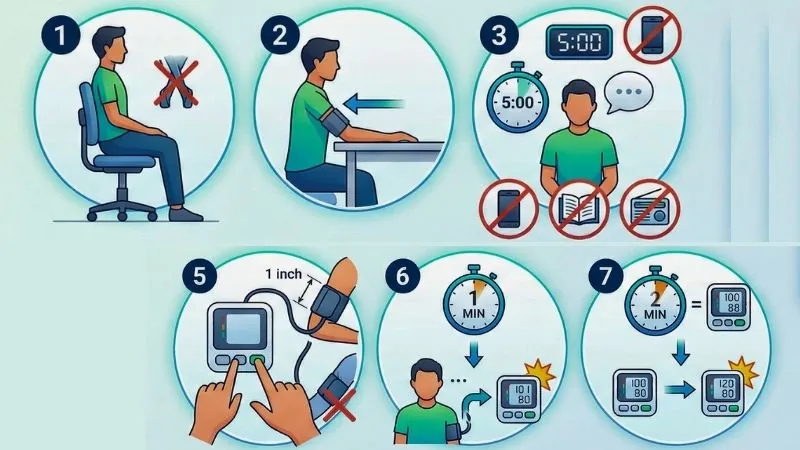
To move beyond “junk” results, you must transform your home environment into a controlled clinical setting. Accuracy is not just about the machine; it is about the application protocol. Following these seven steps ensures your data is actionable for your healthcare provider.
1. The Hemodynamic Reset (Step-by-Step)
- Step 1: Physical Stillness: Sit in a chair with your back supported and feet flat on the floor. Do not cross your legs, as this can increase blood pressure by compressing veins.
- Step 2: The Brachial Alignment: Rest your arm on a flat surface (like a table) so that the upper arm is at heart level.
- Step 3: The 5-Minute Silent Rest: You must remain completely still and silent for five minutes before pressing the start button. During this time, do not use your smartphone, read, or listen to the radio, as cognitive engagement can cause “pressor responses” that spike readings.
- Step 4: Bare Skin Application: Place the cuff directly on your bare arm, approximately 1 inch above the bend of your elbow. Positioning the cuff over clothing is a [CRITICAL GAP] in protocol that can cause errors of up to 40 mmHg.
- Step 5: The First Reading: Press the start button. Remain silent and do not move until the cuff fully deflates.
- Step 6: The “One-Minute Gap” Rule: Take a second reading one minute after the first. Lab tests indicate that the first reading is often artificially high due to the “startle response” of the cuff inflating.
- Step 7: Averaging & Documentation: Average the two readings. Record the date, time, and the average result in a log or sync it via Bluetooth if using a smart device like the Omron X7 Smart AFib.
2. Measurement Schedule
Healthcare professionals typically recommend a “7-Day Protocol” for new monitoring or medication adjustments:
- Morning: Take two readings before breakfast and before taking any blood pressure medications.
- Evening: Take two readings before dinner or before bed.
- Consistency: Perform this for seven consecutive days to provide a statistically significant average for your doctor.
Strict Safety Profile & Demographic Warnings
While home monitoring is generally safe, there are specific clinical risks and limitations that users must understand to prevent medical errors.
1. The Wrist Monitor Restriction
The American Heart Association (AHA) explicitly recommends automatic, upper-arm cuff-style monitors.
- Demographic Warning: Wrist monitors are generally less accurate and are highly sensitive to body position. They are only recommended for patients with physical limitations (e.g., extremely large arm circumference or physical injuries) that prevent an upper-arm cuff from fitting.
- Risk: If your wrist is not held exactly at heart level during the test, the reading will be false, potentially leading to over-medication.
2. Irregular Heartbeat (AFib) Detection
Not all monitors can detect underlying cardiac issues. High-performance models like the Omron X7 Smart and Omron M3 Comfort include sensors for Atrial Fibrillation (AFib).
- Clinical Warning: If your monitor displays an “Irregular Heartbeat” icon frequently, do not ignore it. This is a safety feature designed to alert you to potential arrhythmias that require an EKG for confirmation.
3. Hypertensive Crisis Protocol
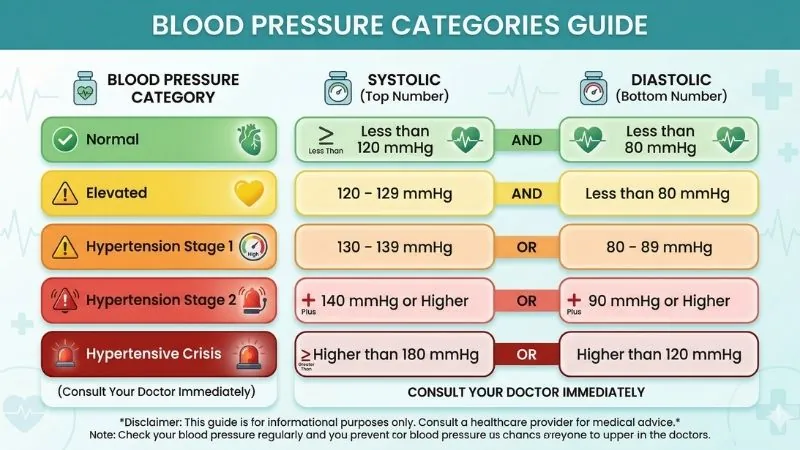
If your monitor shows a systolic number (top) of 180 or higher OR a diastolic number (bottom) of 120 or higher, this is considered a Hypertensive Crisis.
- Immediate Action: Wait five minutes and test again.
- Emergency Threshold: If the numbers remain at or above 180/120, contact your doctor immediately.
- Red-Flag Symptoms: Seek emergency care (911) if these high numbers are accompanied by chest pain, shortness of breath, numbness/weakness, or difficulty speaking.
4. Blood Pressure Category Reference Table
Use this clinical table to interpret your results at home.
Understanding the Different Types of Blood Pressure Monitors
Choosing the right type of blood pressure monitor is the first step toward getting accurate readings. While they all measure the same thing—the force of your blood against your artery walls—how they operate and the features they offer vary significantly.
1. Manual Blood Pressure Monitor
The manual blood pressure monitor (also known as a traditional analogue sphygmomanometer) is the device most people recognize from the doctor’s office.
- How it Works: A healthcare professional wraps a cuff around your arm and inflates it by squeezing a rubber bulb. They then listen to the sounds of blood flow through your brachial artery using a stethoscope while slowly deflating the cuff.
- Pros: It remains the clinical gold standard used to verify the accuracy of all other devices.
- Cons: It is very difficult to use on yourself at home because it requires training to listen for specific “blood sounds” to get a correct reading.
2. Electronic (Digital) Blood Pressure Monitor
Most monitors sold for home use today are electronic blood pressure monitors.
- How it Works: These devices use electronic sensors to detect vibrations in your artery walls rather than listening for sounds. The results are displayed instantly on a digital screen.
- Pros: They are designed to be user-friendly with large screens and easy-to-read numbers, making them ideal for seniors or those with vision changes.
- Cons: They rely on digital sensors that can lose accuracy over time, so they should be checked or recalibrated every one to two years.
3. Automatic Blood Pressure Monitor
The automatic blood pressure monitor is a type of electronic device recommended by the American Heart Association (AHA) for home monitoring.
- How it Works: Unlike manual cuffs, you do not need to squeeze a bulb to inflate it. You simply press a single button, and the device automatically inflates the cuff to the correct pressure and deflates it on its own.
- Pros: This “set-it-and-forget-it” method is the easiest way to ensure the cuff is inflated consistently every time.
- Key Models: Highly-rated automatic models include the A&D Medical Premium Multi-User and the Omron 3 Series.
4. Smart Blood Pressure Monitor
A smart blood pressure monitor is an automatic device that adds advanced technology and connectivity.
- How it Works: These devices use Bluetooth or Wi-Fi to sync your readings directly to a smartphone app.
- Pros: They are excellent for data tracking. Apps like Omron Connect or iHealth MyVitals store an unlimited history of your readings, allowing you to share a tap-button report with your doctor during your next visit.
- Advanced Features: Some high-end smart monitors, like the Omron Complete, also offer EKG readings or advanced screening for Atrial Fibrillation (AFib), giving you deeper insight into your heart health.
Frequently Asked Questions: Troubleshooting Your Measurements
Conclusion: The Gold Standard for Home Monitoring
To ensure you are not buying “junk,” your device selection must be based on clinical validation, not price or extra “smart” features. The consensus among the AHA, AMA, and British Heart Foundation is clear: an automatic upper-arm monitor used with a strict 5-minute rest protocol is the only way to get medical-grade data at home.
Final Selection Checklist:
- Clinically Validated: Check for VDL or BIHS certification.
- Correct Cuff Size: Measure your arm circumference before ordering.
- Automatic Inflation: Avoid manual “bulb” style pumps, which can increase stress.
- Data Sharing: Choose a model like the Omron X7 or A&D UA-651BLE if you need to sync results directly with your doctor via Bluetooth.
Final Medical Disclaimer: This guide is for informational purposes only. It is not a substitute for professional medical advice, diagnosis, or treatment. Always seek the advice of your physician or other qualified health provider with any questions you may have regarding a medical condition.
- Best Blood Pressure Monitors of 2026 https://www.aarp.org
- Best Home Blood Pressure Monitors of 2026 – Consumer Reports https://www.consumerreports.org
- Best blood pressure monitors for home use in 2026 – Which? https://www.which.co.uk
- Home Blood Pressure Monitoring | American Heart Association https://www.heart.org
- Home | Validate BP https://validatebp.org
- How to choose a blood pressure monitor – BHF https://www.bhf.org.uk
- NHS England » Home blood pressure monitoring https://www.england.nhs.uk
- OMRON Blood Pressure Monitors & Blood Pressure Reader | OMRON UK https://www.omron-healthcare.co.uk
- Omron Blood Pressure Monitors: Our 2026 Review https://www.ncoa.org
- Recommended Devices – Public – Hypertension Canada https://hypertension.ca
- The 6 Best Blood Pressure Monitors for Easy At-Home Use of 2026 https://www.health.com
- Buy Blood Pressure Monitors Online for Home in Canada https://www.biosmedical.com
Trust in your purchase:
Every product featured on our site has been carefully researched and selected based on quality, customer ratings, and positive reviews to ensure you receive excellent value for your money.
Please note:
This post contains affiliate links. If you make a purchase through these links, we may earn a small commission at no additional cost to you. This helps support our site and allows us to continue bringing you valuable content. Thank you!
Thank you for your precious time spent with NobleHomeRemedies.
You may also like:

Causes of Fordyce Spots
4 Main Causes of Fordyce Spots: Unraveling the Mystery Fordyce Spots – those tiny, pale,…

When To Worry About Varicose Veins
When To Worry About Varicose Veins: How to Prevent at Home If you have noticeable…
Blood Pressure Log & Tracker
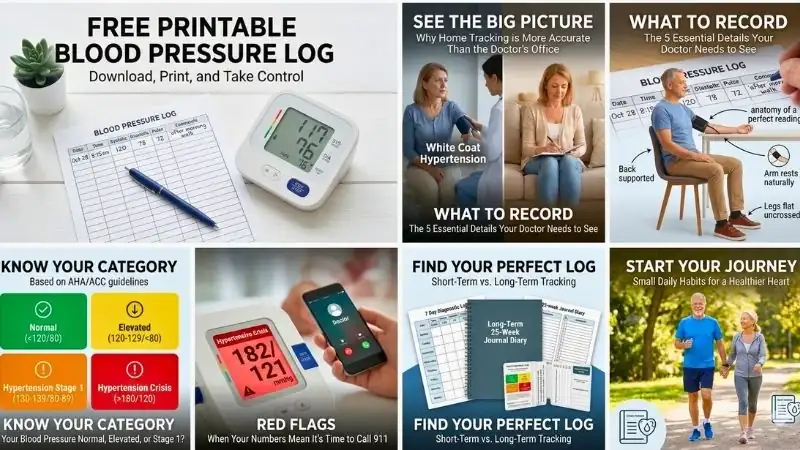
Free Printable Blood Pressure Log & Tracker (PDF Download) Did your doctor ask you to…

Keto Breakfast Recipes
Keto Breakfast Recipes: Easy & Delicious Ideas for Mornings Starting your day right is always…

COVID-19 CoronaVirus Symptoms: Prevention, and Awareness
Discvoer: COVID-19 CoronaVirus Symptoms: Prevention, and Awareness The outbreak of the COVID-19 Coronavirus is a…

Easy Clean Eating Breakfast Ideas
Fuel Your Morning: 40+ Easy Clean Eating Breakfast Ideas Start Your Day Right: Mastering the…