
8 Useful Vertigo Home Remedies

This article explores traditional home remedies for informational purposes only and is not a substitute for professional medical advice. Please note that some links below are affiliate links; we may earn a small commission if you purchase them, at no extra cost to you. Read our full Medical Disclaimer and Affiliate Disclosure here.
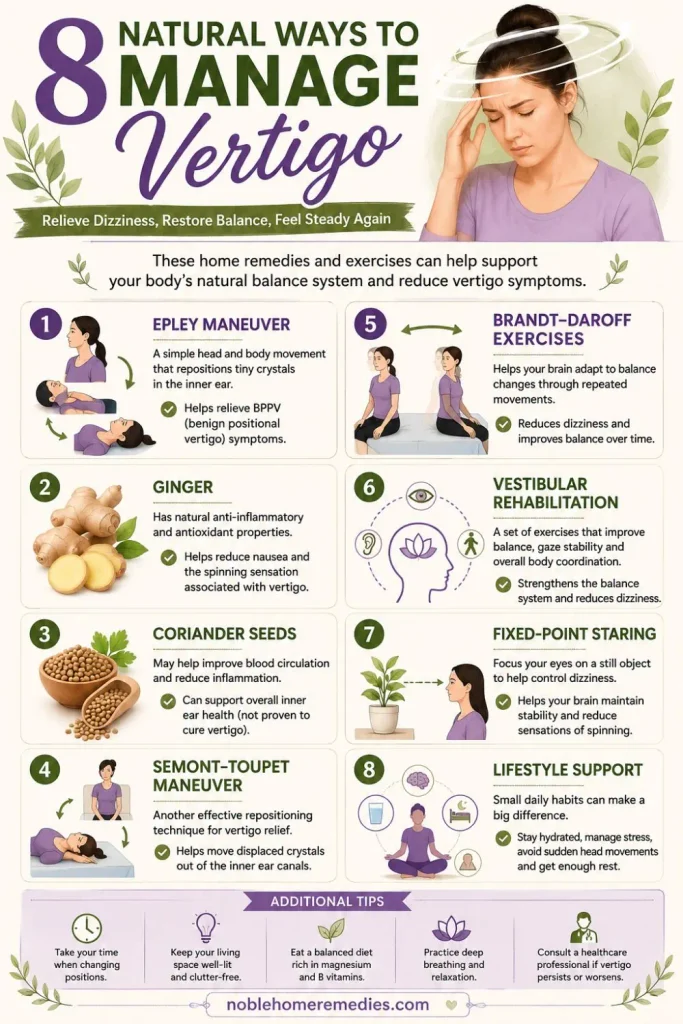
Vertigo is more than just feeling dizzy. It can make you feel as if you or the room around you is spinning, even when you are standing still. This feeling can affect your balance and make everyday tasks harder.
Many people with vertigo can find relief with simple home care, especially when a common inner ear problem causes it. Learning what causes vertigo and knowing which home remedies may help can make it easier to manage your symptoms.
In this guide, you’ll learn what vertigo is, what may cause it, and simple, evidence-based home remedies that may help reduce dizziness and improve your balance. You’ll also learn when it is important to seek medical care.
What is Vertigo
Vertigo is not a disease. It is a symptom that makes you feel as if you or the world around you is spinning or moving when nothing is actually moving. This false feeling of motion happens because the body’s balance system is not working as it should.
Most cases of vertigo start in the inner ear, which helps your brain understand your body’s position and movement. Sometimes, vertigo can also be caused by problems in the brain or nervous system.
Common symptoms of vertigo include:
- A spinning or whirling feeling
- Loss of balance or feeling unsteady
- Dizziness that gets worse when you move your head
- Nausea or vomiting
- Trouble walking or standing
- Sweating or feeling lightheaded
Vertigo can last from a few seconds to several hours, depending on the cause. Some people have only one episode, while others may experience repeated attacks.
Knowing what is causing your vertigo is important because the best treatment depends on the underlying cause. While many people can manage mild vertigo with home remedies and simple exercises, some types of vertigo need medical treatment.
Vertigo Causes and Symptoms
Vertigo can happen for many reasons. Most cases are caused by problems in the inner ear, which helps control your balance. Less often, vertigo can be linked to conditions that affect the brain or nervous system.
Common Causes of Vertigo
Benign Paroxysmal Positional Vertigo (BPPV)
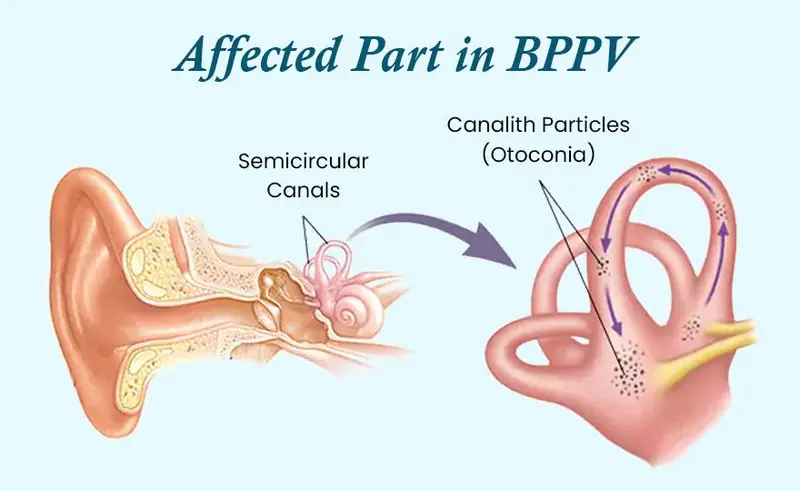
BPPV is the most common cause of vertigo. It happens when tiny calcium crystals in the inner ear move into the wrong place. When you change the position of your head, these crystals send the wrong signals to your brain. This can make you feel as if the room is spinning.
Common symptoms:
- Brief spinning episodes, often lasting less than a minute
- Dizziness when rolling over in bed, looking up, or bending down
- Loss of balance
- Nausea
Inner Ear Infection (Vestibular Neuritis or Labyrinthitis)
An infection or inflammation in the inner ear can affect the balance nerves. This makes it harder for your brain to understand your body’s position, leading to vertigo.
Common symptoms:
- Sudden, severe dizziness
- Trouble walking or standing
- Nausea and vomiting
- Hearing changes or ringing in the ear (more common with labyrinthitis)
Ménière’s Disease
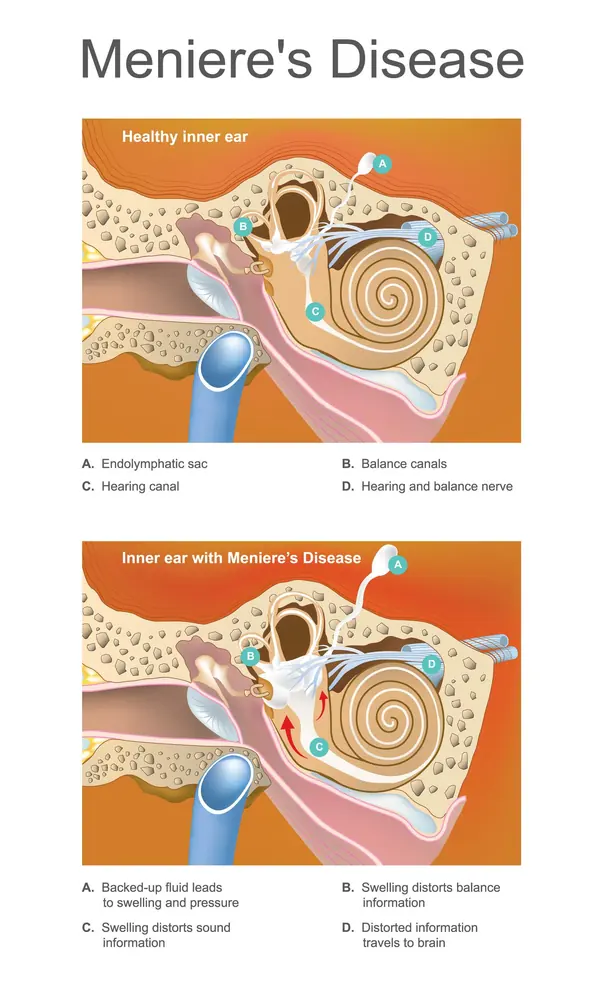
This condition is thought to be caused by a buildup of fluid in the inner ear. The extra fluid can affect both balance and hearing.
Common symptoms:
- Repeated attacks of vertigo
- Ringing in the ear (tinnitus)
- A feeling of fullness or pressure in one ear
- Hearing loss that may come and go
Migraine-Related Vertigo
Some people with migraines also experience vertigo. The dizziness may happen before, during, or after a migraine headache. In some cases, vertigo occurs without a headache.
Common symptoms:
- Spinning or dizziness
- Sensitivity to light or sound
- Headache
- Feeling sick to your stomach
Head Injury
A fall or blow to the head can damage the inner ear or the parts of the brain that help control balance. Vertigo may start right away or develop later.
Common symptoms:
- Dizziness after an injury
- Balance problems
- Headache
- Nausea
General Symptoms of Vertigo
Although symptoms vary depending on the cause, many people experience:
- A spinning or whirling feeling
- Loss of balance or unsteadiness
- Dizziness that gets worse with head movement
- Nausea or vomiting
- Difficulty walking
- Sweating
- Feeling as if you may fall
If your vertigo is severe, lasts for many hours, keeps coming back, or is accompanied by symptoms such as weakness, numbness, trouble speaking, double vision, or a severe headache, seek medical care immediately. These symptoms may be caused by a more serious condition that needs urgent treatment.

Here are the vertigo home remedies you could use to stop vertigo symptoms when they occur:-
Epley Maneuver or Canalith repositioning maneuver
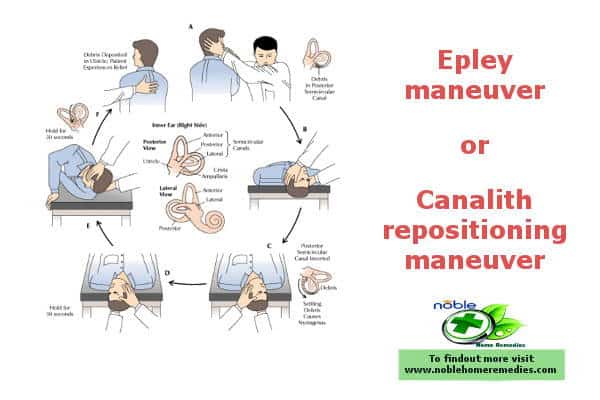
Epley Maneuver (Canalith Repositioning Maneuver)
The Epley maneuver is one of the most effective home treatments for Benign Paroxysmal Positional Vertigo (BPPV). It is designed to move tiny calcium crystals (called otoconia) out of the balance canals in your inner ear and back to the area where they belong.
When these crystals move into the wrong part of the inner ear, they send false signals to your brain. This makes you feel as if the room is spinning when you turn your head. The Epley maneuver uses a series of slow head and body movements to guide the crystals back into place.
Benefits of the Epley Maneuver
- May stop or reduce spinning sensations caused by BPPV
- Helps restore normal balance
- Can reduce nausea caused by vertigo
- Often works after one or more sessions
- Can help many people avoid unnecessary medication
How to Perform the Epley Maneuver
Before you begin: If you are not sure which ear is causing your vertigo, talk to your healthcare provider before trying this exercise.
- Sit upright on your bed with your legs stretched out in front of you.
- Turn your head 45 degrees toward the affected ear.
- Keeping your head turned, quickly lie back so your shoulders are on the bed and your head hangs slightly over the edge. Hold this position for 30 to 60 seconds, or until the spinning stops.
- Without lifting your head, slowly turn it 90 degrees toward the opposite side. Hold for 30 to 60 seconds.
- Roll your body onto the same side you are facing, so you are looking down toward the floor. Hold for 30 to 60 seconds.
- Slowly sit up and remain seated for a few minutes before standing.
Why It Works
Each position uses gravity to gently move the loose calcium crystals through the inner ear. Once the crystals return to their proper place, they no longer send false balance signals to your brain. As a result, the spinning feeling often improves or goes away.
Helpful Tips
- Move slowly between each position.
- If you feel dizzy, wait until it settles before moving to the next step.
- It is normal to feel brief spinning during the exercise.
- If your symptoms do not improve after several attempts, or if they become worse, stop the exercise and contact your healthcare provider.
Repeat for a maximum of 3 times in one go. This exercise, consequently, will help to stop vertigo symptoms.
Important: The Epley maneuver is most helpful for BPPV. It may not work if your vertigo is caused by an inner ear infection, Ménière’s disease, migraines, or another medical condition.
Pro Tip: If your vertigo occurs when you turn your head, roll over in bed, or look up, it may be caused by BPPV. The Epley maneuver is specifically designed for this type of vertigo and is one of the first treatments healthcare providers recommend. If you’re unsure whether you have BPPV, ask your healthcare provider for an evaluation before trying the maneuver on your own.
Ginger for vertigo

Ginger is a popular home remedy that may help ease nausea and dizziness, which are common symptoms of vertigo. It has been used for centuries to support digestion and reduce motion sickness.
While ginger does not treat the underlying cause of vertigo, some people find that it helps them feel more comfortable during an episode.
Why Ginger May Help
Ginger contains natural compounds called gingerols and shogaols. These compounds may help calm the stomach and reduce nausea. Some research also suggests that ginger may improve blood flow, although more studies are needed to understand its effect on vertigo.
Benefits of Ginger
- May help reduce nausea caused by vertigo
- May ease mild dizziness in some people
- Supports healthy digestion
- Easy to prepare and use at home
How to Use Ginger
You can enjoy ginger in several ways:
- Ginger tea: Steep a few slices of fresh ginger in hot water for 5 to 10 minutes. Drink it warm.
- Fresh ginger: Add grated ginger to soups, stir-fries, or smoothies.
- Ginger capsules: Follow the dosage instructions on the product label or ask your healthcare provider if they are right for you.
- Crystallized or candied ginger: A small amount may help settle your stomach, but remember that it often contains added sugar.
Helpful Tips
- Sip ginger tea slowly if you feel nauseous.
- Drink plenty of water to stay hydrated, especially if you have been vomiting.
- If ginger upsets your stomach or makes your symptoms worse, stop using it.
Important: Ginger may help relieve nausea, but it is not a cure for vertigo. If your symptoms are severe, keep coming back, or are accompanied by hearing loss, trouble speaking, weakness, or severe headaches, seek medical care promptly.
Semont-Toupet Maneuver
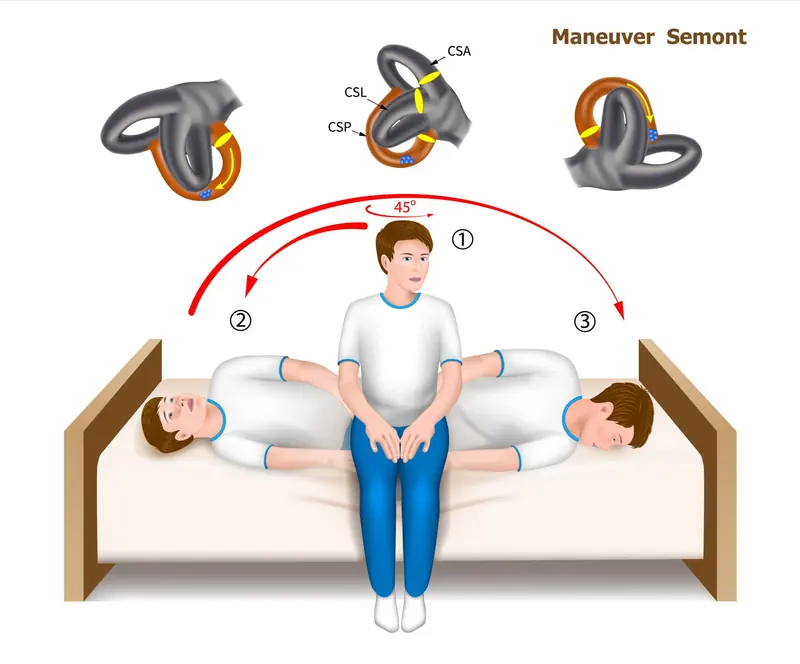
The Semont-Toupet maneuver, also called the Semont maneuver, is another exercise used to treat Benign Paroxysmal Positional Vertigo (BPPV). It uses quick body movements to help move loose calcium crystals (otoconia) out of the balance canals in the inner ear and back to where they belong.
This maneuver may be recommended if the Epley maneuver does not relieve your symptoms or if your healthcare provider feels it is a better option for your type of BPPV.
Benefits of the Semont-Toupet Maneuver
- May reduce or stop the spinning feeling caused by BPPV
- Helps move loose calcium crystals back into place
- May improve balance and reduce dizziness
- Does not require special equipment
- Can often be performed at home after learning the correct technique
How to Perform the Semont-Toupet Maneuver
Before you begin: This example is for right-sided BPPV. If your left ear is affected, reverse the directions.
- Sit upright on the edge of a bed.
- Turn your head 45 degrees to the left (away from the affected right ear).
- Quickly lie down on your right side while keeping your head turned. Your face should be pointing upward. Hold this position for 30 to 60 seconds, or until the spinning stops.
- Without changing the position of your head, quickly move across the bed onto your left side in one smooth motion. Your face should now be pointing downward toward the bed. Hold this position for 30 to 60 seconds.
- Slowly return to a sitting position and remain seated for a few minutes before standing.
Why It Works
The quick change in body position uses gravity and momentum to move the loose calcium crystals out of the semicircular canal. Once the crystals return to their normal location, they stop sending false balance signals to your brain, helping reduce the spinning sensation.
Helpful Tips
- Perform the movements smoothly but quickly, as directed.
- You may feel brief dizziness during the exercise. This is common and usually lasts only a short time.
- Rest for a few minutes after completing the maneuver before walking.
- If your symptoms continue after several attempts or become worse, contact your healthcare provider.
Important: The Semont-Toupet maneuver is designed for BPPV. It is not intended for vertigo caused by Ménière’s disease, vestibular neuritis, migraines, stroke, or other medical conditions. If you are unsure of the cause of your vertigo, get a proper diagnosis before trying this maneuver.
Coriander Seeds for Vertigo

Coriander seeds have been used in traditional medicine for many years to support digestion and overall well-being. Although there is no strong scientific evidence that coriander seeds treat vertigo, some people drink coriander seed tea because they believe it helps them feel more comfortable during dizzy spells.
If you choose to try coriander seeds, use them as a supportive home remedy and not as a replacement for medical care or treatments recommended by your healthcare provider.
Why Coriander Seeds May Help
Coriander seeds contain natural plant compounds with antioxidant and anti-inflammatory properties. While these properties may support general health, researchers have not proven that coriander seeds can relieve the spinning sensation caused by vertigo.
Possible Benefits
- May promote relaxation and general well-being
- May support healthy digestion, especially if nausea upsets your stomach
- Easy to prepare at home
- Naturally caffeine-free
How to Make Coriander Seed Tea
- Lightly crush 1 teaspoon of coriander seeds.
- Add the seeds to 1 cup of boiling water.
- Cover and let the tea steep for 5 to 10 minutes.
- Strain the tea and allow it to cool slightly.
- Drink it warm once or twice a day if desired.
Helpful Tips
- Drink the tea slowly if you are feeling nauseous.
- Stay well hydrated throughout the day, as dehydration can make dizziness worse.
- Stop using coriander seeds if they cause stomach discomfort or an allergic reaction.
Important: Coriander seeds have not been proven to treat vertigo. If your symptoms are severe, last for more than a few hours, keep returning, or occur with hearing loss, weakness, numbness, trouble speaking, or a severe headache, seek medical care promptly.
Brandt-Daroff Exercise
This exercise is a vertigo treatment to do at home for people with Benign Paroxysmal Positional Vertigo. This is a simple exercise you could do without any supervision.
Make sure you are in a safe place to do this exercise. Because while doing this exercise, you may get more dizzy for a short time.
Here are the steps for the Brandt-Daroff exercise: –
- Sit upright, legs outstretched, on a flat surface.
- Turn your head to the left and lay your head down by looking up. Be in this position for 30 seconds
- Bring your head back to the original position.
- Now repeat the same exercise in the opposite (right) direction.
- You could do up to 5 times at one go to stop vertigo. Repeat 3 times a day, but just twice a week.
Ginkgo Biloba Leaves For Vertigo
Ginkgo Biloba leaves date back thousands of years and are known for various treatments, including vertigo. In the United States, many take Ginkgo biloba as a supplement to sharpen their thinking and memory. It also boosts blood flow and acts as an antioxidant. This can be used for Peripheral or Central vertigo conditions.
Ginkgo Biloba leaf extracts are available in pharmacies in the form of capsules and liquids. An intake of 240 mg of this extract every day helps to stop vertigo symptoms.
Vestibular Rehabilitation Therapy
Studies and practices have shown that vestibular rehabilitation therapy is effective in treating inner ear balance (vestibular) disorders. People with vestibular disorders do complain of vertigo, visual disturbance, and dizziness.
Vestibular disorders make your life difficult; you will struggle to focus and carry out your day-to-day work efficiently.
Vestibular Rehabilitation is, therefore, an exercise program to provide relief from vestibular disorders. If you wish to opt for vestibular rehabilitation in relation to vertigo disorder, always get assistance from a doctor.
Staring at a Fixed Point
When you have a vertigo attack, try to stare at a fixed point. This will give a signal to your brain that you are not moving and helps to calm your dizziness and spinning symptoms of vertigo.
At times, natural vertigo home remedies may not be sufficient. Hence, when you realize that vertigo symptoms are prolonged, do contact a physician for consultation.
Chiropractic Treatment for Vertigo
This is not a home remedy. But a remedy without the use of drugs or surgery. The trained chiropractor carries out the chiropractic adjustment procedure. This is another effective solution for vertigo.
Trust in your purchase:
Every product featured on our site has been carefully researched and selected based on quality, customer ratings, and positive reviews to ensure you receive excellent value for your money.
Thank you for your precious time spent with NobleHomeRemedies.
You may also like:

Anti inflammatory Diet
The Anti-Inflammatory Diet Foods: A Powerful Tool for Health Inflammation is a natural process in…

Does Almond Milk Cause Constipation
Does almond milk cause constipation? Truth is Revealed If you’re reading this, you may be…

Natural Urinary Tract Infections Remedies
Natural Remedies for Urinary Tract Infections – What Really Works? A urinary tract infection can…

Honey for sore throat with Lemon
Honey and Lemon Warm Water Benefits for Sore Throat Feeling that familiar tickle or scratch…

Home Remedies for Impetigo
5 Best Home Remedies for Impetigo : Help Your Way Through Impetigo is a highly…

Alkaline Smoothie Recipes
Alkaline Smoothie Recipes: Easy Fruit & Green Blends Eating more whole plant foods is a…
These are some things that might help my daughter who suffers from episodes of such terrible Vertigo, which can hit her at anytime, any place and anywhere. Sometimes even can wake her from sleeping or just plain sitting down it can hit her and sometimes lasts for several hours. Thank you.