
Alkaline Water Recipe: How to Make It at Home
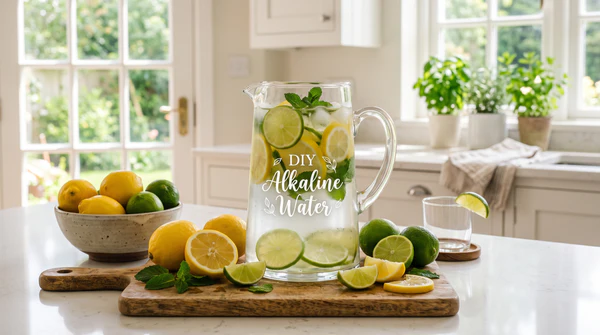
Drinking enough water every day is one of the simplest ways to care for your health. Recently, alkaline water has become a popular topic in health and wellness. Store-bought bottled alkaline water can cost several dollars per bottle, but you can easily make your own diy alkaline water recipe at home for just a few cents.
In this guide, you will learn easy, safe, and affordable ways to make alkaline water in your own kitchen.
1. What Is Homemade Alkaline Water?
Water is measured on a pH scale from 0 to 14:
- Acidic: pH below 7.0
- Neutral: pH of 7.0 (like plain distilled water)
- Alkaline: pH above 7.0
Standard tap water usually sits between pH 6.5 and 7.5. Alkaline water typically has a pH between 8.0 and 9.5. It often contains mineral compounds like calcium, magnesium, potassium, or bicarbonate.
What Does Science Say?
It is important to understand what alkaline water can and cannot do:
- What research suggests: Studies show that water with a pH of 8.8 can help neutralize pepsin, the enzyme responsible for acid reflux, offering mild symptom relief. Small trials also suggest higher-pH mineral water may support cellular hydration during exercise.
- What your body already does: Alkaline water does not change your blood pH. Your body tightly regulates its internal balance between pH 7.35 and 7.45 using your kidneys and lungs.
Making your own alkaline water is simply a cost-effective way to enjoy refreshing, mineralized water at home. If you are new to plant-based nutrition, feel free to explore our complete guide on the Alkaline Diet for Beginners.
2. The Golden Rule: Always Start with Clean, Filtered Water
Before trying any alkaline water recipe, there is one golden rule to follow: always start with clean, filtered water.
Why Tap Water Needs Filtration
Municipal tap water is safe to drink, but it often contains chlorine, heavy metals, or minor organic impurities. These elements can alter the taste of your drink and interfere with the minerals you add.
Using purified water creates a neutral, clean base for your recipe.
Easy Filtering Options
You do not need an expensive home system. Simple choices include:
- Water Filter Pitchers: Carbon-filter pitchers easily reduce chlorine, lead, and bad odors.
- Reverse Osmosis (RO) Systems: RO filters purify tap water by removing heavy metals and dissolved solids.
- Boiled Water: Boiling plain tap water drives off dissolved carbon dioxide, which slightly raises the water’s pH (around 7.5 to 8.0) while removing chlorine taste.
Once your water is clean and fresh, you are ready to prepare your homemade recipe!
3. Recipe 1: The Baking Soda Method (Fastest & Most Affordable)
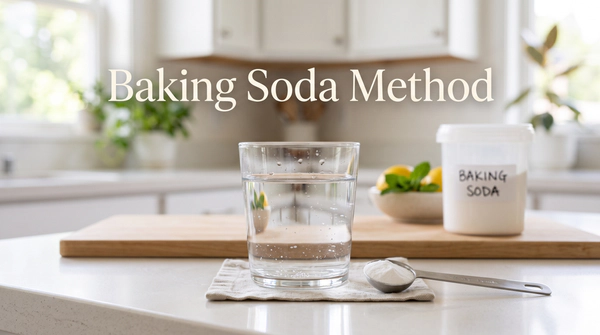
Adding baking soda to plain water is the fastest and most budget-friendly alkaline water recipe you can make. Baking soda (sodium bicarbonate) is naturally alkaline with a pH around 9.0. When dissolved, it instantly lifts the pH level of your drink.
Ingredients & Exact Ratios
- Single Glass (8 to 10 oz): Add 1/8 teaspoon (about 600 mg) of fresh baking soda to 8–10 oz of cold filtered water.
- One Gallon Batch: Add 1/2 teaspoon of baking soda to 1 gallon of filtered water.
Step-by-Step Preparation
- Measure: Pour 8 to 10 ounces of filtered water into a clean glass. Add 1/8 teaspoon of baking soda.
- Stir: Stir vigorously with a spoon for 30 seconds until the powder is fully dissolved and the water turns clear.
- Test: Dip a pH test strip into the glass. The water should read between 8.0 and 9.0 pH.
Taste Profile & Quick Tips
- Taste: Baking soda gives water a slightly salty or mineral-like taste.
- Freshness: Drink it right away or store it in a sealed glass jar in the refrigerator for up to 24 hours.
> Safety & Precautions: Baking soda contains sodium (about 150 mg of sodium per 1/8 teaspoon). If you have high blood pressure, heart conditions, or kidney disease, or follow a sodium-restricted diet, check with your doctor before trying this method. Never exceed 1/4 teaspoon per liter, as consuming too much baking soda can cause stomach upset, gas, or temporary digestive discomfort.
4. Recipe 2: Fresh Lemon Infusion (The Natural Approach)
Using fresh lemons is a popular way to make a refreshing diy alkaline water recipe without adding any sodium.
How Does Acidic Lemon Make Water Alkaline?
Lemons have a low pH outside the body (around pH 2.0 to 3.0) because of citric acid. However, when your body digests lemon water, the citric acid is broken down into carbon dioxide and water. This leaves behind an alkaline mineral ash rich in potassium, magnesium, and calcium. This natural process creates an alkalizing effect after digestion.
Step-by-Step Preparation
- Slice the Lemon: Wash one fresh organic lemon thoroughly. Slice it into thin wheels or wedges. Keep the peel on, as the peel contains beneficial trace minerals.
- Infuse: Place the lemon slices into 1 quart (32 oz) or 1 gallon of cold filtered water. Do not squeeze the lemons—let them steep naturally.
- Wait: Cover your glass pitcher and let it sit at room temperature for 8 to 12 hours (or overnight).
- Serve: Strain out the lemon slices and enjoy your infused drink throughout the day.
Health Benefits & Dental Safety Tip
- Added Nutrients: Lemon water provides natural vitamin C, antioxidants, and a clean citrus taste.
- Protect Your Teeth: Because fresh lemon water is slightly acidic in your mouth before metabolism, citric acid can weaken tooth enamel over time. To protect your enamel, drink through a straw or rinse your mouth with plain water right after drinking.
5. Recipe 3: Food-Grade pH Mineral Drops (Sodium-Free & Precise)
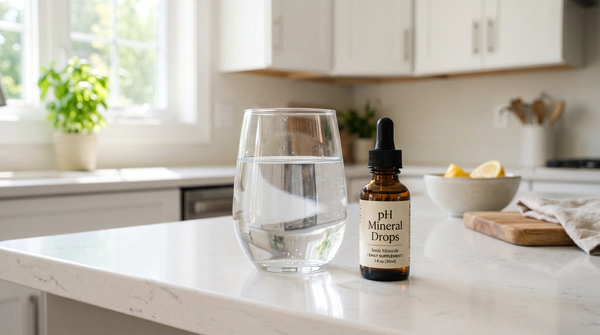
If you travel often or want exact pH control without adding sodium, food-grade pH mineral drops are an easy choice. These liquid drops contain concentrated alkaline minerals like potassium, magnesium, and calcium.
Ingredients & Exact Ratios
- Single Glass (8 to 10 oz): Add 2 to 4 drops of food-grade pH drops to 8–10 oz of filtered water.
- One Gallon Batch: Follow the specific label directions on your bottle (typically 15 to 20 drops per gallon).
Step-by-Step Preparation
- Fill: Pour 8 to 10 ounces of clean filtered water into a glass.
- Add: Squeeze 2 to 4 drops into the water.
- Stir: Stir briefly for 10 seconds.
- Test: Dip a pH test strip to verify your water has reached a target pH between 8.5 and 9.5.
Best For & Safety Handling
- Best For: Anyone watching their sodium intake, people who travel, or those who want a flavorless drink.
- Safety Caution: Commercial pH drops are highly concentrated liquids. Never place undiluted drops directly on your skin or tongue, as pure alkaline concentrates can cause skin irritation or burns. Always store the bottle tightly closed and keep it out of reach of children.
6. Recipe 4: Cucumber & Himalayan Pink Salt Infusion (Mild & Refreshing)
For a gentle, spa-like drink, you can combine fresh cucumber slices with a small pinch of mineral-rich Himalayan pink salt. This method creates a mildly alkaline drink with a clean, crisp flavor.
How It Works
Cucumbers naturally release small amounts of minerals like calcium, potassium, and magnesium into water. Adding a tiny pinch of Himalayan pink salt provides natural trace minerals that gently elevate the pH level to around 7.5 to 8.2.
Step-by-Step Preparation
- Slice: Wash and thinly slice 1/2 of a fresh organic cucumber (leave the peel on).
- Infuse: Place the cucumber slices into a glass pitcher filled with 1 quart (32 oz) of cold filtered water.
- Pinch: Add a tiny pinch (1/8 teaspoon or less) of Himalayan pink salt or unrefined sea salt.
- Chill: Refrigerate the pitcher for 2 to 4 hours so the minerals and mild flavor infuse into the water.
- Serve: Pour into a glass over ice and enjoy.
Why People Love This Method
- Gentle on Digestion: It provides a subtle pH boost that is very mild on your stomach.
- Refreshing Taste: The light cucumber flavor makes it easy to stay hydrated all day long.
7. How to Test and Measure Water pH at Home
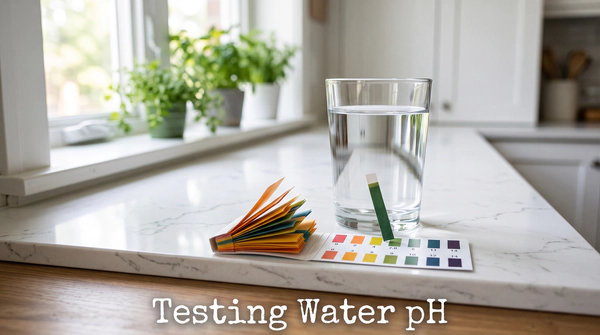
To make sure your homemade alkaline water is safe and effective, it is a good idea to test its pH level before drinking.
Choosing a Testing Method
- pH Test Strips: Test strips are an easy, low-cost way to check your water. Simply dip a strip into your water, wait 10 to 15 seconds, and compare the color change to the chart on the package.
- Digital pH Meter: A digital meter provides an exact numerical reading on a digital screen. You submerge the sensor probe into the water to read the pH. Digital meters require occasional calibration with buffer liquid to stay accurate.
Step-by-Step Testing Guidelines
- Test Quickly: Test your water within 5 minutes of mixing. As water sits in an open glass, it absorbs carbon dioxide from the air, which gradually lowers its pH level.
- Target pH Range: Daily drinking water should ideally sit between pH 8.0 and 9.5.
- Avoid High pH Levels: Never drink water with a pH above 10.0. Water with a pH higher than 9.8 or 10.0 can irritate your stomach lining, disrupt digestion, and cause health risks.
8. Side Effects & Precautions: Who Should Avoid Homemade Alkaline Water?
While moderate consumption of alkaline water is generally safe for healthy adults, safety comes first when dealing with home health remedies. Certain medical conditions and habits require caution or avoiding homemade alkaline water altogether.
1. People with High Blood Pressure or Heart Conditions
If you have high blood pressure or follow a low-sodium diet, avoid the baking soda method. Baking soda is high in sodium (providing about 150 mg of sodium per 1/8 teaspoon). Consuming extra sodium can raise blood pressure and place strain on your cardiovascular system. Choose fresh lemon infusions or food-grade pH drops instead.
2. Individuals with Kidney Disease
Your kidneys work constantly to filter excess minerals and maintain fluid balance. People with chronic kidney disease (CKD) or reduced kidney function cannot easily excrete extra minerals or alkali. Drinking high-pH or heavily mineralized water can cause unsafe buildups of potassium, magnesium, or calcium in the blood. Always consult your physician before drinking alkaline water if you have kidney health concerns.
3. Meal Timing & Medication Safety
- Protect Your Digestion: Your stomach relies on strong gastric acid (pH 1.5 to 3.5) to break down protein, kill ingested bacteria, and absorb vital nutrients like iron, calcium, and vitamin B12. Drinking high-pH water directly with meals dilutes stomach acid and impairs digestion. Drink alkaline water on an empty stomach—at least 30 minutes before meals or 1 to 2 hours after eating.
- Protect Your Prescription Drugs: High-pH water can alter how your body absorbs certain oral prescription medications. Keep a 1 to 2-hour gap between drinking alkaline water and taking your prescription medicines.
4. Recognizing Symptoms of Overconsumption (Alkalosis)
Drinking too much alkaline water or consuming water with an excessively high pH can disrupt your body’s natural fluid balance, leading to a condition called metabolic alkalosis.
- Watch for Warning Signs: Symptoms include nausea, vomiting, gas, muscle twitching, hand tremors, headaches, or confusion.
- Action to Take: If you feel unusual stomach discomfort or nausea after drinking alkaline water, stop drinking it immediately and switch back to plain filtered water.
9. Storage, Freshness & Best Practices
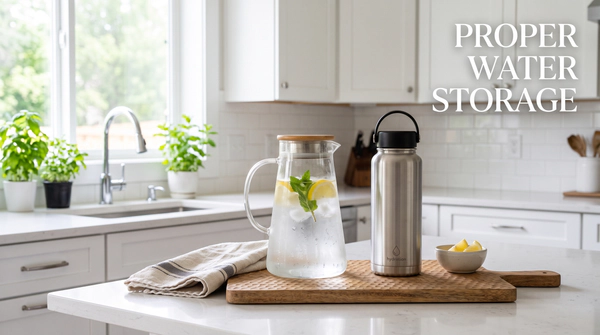
Proper storage ensures your homemade alkaline water stays clean, fresh, and at its target pH level.
Recommended Containers
- Use Glass or Stainless Steel: Always store your prepared water in glass bottles, mason jars, or food-grade stainless steel containers.
- Avoid Plastic Containers: Standard single-use plastic bottles can leach chemicals like BPA or microplastics into your water over time, especially when reacting with citrus or mineral salts.
Lifespan & Freshness
- Consume Within 24 to 48 Hours: Homemade alkaline water is best enjoyed fresh. As water sits exposed to air, it naturally absorbs carbon dioxide. Carbon dioxide converts into mild carbonic acid, which gradually lowers the water’s pH back down to neutral.
- Keep Refrigerated: Store your pitcher or jar in the refrigerator with a tight-fitting lid to slow down pH changes and preserve freshness.
Daily Intake Limits
- Enjoy in Moderation: Limit your consumption of homemade alkaline water to 1 to 3 glasses per day.
- Keep Plain Water as Your Primary Drink: Plain filtered water should make up the majority of your daily fluid intake. Alkaline water should complement your hydration routine, not replace regular water completely.
10. Conclusion & Helpful Next Steps
Making your own alkaline water at home is a simple, budget-friendly way to customize your daily hydration. Whether you choose the quick baking soda method, a refreshing fresh lemon infusion, precise pH mineral drops, or a cucumber and pink salt blend, you can easily control your ingredients and target pH level.
Quick Safety Recap
- Start Clean: Always use clean, filtered water as your base.
- Test Your pH: Keep your water’s pH between 8.0 and 9.5, and never exceed pH 10.0.
- Mind Medical Conditions: Avoid baking soda recipes if you have high blood pressure, and consult a doctor if you have kidney disease or take regular prescription drugs.
- Timing Matters: Drink alkaline water on an empty stomach and at least 1 to 2 hours away from meals and oral medications.
4 Sources:
Noble Home Remedies relies on peer-reviewed studies, academic research institutions, and medical associations for accuracy and reliability while avoiding tertiary references. Our editorial policy provides more information about how we ensure our content is accurate and up-to-date.
- Alkaline Water: Benefits & How to Make It at Home – https://www.reset.in/blog/how-to-make-alkaline-water-at-home-naturally
- Associations of alkaline water with metabolic risks, sleep quality, muscle strength: A cross-sectional study among postmenopausal women – PMC – https://pmc.ncbi.nlm.nih.gov/articles/PMC9621423/
- Extension experts share science behind electrolyte, alkaline water: what are the health benefits? – https://www.uaex.uada.edu/media-resources/news/2026/august/08-07-2026-ark-electrolyte-alkaline-water.aspx
- Frontiers | The health benefits of alkaline water: is it a fact or marketing myth? – https://www.frontiersin.org/journals/medicine/articles/10.3389/fmed.2026.1849818/full
- How To Make Alkaline Water At Home (September 2026) Guide – https://www.rosenberryrooms.com/how-to-make-alkaline-water-at-home/
- How to Make Alkaline Water at Home (5 Easy Methods) | 2026 Guide – https://www.mineralwaters.org/how-to-make-alkaline-water/
- How to Make Alkaline Water at Home: Quick Steps – https://waterpurify.pro/how-to-make-alkaline-water-at-home/
- How to Make Alkaline Water: A Comprehensive Guide | WATER – https://www.watermedia.org/how-to-make-alkaline-water/
- How to Make Your Own Alkaline Water: A 2026 Guide – https://eathealthy365.com/diy-alkaline-water-simple-methods-safety-facts/
- Is Alkaline Water Better for You? – https://health.clevelandclinic.org/alkaline-water-dont-believe-the-marketing-hype
- What Does Alkaline Water Do? Understanding Its Benefits – https://www.webmd.com/diet/what-is-alkaline-water