
Alkaline Water: What It Is, How It’s Made & What to Know
Alkaline water is drinking water that has a higher pH level than standard tap water. To understand what alkaline water is, it helps to look at how the pH scale works.
The pH scale measures how acidic or basic (alkaline) a liquid is, ranging on a scale from 0 to 14:
- Acidic: A pH below 7 (such as lemon juice or coffee).
- Neutral: A pH of 7 (such as pure drinking water).
- Alkaline: A pH above 7.
Most plain tap or bottled drinking water has a neutral pH near 7.0. In contrast, alkaline water typically features a higher pH between 8 and 10. This elevated pH level comes from dissolved natural minerals like calcium, magnesium, and potassium, or from an electrical processing method known as electrolysis.
How Your Body Handles pH Balance
Many people wonder if drinking water with a higher pH can alter their body’s overall acidity. However, the human body naturally manages its own internal chemistry.
Different organs require different pH levels to perform their functions:
- Stomach Acidity: The human stomach is naturally very acidic, usually maintaining a pH between 1.5 and 3.5. This strong gastric acid is essential for digesting proteins and killing harmful microbes. When you drink alkaline water, gastric juices in your stomach quickly neutralize it.
- Blood pH: Human blood is slightly alkaline, staying within a tightly controlled range of 7.35 to 7.45.
Medical research indicates that drinking alkaline beverages does not cause lasting changes to blood pH in healthy individuals. Your lungs and kidneys constantly regulate acid-base levels to keep your blood pH stable. While drinking alkaline water can temporarily change the pH of your urine, it does not alter your systemic blood chemistry.
How Alkaline Water Is Made: Natural vs. Machine-Made
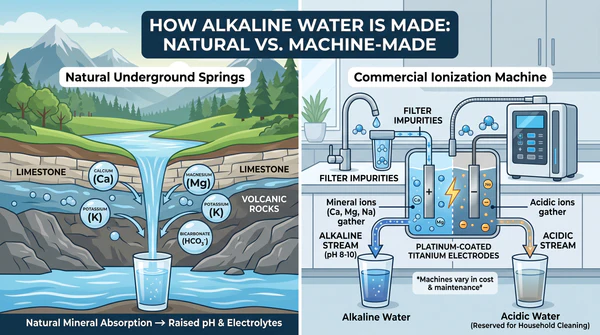
Alkaline water comes from two main sources: natural underground springs or artificial commercial processing.
Natural Alkaline Water (Springs and Aquifers)
In nature, water becomes alkaline through geological filtration. As groundwater flows over mountain rocks, limestone, or volcanic formations, it naturally absorbs trace minerals such as calcium, magnesium, potassium, and bicarbonate. These minerals raise the water’s pH while providing natural electrolytes.
Commercial Ionization & Alkaline Water Machine Options
Artificial alkaline water is usually created through an electrical process called electrolysis.
An alkaline water machine (also known as a water ionizer) connects directly to a tap water line. First, the machine filters out chlorine and impurities. Next, an electric current passes through metal plates—typically platinum-coated titanium electrodes—to separate the water into two distinct fractions:
- Alkaline Stream: Mineral ions like calcium, sodium, and magnesium gather near one electrode, producing water with an elevated pH between 8 and 10.
- Acidic Stream: Acidic ions gather near the opposite electrode, which is drained away or reserved for household cleaning.
Home water ionizer machines can be expensive, ranging from several hundred to thousands of dollars, and require regular maintenance to prevent filter contamination.
Packaged Alkaline Water Bottle Products vs. Tap Water Filters
If you do not own an ionizer, you can buy a pre-packaged alkaline water bottle at most stores. Manufacturers create bottled alkaline water in two primary ways:
- Bottled Spring Water: Sourced directly from natural mineral aquifers.
- Remineralized Purified Water: Filtering tap water through reverse osmosis and then adding minerals like calcium carbonate or magnesium oxide to elevate the pH.
Standard home pitcher filters remove basic impurities, but they do not raise water pH unless they feature specialized remineralizing cartridges.
(Note: If you want to make your own alkaline water at home using kitchen ingredients like baking soda or lemon juice, see our separate DIY guide on How to Make Alkaline Water.)
Alkaline Water vs. Regular Tap Water
To decide whether to drink alkaline water or plain water, it helps to compare how they differ in pH, mineral content, and how your body processes them.
| Feature | Regular Tap Water | Alkaline Water |
|---|---|---|
| Typical pH Level | 6.5 to 7.5 (Neutral) | 8.0 to 10.0 (Basic) |
| Primary Sources | Municipal tap, regular bottled water | Natural springs, ionizers, remineralized bottled water |
| Key Minerals | Trace minerals (varies by tap region) | Higher amounts of calcium, magnesium, potassium, and bicarbonate |
| Stomach Interaction | Passes through without altering stomach acid pH | Temporarily neutralizes gastric acid before the stomach secretes more acid |
Mineral Composition Differences
Plain tap water and basic bottled water generally have a neutral pH near 7.0. In contrast, alkaline water has a higher pH because it contains basic mineral compounds.
These key minerals include:
- Calcium: Supports bone health and nerve signaling.
- Magnesium: Helps with muscle function and energy production.
- Potassium: Important for heart rhythm and fluid balance.
- Bicarbonate: Acts as a natural buffer to raise the liquid’s pH level.
In natural spring water, these minerals come from rocks and soil. In packaged bottles, manufacturers often add these minerals after purifying tap water.
What Happens in Your Stomach When You Drink Alkaline Water?

A common myth is that drinking alkaline water permanently changes your digestive environment or neutralizes acid throughout your whole body. Science shows a very different process:
- Immediate Mixing: When you swallow alkaline water, it enters your stomach and mixes directly with gastric acid, which has a very acidic pH of 1.5 to 3.5.
- Temporary Neutralization: The basic minerals in the water briefly reduce the acidity inside your stomach.
- Natural Rebalancing: Your stomach senses this shift and quickly secretes more hydrochloric acid to restore its acidic state.
Because your stomach continuously produces acid to digest food and protect against bacteria, drinking alkaline water does not permanently change your stomach’s natural acidity level.
Does Alkaline Water Have Real Health Benefits?
Advertisements for bottled water often claim that drinking high-pH water can boost energy, prevent disease, slow aging, or detoxify the body. However, mainstream medical organizations and systematic research reviews indicate that these broad claims lack solid scientific proof.
For healthy individuals, human biology already handles acid-base balance automatically. Your lungs and kidneys continuously adjust internal chemistry to keep your blood pH within a safe, slightly basic range of 7.35 to 7.45. Because gastric acid in your stomach quickly neutralizes basic liquids, drinking alkaline water does not produce lasting changes in your blood or overall bodily acidity.
What the Science Actually Shows
While alkaline water is not a cure-all or a replacement for medical care, studies suggest a few minor, localized effects:
- Acid Reflux Relief: Laboratory research shows that water with a pH of 8.8 can permanently deactivate pepsin, a digestive enzyme that contributes to throat and esophageal irritation during reflux episodes.
- Post-Exercise Rehydration: Small trials in athletes suggest that mineral-rich high-pH water may modestly reduce blood viscosity and support fluid retention after intense anaerobic workouts.
- Bone Remodeling Markers: Some preliminary trials indicate that bicarbonate- and calcium-rich alkaline waters may temporarily lower markers of bone breakdown in postmenopausal women, though long-term evidence on bone density remains limited.
Beyond these specific settings, systematic reviews have concluded that alkaline water provides no distinct advantage over plain drinking water for general health, immunity, or disease prevention.
(Note: For an in-depth breakdown of clinical trials, laboratory studies, and detailed medical research regarding reflux, athletic recovery, and bone density, see our complete guide on Alkaline Water Benefits.)
Side Effects & Precautions: Who Should Avoid Alkaline Water?
While drinking small amounts of alkaline water is generally safe for most healthy adults, it is not ideal for everyone. Because alkaline water contains extra minerals and a higher pH, it can pose health risks for people with specific medical conditions or those taking certain medications.
1. People with Chronic Kidney Disease
If you have kidney disease or reduced kidney function, you should avoid drinking alkaline water unless explicitly approved by your doctor.
- Mineral Overload: Healthy kidneys filter out excess minerals. Impaired kidneys struggle to process high levels of minerals like potassium, calcium, and magnesium.
- Risk of High Potassium (Hyperkalemia): Drinking mineral-rich alkaline water can cause potassium to build up in your blood. Dangerous electrolyte imbalances can lead to heart rhythm problems and muscle weakness.
2. People Taking Specific Medications
Alkaline water can affect how your digestive system absorbs and processes certain prescription drugs.
- Acid-Blocking Medications: If you take proton pump inhibitors (PPIs) or antacids for heartburn, altering your stomach pH with high-pH water can interfere with how your medication works.
- pH-Sensitive Drugs: Some prescription pills require a strongly acidic environment to dissolve at the correct speed. Drinking alkaline water around the time you take medication may alter how the drug is absorbed into your bloodstream.
3. Potential Digestive and Nutrient Issues
Your stomach needs strong gastric acid (pH 1.5 to 3.5) to digest food efficiently and protect against ingested pathogens.
- Slower Protein Digestion: Drinking large amounts of alkaline water, particularly right before or during meals, may temporarily dilute stomach acid. This can slow down protein breakdown.
- Reduced Mineral Absorption: Adequate stomach acid is required to extract essential nutrients like iron, calcium, and vitamin B12 from your food.
4. Excessive Consumption Risks (Metabolic Alkalosis)
Drinking very high-pH water (pH above 10) in large quantities over a long period can strain your body’s acid-base balance. In rare cases, consuming excessive alkaline compounds can lead to a condition called metabolic alkalosis. Symptoms can include:
- Nausea or vomiting
- Hand tremors or muscle twitching
- Tingling sensations in the face, hands, or feet
- Confusion or lightheadedness
Practical Tips for Trying Alkaline Water Safely

If you decide to try alkaline water, following a few practical guidelines can help you use it safely and avoid unnecessary expenses.
1. How to Read Bottle Labels
When buying a pre-packaged alkaline water bottle, read the label carefully to know what you are buying:
- Check the pH Level: Most commercial brands list a pH level between 8.0 and 9.5. Avoid products with a pH above 10.0 unless directed by a doctor.
- Look at the Ingredients: Check whether the water comes from a natural mineral spring or if it is purified tap water with added mineral salts (such as calcium chloride, magnesium sulfate, or potassium bicarbonate).
- Verify Filtration Standards: Look for labels stating that the water has been filtered to remove contaminants like chlorine and heavy metals.
2. Practice Moderation
You do not need to replace all of your regular drinking water with high-pH water.
- Start Slowly: If you are new to alkaline water, start with one glass a day to see how your stomach reacts.
- Drink Between Meals: To avoid diluting your stomach acid during digestion, drink alkaline water at least 30 minutes before or two hours after full meals.
- Keep Plain Tap Water as Your Primary Drink: Regular plain water remains the most affordable and effective choice for daily hydration.
3. Explore Related Guides
To learn more about related home remedies and dietary adjustments, check out our other guides:
- If you want to prepare high-pH water at home using kitchen ingredients like baking soda or fresh lemons, see our step-by-step guide on [How to Make Alkaline Water].
- To understand how alkaline hydration fits into an overall plant-focused eating style, read our beginner’s overview on [Alkaline Diet for Beginners].
Frequently Asked Questions About Alkaline Water
Key Takeaways: What You Need to Know
- Higher pH Level: Alkaline water has a pH between 8 and 10, making it less acidic than neutral tap water (pH 7) due to added minerals or electrical processing.
- Your Body Regulates pH: Drinking high-pH water does not change your blood pH, which your lungs and kidneys tightly maintain between 7.35 and 7.45.
- Stomach Acid Neutralizes It Quickly: Hydrochloric acid in your stomach quickly neutralizes basic water upon swallowing, maintaining the acidic environment needed for proper digestion.
- Limited Evidence for Health Claims: Bold promises of anti-aging, cancer prevention, or systemic detoxification are unproven marketing myths. Research shows only minor, localized benefits, such as temporary symptom relief from acid reflux.
- Important Safety Precautions: Individuals with chronic kidney disease or those taking acid-blocking medications (like PPIs) should consult a doctor before drinking alkaline water due to mineral accumulation and stomach acid concerns.
- Plain Water Works Best: For daily hydration, plain tap or standard bottled water remains the safest, most effective, and most budget-friendly choice for healthy adults.
4 Sources:
Noble Home Remedies relies on peer-reviewed studies, academic research institutions, and medical associations for accuracy and reliability while avoiding tertiary references. Our editorial policy provides more information about how we ensure our content is accurate and up-to-date.
- The health benefits of alkaline water: is it a fact or marketing myth? – https://doi.org/10.3389/fmed.2026.1849818
- Health effects of alkaline, oxygenated, and demineralized water compared to mineral water among healthy population: a systematic review – https://doi.org/10.1515/reveh-2022-0057
- Alkaline water: Better than plain water? – https://www.mayoclinic.org/healthy-lifestyle/nutrition-and-healthy-eating/expert-answers/alkaline-water/faq-20058029
- Is alkaline water better? – https://www.health.harvard.edu/healthy-aging-and-longevity/is-alkaline-water-better
- Is Alkaline Water Good for You? What the Science Says – https://www.goodrx.com/well-being/diet-nutrition/is-alkaline-water-good-for-you
- Here’s Why Alkaline Water Doesn’t Live Up to the Hype – https://health.clevelandclinic.org/alkaline-water-dont-believe-the-marketing-hype
- Mayo Clinic Q and A: For most people, drinking plain water is the best way to stay hydrated – https://newsnetwork.mayoclinic.org/discussion/mayo-clinic-q-and-a-for-most-people-drinking-plain-water-is-the-best-way-to-stay-hydrated/