
Alkaline Diet for Beginners: What to Eat & How to Start
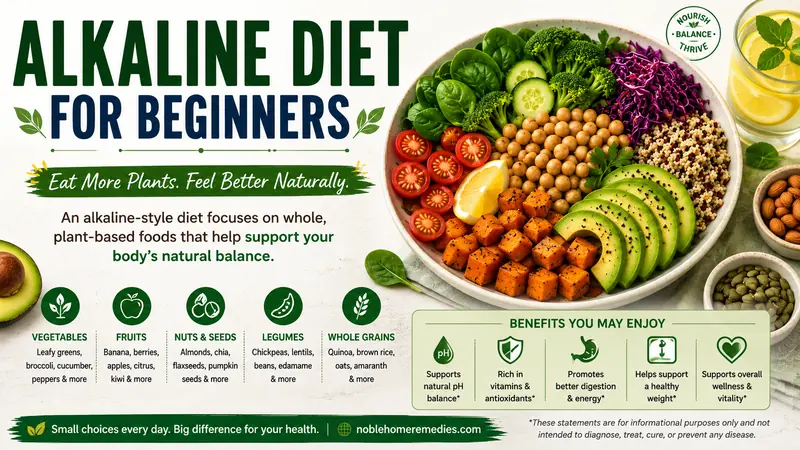
The alkaline diet focuses on eating more plant foods, such as vegetables, fruits, beans, nuts, and seeds, while limiting some foods that are considered acid-forming. It has become popular among people looking for a simple way to eat more whole foods and fewer highly processed foods.
However, some claims about the alkaline diet can be confusing. Foods can affect the pH of urine, but they do not make a healthy person’s blood more alkaline. Your lungs and kidneys work closely to keep blood pH within a safe range.
This guide explains the alkaline diet for beginners in a practical and balanced way. You will learn how the diet works, what foods it usually includes, what science says about its pH claims, possible benefits and drawbacks, and simple ways to get started without following extreme rules.
What Is the Alkaline Diet?
The alkaline diet is based on the idea that some foods leave behind more acid-forming compounds after the body breaks them down, while others are considered more alkaline-forming.
In practice, the diet usually puts more focus on vegetables, fruits, beans, nuts, seeds, herbs, and other plant foods. It often limits foods such as red meat, processed meat, some dairy products, refined foods, and foods high in added sugar.
The diet is sometimes called the acid-alkaline diet or alkaline ash diet.
The Basic Idea Behind the Diet
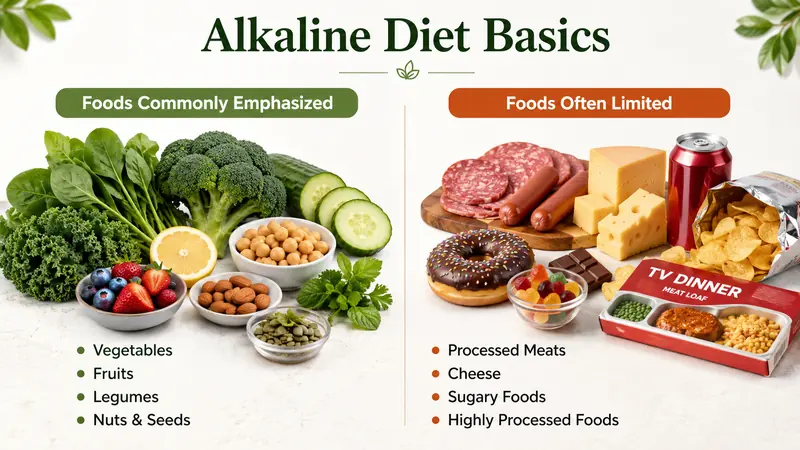
The main idea is not about whether a food tastes acidic.
For example, Lemons taste acidic, but many alkaline-diet systems classify them as alkaline-forming after digestion because of the compounds produced after digestion.
Supporters of the diet often group foods into three broad categories:
- Alkaline-forming foods: many fruits, vegetables, nuts, seeds, and legumes
- Neutral foods: some fats and other foods that have little effect on dietary acid load
- Acid-forming foods: often meat, cheese, eggs, some grains, and highly processed foods
These labels are commonly used in alkaline diet plans, but they should not be used to determine whether a food is healthy or unhealthy. Some foods described as acid-forming can still be nutritious parts of a balanced diet.
Why Do People Follow the Alkaline Diet?
Many people are drawn to the alkaline diet because it encourages more whole plant foods and fewer heavily processed foods. Others become interested after reading claims that alkaline foods can change the body’s pH or improve health.
This is where the subject needs some care. Eating more vegetables, fruits, beans, nuts, and seeds can be a healthy choice, but that does not mean these foods make your blood more alkaline.
We will look at that difference next, because understanding how the body controls pH is one of the most important parts of learning how the alkaline diet really works.
For readers who want a deeper breakdown of which foods are commonly included, see our / Alkaline Foods List guide.
How Is the Alkaline Diet Supposed to Work?
The alkaline diet is built around the idea that food can affect the amount of acid the body has to handle after digestion.
This does not mean that sour foods are always acid-forming or that mild-tasting foods are always alkaline-forming. The idea is based more on what happens after the body breaks the food down.
To understand this, it helps to know a little about pH.
Understanding the pH Scale
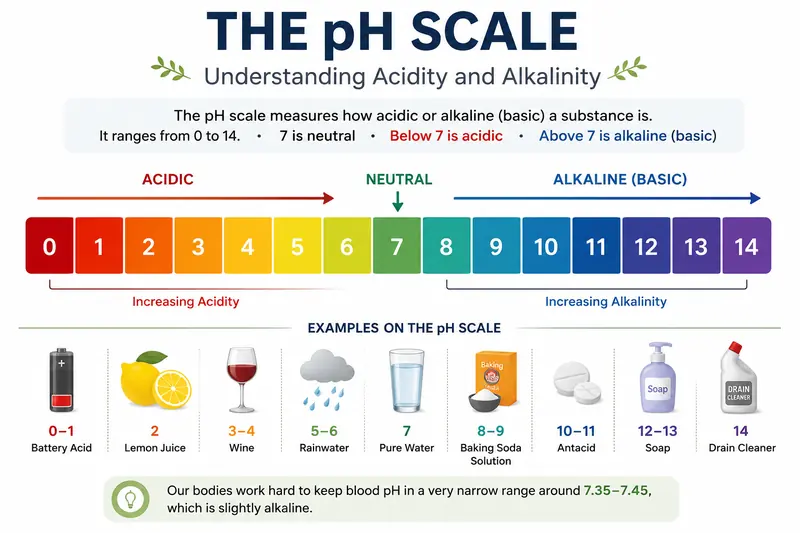
The pH scale measures how acidic or alkaline something is.
- A pH below 7 is acidic.
- A pH of 7 is neutral.
- A pH above 7 is alkaline, also called basic.
But the body does not have one single pH level.
Different parts of the body need different levels of acidity to work properly. For example, the stomach is naturally very acidic because this helps digest food. Blood, on the other hand, must stay within a very narrow pH range.
This is an important point because some alkaline diet claims make it sound as if the whole body can simply become “too acidic.” In reality, the body manages pH differently in different places.
What Does “Acid-Forming Food” Mean?
When people talk about acid-forming and alkaline-forming foods, they are usually talking about what remains after the body processes those foods.
Some foods may create more acid-forming compounds during digestion. Others may provide minerals and compounds that create a lower dietary acid load.
For this reason, meat, cheese, and some grains are often placed in the acid-forming group, while many fruits and vegetables are placed in the alkaline-forming group.
This is the basic theory behind the diet.
However, eating an alkaline-forming food does not mean that it directly changes the pH of your blood. Your body has its own systems for keeping blood pH stable.
That difference is important, so the next section looks at what food can and cannot change when it comes to your body’s pH.
Can an Alkaline Diet Change Your Body’s pH?
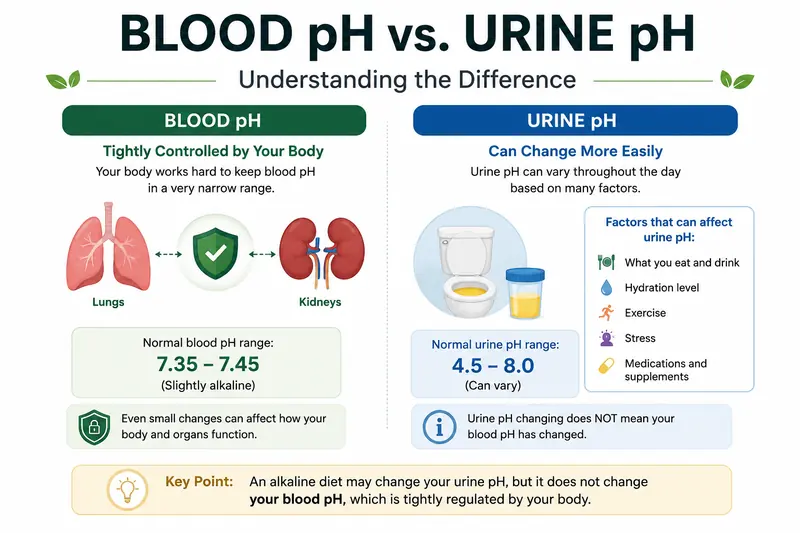
This is where the alkaline diet can become confusing. You may hear that eating more alkaline foods can make your body less acidic. That sounds simple, but the body does not work quite that way.
Food can affect some things, including the pH of your urine. But in a healthy person, what you eat does not cause large changes in the pH of your blood.
Your Blood pH Is Tightly Controlled
Your blood needs to stay within a very small pH range for your body to work properly. Your lungs and kidneys help keep it there.
The lungs remove carbon dioxide when you breathe out. The kidneys remove acids through urine and help manage substances such as bicarbonate, which plays a role in keeping acid and base levels balanced. These systems are working all the time, not just after you eat certain foods.
So, eating a bowl of vegetables or drinking a green smoothie does not suddenly make your blood more alkaline. In the same way, eating an acid-forming food does not normally make your blood dangerously acidic.
If blood pH moves too far outside its normal range, it can be a sign of a medical problem rather than something that should be corrected by changing a meal.
Food Can Affect Urine pH
There is one important reason the alkaline diet may seem to change body pH: your urine can become more or less acidic depending on what you eat.
That is normal.
Your kidneys help remove substances the body does not need. As part of this job, they can change how much acid leaves the body through urine. This means a urine pH test may change after dietary changes even when blood pH stays stable.
This is why home urine pH strips do not tell you whether your whole body has become more alkaline.
Why This Difference Matters
Understanding the difference between blood pH and urine pH can help you avoid some of the stronger claims made about the alkaline diet.
You do not need to “alkalize your blood” to get value from eating more vegetables, fruits, beans, nuts, seeds, and other nutritious plant foods.
A better way to judge the alkaline diet is to look at the foods it encourages, the nutrients those foods provide, and whether the overall eating pattern is balanced and practical for you.
That is what we will look at next.
What Do You Eat on an Alkaline Diet?
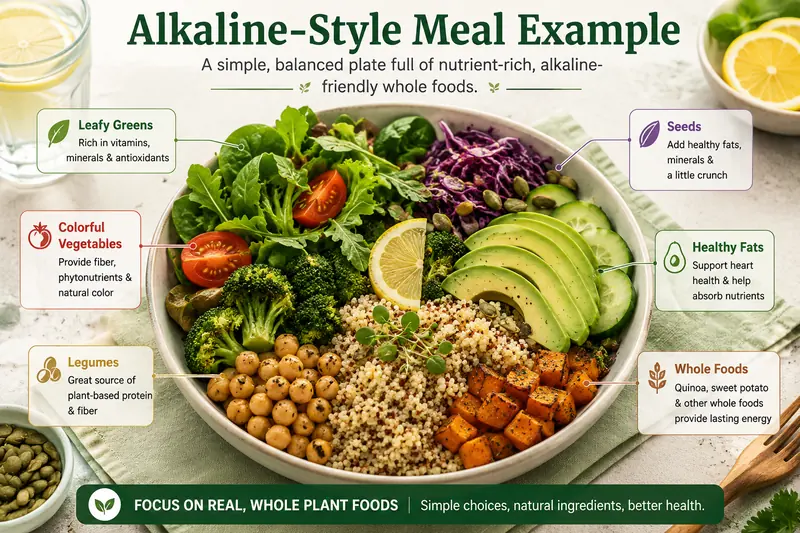
The alkaline diet usually puts the main focus on plant foods.
That means meals often include plenty of vegetables, fruits, beans, nuts, seeds, herbs, and other whole or lightly processed foods. These foods are commonly emphasized in alkaline-style diets.
At the same time, many versions of the diet limit foods that are often called acid-forming, such as meat, cheese, eggs, some grains, and highly processed foods.
The key point is this: an alkaline label does not automatically mean a food is healthy, and an acid-forming label does not automatically mean a food is unhealthy.
Foods Commonly Emphasized
People following an alkaline-style diet often eat more foods such as:
- leafy greens and other vegetables;
- fruits such as berries, apples, melons, and citrus;
- beans and lentils;
- almonds and other nuts;
- seeds;
- herbs and spices;
- other minimally processed plant foods.
These foods can be valuable because they provide fiber, vitamins, minerals, and other nutrients.
You do not need to eat every food on an alkaline list. A better approach is to choose a range of foods that you enjoy and can use in regular meals.
Foods Often Limited
Stricter versions of the alkaline diet may reduce:
- red and processed meat;
- cheese and some other dairy foods;
- eggs;
- refined grains;
- sweets and sugary drinks;
- highly processed snack foods.
Some plans also limit whole grains and other nutritious foods because they are considered acid-forming.
This is where balance matters.
Foods such as whole grains, eggs, dairy products, and other protein foods can still provide useful nutrients. There is no good reason to remove a nutritious food only because an alkaline diet chart places it in the acid-forming group.
A practical beginner approach is to focus less on making every food “alkaline” and more on adding more vegetables, fruits, beans, nuts, seeds, and other whole foods to your meals.
If you want a more complete breakdown of the foods commonly used in this eating pattern, see our / Alkaline Foods List guide.
Is the Alkaline Diet Healthy?
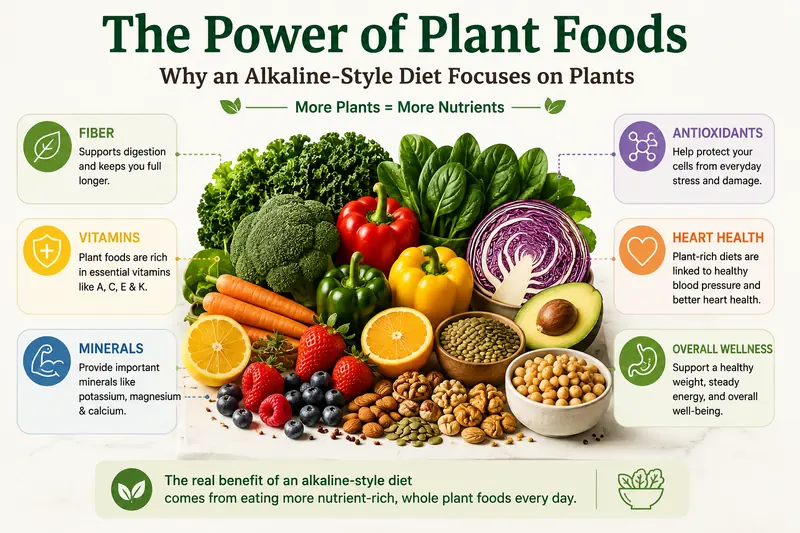
The alkaline diet can include many healthy foods, but that does not mean every claim made about the diet is true.
Its strongest feature is simple: it encourages people to eat more vegetables, fruits, beans, nuts, seeds, and other plant foods. These foods are part of many well-balanced eating patterns.
The benefits are more likely to come from eating better-quality foods, not from making the blood more alkaline.
What May Be Helpful About the Eating Pattern
Many people following an alkaline-style diet naturally eat more whole and lightly processed foods.
This may mean eating more:
- vegetables and fruits;
- beans and lentils;
- nuts and seeds;
- herbs and spices;
- meals prepared from simple, whole ingredients.
These foods can provide fiber, vitamins, minerals, and other nutrients your body needs.
The diet may also encourage people to cut back on foods that are often high in added sugar, sodium, or saturated fat. Examples include sugary drinks, processed meats, sweets, and many packaged snack foods.
This approach has something in common with well-established healthy eating advice. Health Canada, for example, recommends eating plenty of vegetables and fruits, choosing whole grains, and including a variety of protein foods, with plant-based choices more often.
So, there can be real value in some of the eating habits linked with the alkaline diet.
The Benefits Are Not About “Alkalizing” Your Blood
This is an important difference.
Eating more vegetables and other plant foods may support a healthy diet, but the reason is not that they make your blood more alkaline. As explained earlier, your body already has systems that keep blood pH within a very narrow range.
A simple way to think about it is this:
The food choices may be useful even if the pH theory behind the diet is overstated.
You can enjoy a salad, lentil soup, fruit, or a handful of nuts because they provide useful nutrients. You do not need to believe they are changing the pH of your blood.
What the Evidence Does Not Show
Some alkaline diet claims go much further.
You may see claims that the diet can “detox” the body, remove harmful acid, prevent serious illness, or even treat diseases such as cancer.
Good evidence does not support these claims.
A systematic review of research on alkaline diets and alkaline water found that the evidence did not support using them for cancer prevention or treatment. Research has also failed to support the idea that simply lowering the body’s dietary acid load prevents bone loss.
This does not mean the fruits, vegetables, beans, nuts, and seeds encouraged by the diet are unhealthy. It means we need to separate the value of those foods from unproven claims.
For most beginners, the more useful question is not, “How alkaline is this food?”
A better question is:
“Does this food help me build a balanced, nutritious way of eating that I can keep up over time?”
Possible Benefits of an Alkaline-Style Eating Pattern
The possible benefits of an alkaline-style diet are mainly linked to the foods it encourages, not to changing the pH of your blood.
When the diet is followed in a balanced way, it can lead people to eat more vegetables, fruits, beans, nuts, seeds, and other whole plant foods. These are foods that already fit well within healthy eating guidelines.
More Fruits and Vegetables
One of the biggest changes many people make on an alkaline-style diet is simply eating more fruits and vegetables.
These foods can provide:
- fiber;
- vitamins;
- minerals;
- water;
- a wide range of plant nutrients.
Fiber is especially useful because it supports normal digestion and helps make meals more filling.
Health Canada recommends eating vegetables and fruits regularly as part of a healthy eating pattern. It also notes that eating patterns with more plant-based foods often provide more dietary fiber.
You do not need to choose only foods that appear on an alkaline food chart to get these benefits. Eating a good variety of plant foods is more important.
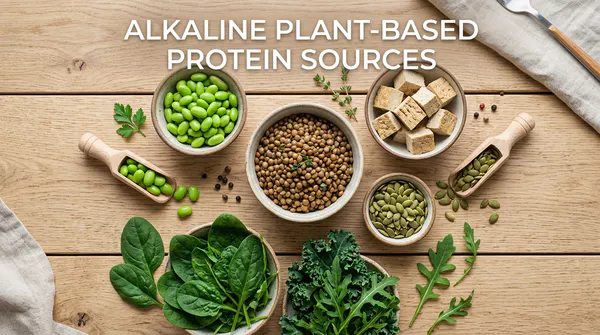
More Plant-Based Protein Foods
An alkaline-style diet may also encourage you to use more plant-based protein foods.
These can include:
- beans;
- lentils;
- chickpeas;
- nuts;
- seeds;
- tofu.
Health Canada recommends choosing plant-based protein foods more often as part of a healthy diet.
Adding these foods can also make meals more varied. For example, lentils can be added to soups, chickpeas can be used in salads, and nuts or seeds can be added to breakfast or snacks.
The important point is to make sure you are still getting enough protein overall, especially if you decide to reduce meat, dairy, or other animal foods.
Fewer Highly Processed Foods
Some versions of the alkaline diet also encourage people to cut back on highly processed foods.
That can be a useful change when it means eating fewer foods that are high in added sugar, sodium, or saturated fat.
Health Canada recommends limiting highly processed foods and preparing meals and snacks with ingredients that contain little or no added sodium, sugars, or saturated fat.
Cooking more meals at home may also make it easier to choose whole ingredients and rely less on packaged foods.
The Main Benefit Is the Eating Pattern
It helps to keep the bigger picture in mind.
The possible benefits of an alkaline-style diet are not a sign that your blood has become more alkaline. They are more likely to come from eating more nutrient-rich plant foods and fewer highly processed foods.
That is a much more practical way to look at the diet, and it also makes it easier to follow without worrying about making every single food perfectly “alkaline.”
Are There Any Risks or Drawbacks?
An alkaline-style diet can include many nutritious foods. Problems are more likely to come from following a very strict version of the diet.
If you cut out too many foods at once, it can become harder to get all the nutrients your body needs. The diet may also become difficult to follow over time.
The goal should be to eat more nourishing plant foods without turning every meal into a list of foods you are “allowed” or “not allowed” to eat.
Very Restrictive Versions Can Make Nutrition Harder
Some alkaline diet plans greatly limit meat, eggs, dairy products, and grains. Others remove animal foods completely.
A well-planned plant-based diet can provide good nutrition, but the more foods you remove, the more carefully you need to plan what takes their place.
Depending on how you follow the diet, you may need to pay extra attention to nutrients such as:
- protein;
- vitamin B12;
- iron;
- calcium;
- vitamin D;
- zinc.
For example, beans, lentils, nuts, seeds, tofu, and other plant foods can help provide protein. But simply removing meat or dairy without adding suitable alternatives can leave meals less balanced.
This does not mean you need to avoid an alkaline-style diet. It simply means that removing foods is not the same as improving your diet.
Do Not Fear Every “Acid-Forming” Food
Another drawback is that alkaline food charts can make some nutritious foods look unhealthy simply because they are listed as acid-forming.
Whole grains are a good example. They may be classified as acid-forming in some alkaline diet systems, yet they can still provide fiber, vitamins, minerals, and useful energy.
The same is true for many protein foods.
Instead of judging a food only by its alkaline or acid-forming label, look at its overall nutritional value and how it fits into your usual meals.
A balanced diet does not need to be made up of 100% alkaline-forming foods.
People With Kidney Problems Need Extra Care
Many foods encouraged on an alkaline diet, such as fruits, vegetables, beans, nuts, and seeds, can contain a good amount of potassium.
For most healthy people, this is not a problem. The kidneys help keep potassium in the blood within a safe range.
However, some people with kidney disease may need to limit certain high-potassium foods. What is suitable can vary from one person to another.
If you have kidney disease or have been told to watch your potassium intake, it is best to follow the eating plan recommended by your doctor or registered dietitian rather than using a general alkaline food list.
An Alkaline Diet Should Not Replace Medical Care
Food can be an important part of looking after your health, but an alkaline diet should not be used in place of medical treatment.
Be cautious with claims that suggest changing your diet can correct an illness simply by making the body more alkaline.
If you have a health condition, take medicine, are pregnant, or plan to make a major change to your diet, it may be helpful to speak with a qualified healthcare professional.
For most beginners, a safer and more practical approach is simple: add more nutritious plant foods, avoid unnecessary restrictions, and build meals that are balanced enough to support your everyday needs.
How to Start an Alkaline Diet for Beginners
Starting an alkaline diet does not have to mean changing everything you eat overnight.
For most beginners, a simpler approach works better: add more whole plant foods, make a few steady changes, and avoid getting too caught up in whether every food is perfectly “alkaline.”
1. Start by Adding, Not Just Removing
Many diet plans begin with a long list of foods to avoid. That can make healthy eating feel harder than it needs to be.
Instead, start by adding more foods such as:
- vegetables;
- fruits;
- beans and lentils;
- nuts and seeds;
- other whole or lightly processed plant foods.
For example, you might add a side of vegetables to lunch, include fruit with breakfast, or use beans in a meal a few times a week.
This approach can make the diet feel more realistic and less restrictive.
2. Build Meals Around Plant Foods
You do not need a complicated formula to put together an alkaline-style meal.
A simple meal might include:
- vegetables or fruit;
- a source of protein;
- a filling carbohydrate;
- a small amount of healthy fat.
For example, a bowl with vegetables, lentils, brown rice, and seeds can make a balanced meal.
The goal is not to create a plate that is “100% alkaline.” It is to build meals that are filling, varied, and nutritious.
3. Make Changes Gradually
Trying to change your entire diet in one day can be hard to maintain.
It may be easier to choose one or two changes at a time.
You could start by:
- adding vegetables to one extra meal each day;
- choosing fruit instead of a heavily processed snack;
- trying beans or lentils in place of meat for one meal;
- cooking at home more often;
- cutting back slowly on sugary drinks or highly processed foods.
Once those changes feel normal, you can add another.
Small changes may not feel dramatic, but they are often easier to keep.
4. Make Sure You Get Enough Protein
Protein is easy to overlook when people focus mainly on fruits and vegetables.
If you are eating less meat, eggs, or dairy, make sure other protein foods take their place.
Plant-based options can include:
- beans;
- lentils;
- chickpeas;
- tofu;
- nuts;
- seeds.
You do not need to depend on one food. Using a mix of protein foods across the day can make meals more balanced.
If you want more ideas, our High-Protein Alkaline Foods guide can help you explore protein-rich choices that fit this style of eating.
5. Regular Water Is Fine
You may also come across advice saying that you need alkaline water to follow an alkaline diet.
You do not.
Plain water is a perfectly suitable choice for everyday hydration.
Alkaline water is a separate topic, and drinking it is not required to start eating more vegetables, fruits, beans, nuts, or seeds.
If you are curious about the difference between regular and alkaline water, see our Alkaline Water Guide for a closer look at the evidence.
6. Aim for a Pattern You Can Keep
You do not need to test the pH of every meal or worry when you eat a food that is listed as acid-forming.
A more practical approach is to look at your diet as a whole.
Are you eating more vegetables and fruits? Are you getting enough protein? Are most of your meals built around whole or lightly processed foods? Can you follow this way of eating without feeling overly restricted?
Those questions are more useful than trying to make every meal perfectly alkaline.
For beginners, the best starting point is usually a balanced eating pattern that feels simple enough to continue over time.
What Could a Simple Alkaline-Style Day Look Like?
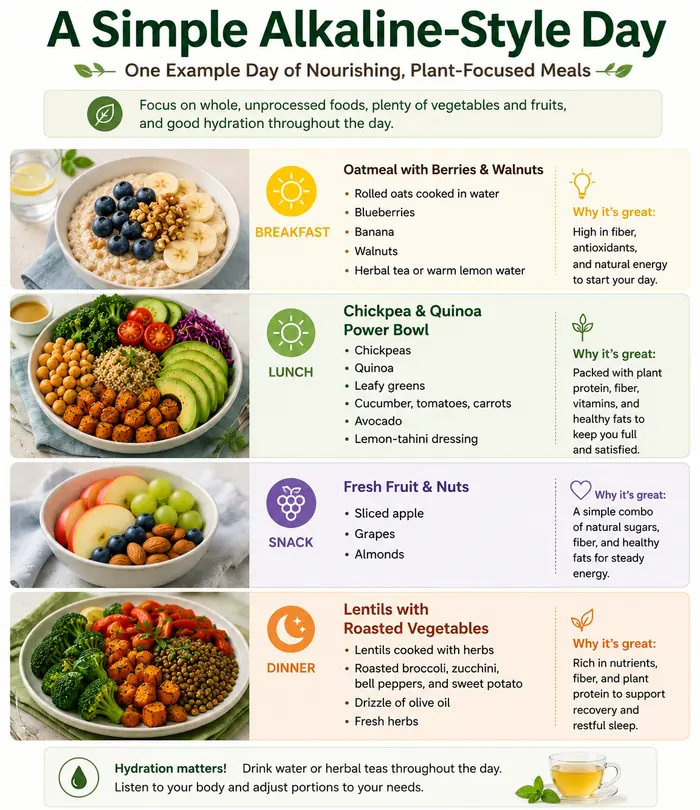
If you are new to the alkaline diet, it may help to see how these foods can fit into a normal day.
You do not need a perfect meal plan. A simple mix of vegetables, fruits, plant-based protein, whole foods, and healthy fats can give you a good starting point.
Breakfast
You might start the day with oatmeal topped with berries, chia seeds, and a few almonds.
If you prefer something fresh, a smoothie made with fruit, leafy greens, and an unsweetened plant-based drink can also work.
For more ideas, see our / Alkaline Breakfast Recipes guide.
Lunch
Lunch could be a bowl made with leafy greens, chickpeas, cucumber, tomato, avocado, and a whole grain such as quinoa or brown rice.
A simple dressing made with olive oil, herbs, and lemon can add flavor without making the meal complicated.
Snack
A piece of fruit with a small handful of nuts or seeds can make an easy snack.
Other simple choices could include sliced vegetables with hummus.
Dinner
For dinner, you might choose roasted vegetables with lentils, quinoa, or another plant-based protein food.
Adding herbs, spices, and a small amount of healthy fat can make the meal more satisfying.
The goal is not to make every bite perfectly “alkaline.” It is to build meals around nutritious foods that you enjoy and can eat regularly.
Some strict alkaline plans limit grains, but whole grains can still be part of a nutritious eating pattern.
If you want more structure, explore our / Easy Alkaline Meals guide or the / Alkaline Meal Plan and Grocery List for more detailed planning.
Alkaline Recipes and Meal Ideas
Once you understand the basics of the alkaline diet, the next step is learning how to turn those foods into simple meals you can actually enjoy.
You do not need complicated recipes or unusual ingredients. A practical alkaline-style meal can be as simple as combining vegetables, a plant-based protein, a filling whole food, and herbs or spices for flavor.
If you want more ideas, these guides can help: (Coming Soon)
- Alkaline Recipes / for a wider collection of recipe ideas built around plant-focused foods.
- Easy Alkaline Meals / for simple everyday meals that do not take much planning.
- Alkaline Breakfast Recipes / for easy ways to start the day with fruit, whole foods, and plant-based ingredients.
- Alkaline Lunch Ideas / for light but filling midday meals.
- Alkaline Dinner Recipes / for simple evening meals that can fit into a balanced eating pattern.
You can also explore alkaline smoothies, juices, snacks, and desserts if you want more variety.
The main goal is not to make every recipe perfectly “alkaline.” It is to build meals around nutritious foods, keep the plan realistic, and choose recipes you can enjoy often.
Common Alkaline Diet Mistakes Beginners Should Avoid
The alkaline diet can feel simple at first, but beginners often make it more complicated than it needs to be.
Most problems come from focusing too much on food labels and not enough on the bigger picture: eating a balanced diet that provides enough nutrients and feels realistic to follow.
Here are some common mistakes to avoid.
1. Trying to Change Your Blood pH With Food
One of the biggest mistakes is believing that certain foods can make your blood more alkaline.
As we covered earlier, your body controls blood pH very closely. Your lungs and kidneys do most of that work.
Food can change the pH of your urine, but that is not the same as changing the pH of your blood.
So, there is no need to test every meal or chase a certain pH number.
A better goal is to choose foods because they are nutritious and fit well into your overall eating pattern.
2. Treating Every Acid-Forming Food as Unhealthy
Some alkaline food charts place foods such as whole grains, eggs, dairy products, and certain protein foods in the acid-forming group.
That does not automatically make them unhealthy.
Many of these foods can provide important nutrients. Removing them simply because of an acid-forming label may make your diet more limited without giving you any clear benefit.
Instead of asking, “Is this food alkaline?” ask:
“Does this food add useful nutrition to my diet?”
That question is often more helpful.
3. Cutting Out Too Many Foods at Once
Another common mistake is starting with a long list of foods to avoid.
This can make the diet difficult to follow and may leave you wondering what is left to eat.
A slower approach is usually easier.
Start by adding more vegetables, fruits, beans, lentils, nuts, and seeds. Then gradually reduce the highly processed foods you want to eat less often.
You do not need to rebuild your whole diet in one day.
4. Forgetting About Protein and Key Nutrients
It is easy to focus so much on fruits and vegetables that protein gets pushed aside.
This is especially important if you are cutting back on meat, eggs, or dairy.
Make room for protein foods such as beans, lentils, chickpeas, tofu, nuts, and seeds.
If your diet becomes very restrictive, you may also need to pay closer attention to nutrients such as vitamin B12, iron, calcium, vitamin D, and zinc.
The goal is not just to eat “alkaline” foods. It is to build meals that actually meet your body’s needs.
5. Believing You Need Alkaline Water
You may see alkaline water promoted as an important part of the alkaline diet.
It is not required.
Plain water is fine for everyday hydration, and you do not need special water to begin eating more plant foods.
If you are interested in the subject, our Alkaline Water Guide looks more closely at what alkaline water is and what the evidence says.
For most beginners, keeping things simple works best. Eat more whole plant foods, avoid unnecessary restrictions, and focus on building a pattern you can comfortably follow over time.
Frequently Asked Questions About the Alkaline Diet
A Balanced Way to Think About the Alkaline Diet
The alkaline diet can be useful when it helps you eat more vegetables, fruits, beans, nuts, seeds, and other whole foods.
These foods can add more fiber, vitamins, minerals, and variety to your meals. Cutting back on heavily processed foods can also be a positive step.
What matters is why these changes may help.
The benefits do not come from making your blood more alkaline. Your body already works hard to keep blood pH within a very narrow range. The real value is more likely to come from the quality of the foods you choose and the balance of your overall diet.
You also do not need to follow the alkaline diet perfectly. A meal can still be nutritious even if it includes a food that an alkaline chart calls acid-forming.
For most beginners, a sensible approach is to eat more plant foods, keep meals balanced, and avoid unnecessary restrictions.
If you are ready to put these ideas into practice, start with our / Alkaline Foods List. From there, you can explore our / Alkaline Recipes and / Easy Alkaline Meals guides for simple ways to build everyday meals.
xxx To be Removed xx
Internal Linking Architecture for the Pillar
The Pillar should strongly link to the four major hubs:
- Alkaline Foods List
- Alkaline Recipes
- Easy Alkaline Meals
- Alkaline Water Guide
Secondary contextual links can point to:
- Alkaline Meal Plan and Grocery List
- Alkaline Breakfast Recipes
- Alkaline Vegan Recipes
- High-Protein Alkaline Foods
The Pillar does not need to force links to every individual recipe cluster. The cluster hubs should distribute authority downward to lunch, dinner, smoothies, juice, snacks, and other narrower pages.
xx end
Sources:
9 Sources & References:
Noble Home Remedies relies on peer-reviewed studies, academic research institutions, and medical associations for accuracy and reliability while avoiding tertiary references. Our editorial policy provides more information about how we ensure our content is accurate and up-to-date.
- NCI — Definition of Alkaline Diet – https://www.cancer.gov/publications/dictionaries/cancer-terms/def/alkaline-diet
- Physiology, Acid-Base Balance – https://www.ncbi.nlm.nih.gov/books/NBK507807/
- The alkaline diet: What you need to know – https://www.mdanderson.org/cancerwise/alkaline-diet–what-cancer-patients-should-know.h00-159223356.html
- Systematic review of the association between dietary acid load, alkaline water and cancer – https://pubmed.ncbi.nlm.nih.gov/27297008/
- Causal assessment of dietary acid load and bone disease: a systematic review – https://pubmed.ncbi.nlm.nih.gov/21529374/
- Dietary acid load in health and disease – https://pubmed.ncbi.nlm.nih.gov/38282081/
- Canada’s Dietary Guidelines – https://www.canada.ca/content/dam/hc-sc/documents/services/food-guide/explore/dietary-guidelines/dietary-guidelines.pdf?
- Plant-based eating guidelines – https://www.healthlinkbc.ca/healthlinkbc-files/plant-based-eating-guidelines
- Nutrition and Kidney Disease, Stages 1-5 (Not on Dialysis) – https://www.kidney.org/kidney-topics/nutrition-and-kidney-disease-stages-1-5-not-dialysis
Trust in your purchase:
Every product featured on our site has been carefully researched and selected based on quality, customer ratings, and positive reviews to ensure you receive excellent value for your money.
Thank you for your precious time spent with NobleHomeRemedies.
You may also like:

Blood Pressure Chart by Age
Blood Pressure Chart by Age: Is Your Number Normal? (Free Guide) Medical Disclaimer: The content…
High-Alkaline Protein Foods
Alkaline Protein: High-Protein Foods & Recipe Ideas Many people think eating an alkaline, plant-focused diet…
Is Coffee an Acid or a Base?
Is Coffee an Acid or a Base?: Does Morning Coffee Hurt You? Have you ever…
What Does a Cavity Look Like
What Does a Cavity Look Like – 10 Best Prevention Efforts Cavities in their beginning…

Why Do I Crave Butter
Why Do I Crave Butter?: Science Behind Fatty Food Addictions Oh Butter! Rich, creamy, delicious…

Benefits of Exercising
Incredible Benefits of Exercising: Supercharge Your Life Life can get pretty busy, can’t it? Between…