
Alkaline Foods List: Fruits, Vegetables & Everyday Foods
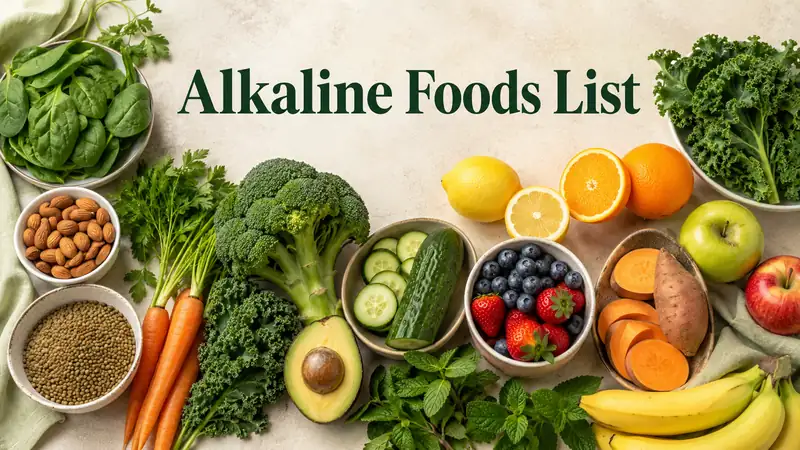
Most foods called alkaline are fruits, vegetables, herbs, beans, nuts, and seeds. However, the word “alkaline” can be confusing. It does not mean these foods can change your blood pH. Your lungs and kidneys keep blood pH within a narrow range.
In food guides, “alkaline-forming” usually means a food may create a lower acid load after digestion. This is different from how acidic the food tastes. For example, a lemon tastes sour but is often placed on alkaline-forming food lists.
This guide gives you a clear alkaline foods list, including fruits, vegetables, herbs, protein foods, grains, and other everyday choices. You will also find a simple chart showing which groups are usually alkaline-forming, neutral, or acid-forming. The chart is a planning tool, not a medical rule. A balanced eating pattern matters more than the score of one food.
If you are new to this eating pattern, read our complete alkaline diet for beginners guide before using the list.
What Are Alkaline Foods?
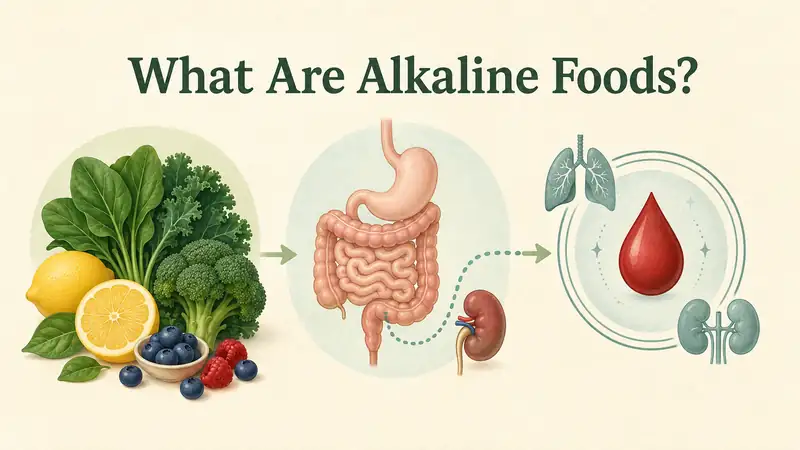
Alkaline foods are foods that may produce a lower acid load after the body breaks them down. Most fruits and vegetables fall into this group. Some beans, nuts, seeds, and herbs may also have a low acid-forming effect.
The term does not describe the food’s taste or its pH before you eat it. It also does not mean the food will make your blood more alkaline.
“Alkaline” Usually Means Alkaline-Forming
Researchers may use a system called potential renal acid load, or PRAL, to estimate a food’s effect after digestion. The calculation looks at nutrients such as protein, phosphorus, potassium, magnesium, and calcium.
A negative PRAL value suggests that a food has a lower acid-forming effect. A positive value suggests that it has a higher acid-forming effect. Fruits and vegetables often have negative values, while meat and cheese tend to have positive values.
PRAL is only an estimate. It does not measure the total health value of a food. The figures may also differ because food varieties and nutrient levels can change. Even researchers advise using older PRAL tables as general guidance rather than fixed rules.¹²
Can Alkaline Foods Change Your Blood pH?
Alkaline foods do not meaningfully change the blood pH of a healthy person. Your lungs, kidneys, and natural buffer systems work together to keep it within a narrow range.³
Food can change urine pH because the kidneys remove acids through urine. However, a change in urine pH does not prove that your blood pH has changed.⁴
For this reason, it is more accurate to call these foods alkaline-forming foods. Their main value comes from being nutritious plant foods—not from changing your blood pH.
Alkaline Foods Chart at a Glance
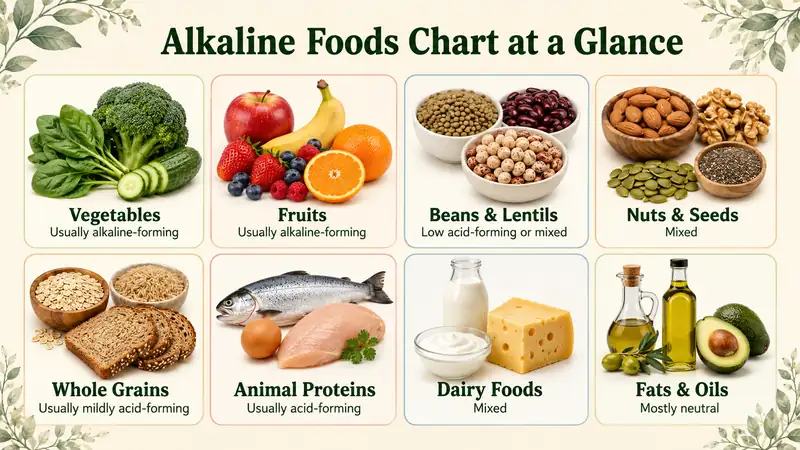
The chart below shows how common food groups are usually classified. It is a quick planning guide, not a set of strict food rules.
| Food group | Common examples | General classification | Practical note |
|---|---|---|---|
| Vegetables | Spinach, kale, broccoli, carrots, cucumber and sweet potatoes | Usually alkaline-forming | Choose different colours and types |
| Fruits | Apples, bananas, berries, oranges, pears and melons | Usually alkaline-forming | Whole fruit provides more fibre than juice |
| Beans and lentils | Lentils, chickpeas, kidney beans and white beans | Low acid-forming or mixed | Useful sources of plant protein and fibre |
| Soy foods | Tofu, tempeh, soybeans and edamame | Mixed | Classification may vary by product |
| Nuts and seeds | Almonds, walnuts, pumpkin seeds, chia seeds and flaxseeds | Mixed | Some are more acid-forming than others |
| Herbs and spices | Parsley, basil, cilantro, mint, ginger and turmeric | Often listed as alkaline-forming | Usually eaten in small amounts |
| Whole grains | Oats, brown rice, barley and whole wheat | Usually mildly acid-forming | Can still be part of a healthy diet |
| Animal proteins | Meat, poultry, fish and eggs | Usually acid-forming | Acid-forming does not mean unhealthy |
| Dairy foods | Milk, yogurt and cheese | Mixed; cheese is often more acid-forming | These foods can provide protein and calcium |
| Fats and oils | Olive oil, avocado oil and other plant oils | Mostly neutral | Use moderate amounts |
| Highly processed foods | Processed meats, sugary drinks and salty snacks | Varies; often acid-forming | Limit these foods for overall health |
These groups are based on their estimated dietary acid load, not their taste. A lemon, for example, tastes acidic but may have a low acid-forming effect after digestion.
The chart also does not measure whether a food is healthy. Whole grains and protein foods may be acid-forming, but they still provide important nutrients. A balanced eating pattern should include vegetables, fruits, whole grains, and suitable protein foods.²
Complete Alkaline Foods List by Category
Most alkaline-forming foods come from plants. However, foods within the same group may have different acid-load values. Use this list as a general guide rather than a strict set of rules.
Alkaline Vegetables
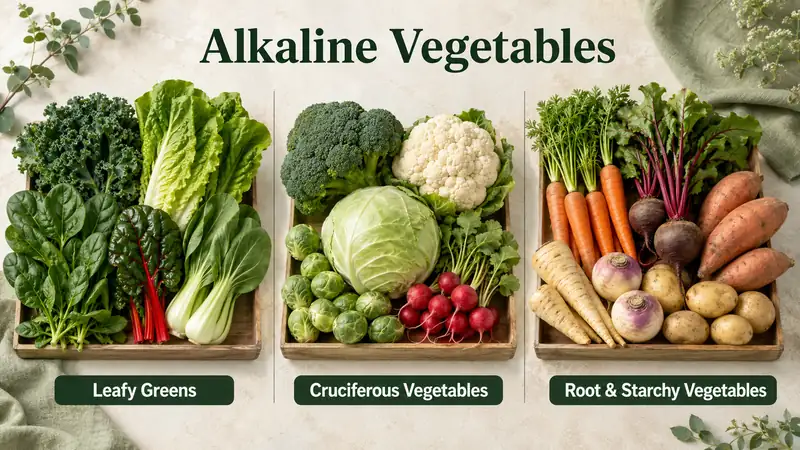
Most vegetables have a low or negative estimated acid load. They also provide fibre, vitamins, minerals and helpful plant compounds.
Leafy Green Vegetables
Common choices include:
- Spinach
- Kale
- Romaine lettuce
- Collard greens
- Mustard greens
- Bok choy
- Arugula
- Watercress
- Swiss chard
- Beet greens
Leafy greens are often rich in potassium, magnesium, and calcium. These minerals are part of the PRAL calculation used to estimate dietary acid load.
You can eat leafy greens raw or cooked. Fresh, frozen, and low-sodium canned options may all fit into a balanced diet.
Cruciferous Vegetables
Common choices include:
- Broccoli
- Cauliflower
- Cabbage
- Brussels sprouts
- Bok choy
- Turnips
- Radishes
These vegetables are commonly placed on alkaline foods lists. They also add fibre and variety to meals.
Cooking does not make them unhealthy or remove them from an alkaline-style eating pattern. Steaming, roasting and stir-frying are all practical choices.
Root and Starchy Vegetables
Common choices include:
- Carrots
- Beets
- Sweet potatoes
- White potatoes
- Turnips
- Parsnips
- Rutabaga
Potatoes and sweet potatoes are often classed as alkaline-forming. They also provide carbohydrates, fibre and potassium.
The way these foods are prepared still matters. A baked potato and heavily salted French fries do not have the same overall nutritional value.
Other Everyday Vegetables
Other vegetables commonly included are:
- Cucumber
- Celery
- Zucchini
- Bell peppers
- Asparagus
- Green beans
- Squash
- Pumpkin
- Mushrooms
- Artichokes
- Eggplant
- Tomatoes
- Onions
- Leeks
Aim for variety instead of trying to find one “best” vegetable. Different colours often provide different vitamins and plant compounds.
Fresh, frozen and canned vegetables can all be part of healthy eating. When choosing canned vegetables, look for options with little or no added sodium.
Alkaline Fruits
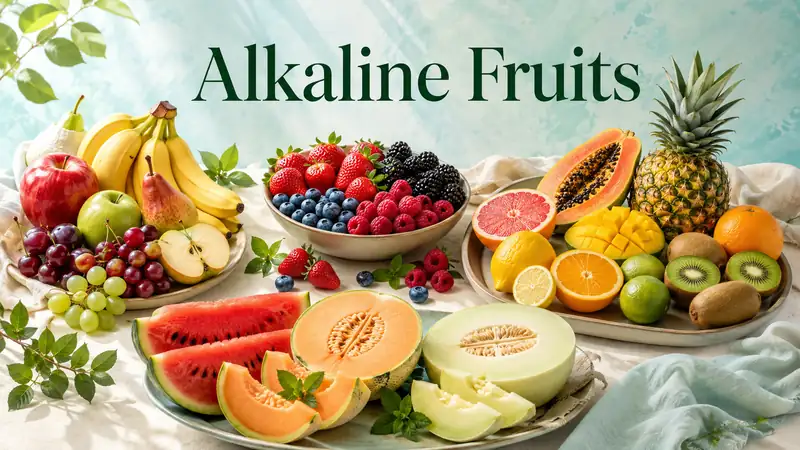
Most fruits are classed as alkaline-forming after digestion. This can be true even when a fruit tastes sour or has an acidic natural pH.
Everyday Fruits
Common choices include:
- Apples
- Bananas
- Pears
- Grapes
- Peaches
- Plums
- Cherries
- Apricots
- Nectarines
These fruits are easy to eat on their own or add to breakfast and snacks. Whole fruit also provides fibre, which is often reduced when fruit is made into juice.
Berries
Common choices include:
- Strawberries
- Blueberries
- Raspberries
- Blackberries
- Cranberries
Fresh and frozen berries can both fit into an alkaline-style eating pattern. Check packaged frozen fruit for added sugar or syrup.
Citrus and Tropical Fruits
Common choices include:
- Lemons
- Limes
- Oranges
- Grapefruit
- Mango
- Papaya
- Pineapple
- Guava
- Kiwi
- Pomegranate
Lemons, limes, and oranges contain natural acids and taste sour. However, a food’s natural acidity is not the same as its estimated acid load after digestion. This is why citrus fruits often appear on alkaline-forming food lists.
People with acid reflux or sensitive teeth may still find that acidic fruits cause discomfort. Being classed as alkaline-forming does not prevent this reaction.
Melons
Common choices include:
- Watermelon
- Cantaloupe
- Honeydew melon
Melons provide water as well as vitamins and minerals. They can be useful when you want a simple fruit choice, but they do not hydrate the body better than regular drinking water.
Dried Fruits
Common choices include:
- Dates
- Raisins
- Prunes
- Dried apricots
- Dried figs
Dried fruits are often included on alkaline diet food lists. However, drying removes much of the water and makes the natural sugar more concentrated. A small serving is usually enough.
Many dried fruits are also rich in potassium. People who need to control potassium should follow advice from their healthcare professional.
Beans, Lentils and Other Plant Proteins
Beans and lentils are not all classified in the same way. Some have a low acid-forming effect, while others may be closer to neutral or mildly acid-forming.
Common choices include:
- Lentils
- Chickpeas
- Black beans
- Kidney beans
- White beans
- Navy beans
- Pinto beans
- Green peas
- Split peas
- Soybeans
- Edamame
- Tofu
- Tempeh
Even when a food is mildly acid-forming, it can still be nutritious. Beans, peas and lentils provide plant protein, fibre, vitamins and minerals. They can also make meals more filling.
Health Canada recommends choosing plant-based protein foods regularly. It lists beans, lentils, nuts, seeds, tofu and other soy foods as useful protein choices.
When using canned beans, drain and rinse them to reduce some of the added sodium. Choose tofu and other soy foods with less added salt when possible.
Nuts and Seeds
Nuts and seeds are a mixed group. Some have a lower acid load, while others are mildly acid-forming. Online alkaline diet charts often disagree about individual types.
Common choices include:
- Almonds
- Chestnuts
- Walnuts
- Cashews
- Brazil nuts
- Pecans
- Macadamia nuts
- Pumpkin seeds
- Sunflower seeds
- Sesame seeds
- Chia seeds
- Flaxseeds
- Hemp seeds
Do not remove a nutritious nut or seed simply because one chart calls it acid-forming. Nuts and seeds can provide healthy fats, fibre, minerals and plant protein.
Choose unsalted varieties when possible. A small handful is a practical serving because nuts and seeds contain a lot of energy in a small amount.
Alkaline Herbs and Spices
Fresh herbs and many spices are commonly included in alkaline food lists.
Examples include:
- Parsley
- Basil
- Cilantro
- Mint
- Dill
- Oregano
- Thyme
- Rosemary
- Sage
- Ginger
- Turmeric
- Garlic
- Cinnamon
Herbs and spices are usually eaten in small amounts. Because of this, they may not have a large effect on the total acid load of a meal.
Their main value is practical: they add flavour without the need for large amounts of salt, sugar or rich sauces.
Herbs and spices should not be presented as cures. They are flavourful foods, not replacements for medical care.
Grains and Grain Alternatives
Most grains are classed as mildly acid-forming rather than alkaline-forming. This does not mean they are bad foods.
Common choices include:
- Oats
- Brown rice
- Wild rice
- Barley
- Quinoa
- Millet
- Buckwheat
- Whole-wheat bread
- Whole-grain pasta
Whole grains provide fibre, carbohydrates, vitamins, and minerals. They can help make a plant-focused meal more balanced and satisfying.
Some alkaline food lists include quinoa, millet, or buckwheat in the alkaline group. Their exact classification may vary between databases. Instead of worrying about a small difference in PRAL, choose whole or minimally processed grains that fit your needs.
Health Canada includes whole grains as part of a healthy eating pattern. Therefore, it would be misleading to label them unhealthy only because they may be acid-forming.
Healthy Fats and Neutral Foods
Most pure oils contain little protein or minerals, so they are usually treated as neutral rather than strongly alkaline-forming or acid-forming.
Common choices include:
- Olive oil
- Avocado oil
- Canola oil
- Other unsaturated plant oils
Use oils in moderate amounts for dressings, roasting or cooking. Being neutral does not mean that unlimited amounts are needed.
Avocado is different from avocado oil. Whole avocado contains fibre, potassium and magnesium, so it is commonly included with alkaline-forming plant foods.
The original PRAL system was designed to estimate a food’s possible acid load, not to create a perfect list of good and bad foods. Newer research also advises treating older PRAL values as relative guidance rather than fixed measurements.¹²
Which Foods Are Usually Acid-Forming?
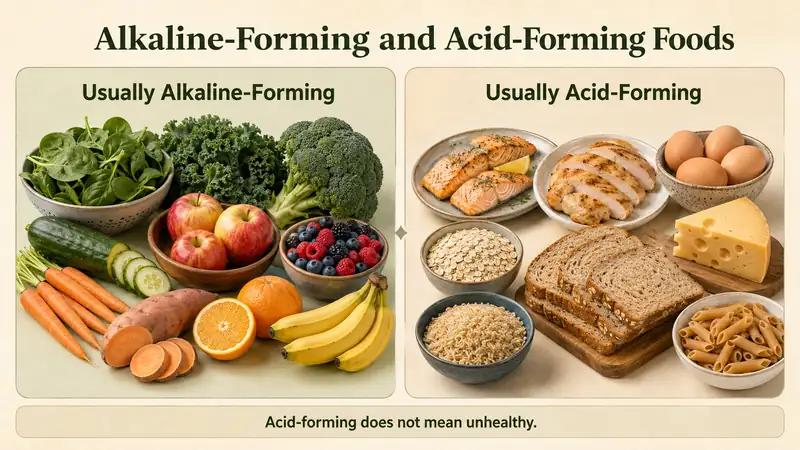
Acid-forming foods are foods that may produce a higher acid load after digestion. They often have a positive PRAL value because they contain more protein and phosphorus in relation to minerals such as potassium, magnesium, and calcium.
This does not mean these foods taste acidic. It also does not mean they make your blood acidic.
Common Acid-Forming Food Groups
Foods that are usually classed as acid-forming include:
- Beef
- Pork
- Lamb
- Chicken
- Turkey
- Fish
- Shellfish
- Eggs
- Hard cheese
- Soft cheese
- Bread
- Pasta
- Rice
- Oats
- Other grain foods
Meat, poultry, fish and eggs are often acid-forming because they provide protein and phosphorus. Cheese may have a higher estimated acid load than milk or yogurt.
Most grains are mildly acid-forming. This includes many whole grains as well as refined grain products. However, the amount can differ based on the grain and how it was processed.
Dairy foods are a mixed group. Hard cheeses tend to be more acid-forming, while milk and yogurt usually have a lower estimated acid load.
Beans, nuts, and seeds can also vary. Some are low acid-forming, while others are neutral or mildly acid-forming. This is one reason different alkaline food charts may not fully agree.
Acid-Forming Does Not Mean Unhealthy
A food’s estimated acid load does not show its full nutritional value. Fish can provide protein and healthy fats. Eggs provide protein and several vitamins. Dairy foods can supply protein and calcium. Whole grains offer fibre, vitamins and minerals.
These foods do not need to be removed just because they have a positive PRAL value. A balanced eating pattern matters more than the score of one food.
Health Canada recommends eating vegetables, fruits, whole grains and suitable protein foods. This is a more balanced approach than dividing every food into “good” alkaline foods and “bad” acid foods.
Highly processed foods should still be limited, but not simply because they may be acid-forming. Many are high in sodium, added sugar, or saturated fat and provide fewer helpful nutrients.
The goal is not to remove all acid-forming foods. A better goal is to eat a wide range of plant foods while still getting enough protein, healthy fats, and other key nutrients.
How to Use This Alkaline Diet Food List
You do not need to change everything you eat at once. Use the list as a simple way to add more vegetables, fruits, and other plant foods to your usual meals.
Start With Foods You Already Eat
Look at the alkaline foods list and choose a few foods you already enjoy. This makes the change easier to maintain.
You could:
- Add berries or banana to breakfast.
- Include one more vegetable with lunch.
- Eat an apple, pear or orange as a snack.
- Add beans or lentils to a familiar dish.
- Use herbs and spices to add flavour.
- Keep frozen vegetables ready for busy days.
Begin by adding foods instead of making a long list of foods to avoid. There is no need to buy costly powders, supplements or special products.
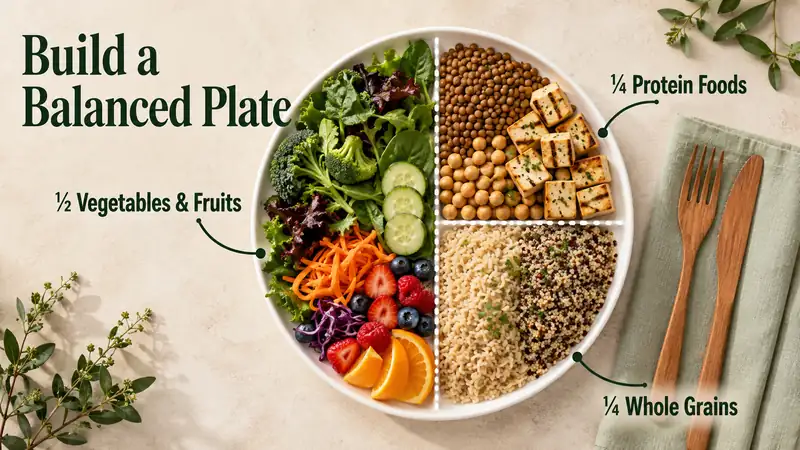
Build a Balanced Plate
An alkaline-style plate should still provide enough protein, carbohydrates, fats, vitamins, and minerals.
A simple plate can include:
- Half vegetables and fruits.
- One-quarter protein foods.
- One-quarter whole grains.
This follows the general plate method from Canada’s Food Guide. It is a balanced eating guide—not a method for changing your blood pH.
Plant proteins can include beans, lentils, tofu, nuts, and seeds. Whole grains can include oats, brown rice, quinoa, barley, or whole-grain bread. Animal protein can also fit if you choose to eat it.
Choose Variety Instead of Chasing the “Most Alkaline” Food
There is no single fruit or vegetable that can balance your whole diet. Eating different foods is more useful than eating large amounts of one item.
Try to vary:
- The colour of your vegetables.
- The fruits you buy each week.
- Your sources of protein.
- The grains and starchy vegetables you eat.
- The herbs and spices you use.
Your choices can also reflect your culture, budget, and local food supply. Fresh produce is not your only option. Frozen fruit and vegetables can be convenient and nutritious. Canned foods can also work when they contain little added sodium or sugar.
Do Not Depend on Exact PRAL Numbers
PRAL values are estimates. They may change based on the type of food, its nutrient content, and the database used for the calculation. Older tables may not fully match foods grown and sold today.
It is not useful to worry about a small difference between two foods. One chart may list a food as slightly alkaline-forming, while another places it close to neutral.
Focus on broad patterns instead:
- Eat vegetables and fruits often.
- Include enough protein.
- Choose whole or minimally processed foods more often.
- Limit foods high in sodium, added sugar, or saturated fat.
- Avoid removing nutritious food groups without a clear reason.
Use the alkaline diet food list as a flexible planning tool. It should make healthy eating simpler—not create fear or stress around food.
Foods Commonly Mistaken for Alkaline or Acidic
A food can taste acidic but have a low estimated acid load after digestion. The opposite can also be true. This is why the words “acidic” and “acid-forming” should not be used as if they mean the same thing.
Are Lemons Acidic or Alkaline?
Lemons are naturally acidic. Their sour taste comes mainly from citric acid. However, they are often classed as alkaline-forming because of the minerals and compounds left after the body processes them.
This does not mean lemon water can alkalize your blood. Your lungs and kidneys control blood pH. Adding lemon to water may provide flavour, but it is not needed to control the body’s pH.
The natural acid in lemons can also affect tooth enamel. Drinking lemon water often or holding it in the mouth may raise the risk of enamel wear.
Is Apple Cider Vinegar an Alkaline Food?
Apple cider vinegar is acidic. Some alkaline diet lists claim that it becomes alkaline-forming after digestion, but this does not mean it changes blood pH.
You do not need apple cider vinegar to follow an alkaline-style eating pattern. It can be used in small amounts in salad dressings or other foods if you enjoy it.
Drinking it undiluted may irritate the mouth, throat, or stomach and may harm tooth enamel. It should not be presented as a detox, cure, or way to control the body’s pH.
Are Tomatoes Acidic or Alkaline?
Tomatoes contain natural acids and have an acidic pH before digestion. However, they are commonly placed among lower acid-forming plant foods.
Tomatoes can be part of a balanced diet. They provide vitamins, minerals, and helpful plant compounds. Their natural acidity may still cause discomfort for some people with acid reflux or a sensitive digestive system.
Being alkaline-forming does not mean a food cannot trigger symptoms. How your body responds to a food is different from its estimated PRAL value.
Are Whole Grains Bad Because They Are Acid-Forming?
No. Oats, brown rice, whole-wheat bread and other whole grains are usually classed as mildly acid-forming. They can still provide fibre, carbohydrates, vitamins and minerals.
A positive PRAL value does not make a food harmful. It only estimates the acid load the kidneys may handle after digestion.
Health Canada recommends eating a variety of whole-grain foods. Removing all grains may make a diet harder to follow and could reduce the intake of useful nutrients.
The better question is not whether one food is perfectly alkaline. Ask whether your full eating pattern is varied, balanced, and able to meet your nutritional needs.
Who Should Be Careful With a High-Alkaline-Food Diet?
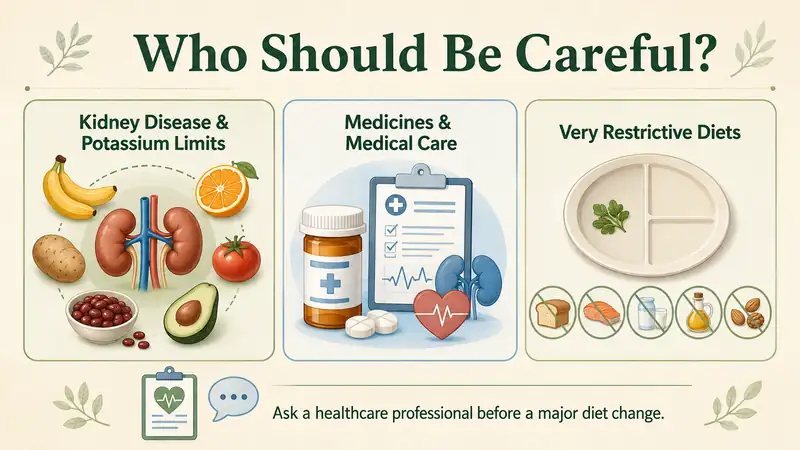
For most healthy adults, eating more vegetables and fruits is a safe and useful goal. However, a strict alkaline diet may not be suitable for everyone.
People With Kidney Disease
Many foods commonly called alkaline are rich in potassium. Examples include:
- Bananas
- Oranges
- Avocados
- Potatoes
- Tomatoes
- Beans
- Dried fruits
- Some nuts and seeds
Healthy kidneys usually help control the amount of potassium in the blood. When the kidneys do not work well, potassium may rise to an unsafe level. Too much or too little potassium can affect the muscles and heart.
People with chronic kidney disease may also need to manage phosphorus, protein, sodium, calcium or fluids. The right amount depends on kidney function, medicines and blood test results.
The National Kidney Foundation advises people with kidney disease to follow guidance from their healthcare professional or renal dietitian. Do not make a large increase in high-potassium foods without checking first.
Salt substitutes also need care. Some replace sodium with potassium and may not be safe for people who have been told to limit potassium.
People Taking Medicines or Receiving Medical Care
Some medicines can affect potassium levels, fluid balance, or kidney function. A major diet change may also affect how a health condition is managed.
Speak with a healthcare professional before starting a strict alkaline diet if you:
- Take medicines that affect potassium.
- Have kidney, heart or liver disease.
- Receive treatment for cancer or another serious condition.
- Have been given a special medical diet.
- Have trouble eating enough food or maintaining your weight.
An alkaline diet should never replace medical care or prescribed treatment.
People Following a Very Restrictive Diet
Some versions of the alkaline diet remove meat, fish, eggs, dairy products, grains, and many other foods. Removing several food groups may make it harder to get enough:
- Protein
- Vitamin B12
- Iron
- Calcium
- Vitamin D
- Healthy fats
- Energy
A plant-focused diet can meet nutritional needs when it is planned well. However, a restrictive food list should not be followed without thinking about the nutrients being removed.
Children, pregnant people, older adults, and anyone with a history of disordered eating may need extra support before making major diet changes.
The safest approach is flexible and balanced. Add more vegetables, fruits, and plant proteins without treating every acid-forming food as harmful. A registered dietitian can help create a plan that fits your health needs.
Frequently Asked Questions
The Bottom Line
Most foods called alkaline are fruits, vegetables, and selected plant foods. A more accurate name is alkaline-forming foods because the term describes their estimated acid load after digestion. It does not mean these foods can change your blood pH.
Use this alkaline foods list as a flexible guide. Eat a variety of vegetables and fruits, include enough protein, and choose whole or minimally processed foods more often. Do not remove whole grains, dairy foods, or other nutritious foods only because a chart calls them acid-forming. PRAL values are estimates, not a complete measure of food quality.
People with kidney disease or potassium limits should speak with a healthcare professional before making a large diet change.
The best approach is balanced, varied, and easy to maintain. If you need help putting these foods into a practical eating pattern, read our complete alkaline diet for beginners guide.
11 Sources and References:
Noble Home Remedies relies on peer-reviewed studies, academic research institutions, and medical associations for accuracy and reliability while avoiding tertiary references. Our editorial policy provides more information about how we ensure our content is accurate and up-to-date.
- Remer T, Manz F. Potential renal acid load of foods and its influence on urine pH. https://pubmed.ncbi.nlm.nih.gov/7797810/
- Storz MA, Ronco AL. The 1995 PRAL values may no longer adequately reflect the acid-base impact of certain foods. https://pubmed.ncbi.nlm.nih.gov/36922789/
- NCBI Bookshelf. Physiology, Acid Base Balance. https://www.ncbi.nlm.nih.gov/books/NBK507807/
- MD Anderson Cancer Center. The alkaline diet: What you need to know. https://www.mdanderson.org/cancerwise/alkaline-diet–what-cancer-patients-should-know.h00-159223356.html
- Health Canada. Eat a variety of healthy foods. https://www.canada.ca/en/health-canada/services/food-guide/explore/healthy-eating-recommendations/eat-variety.html
- Health Canada. Eat protein foods. https://www.canada.ca/en/health-canada/services/food-guide/explore/healthy-eating-recommendations/eat-variety/eat-proteins.html
- Health Canada. Eat vegetables and fruits. https://www.canada.ca/en/health-canada/services/food-guide/explore/healthy-eating-recommendations/eat-variety/eat-vegetables-fruits.html
- Health Canada. Eat whole grain foods. https://www.canada.ca/en/health-canada/services/food-guide/explore/healthy-eating-recommendations/eat-variety/eat-whole-grains.html
- Health Canada. Make healthy meals with Canada’s Food Guide plate. https://www.canada.ca/en/health-canada/services/food-guide/eating-support/cooking/make-healthy-meals-plate.html
- National Kidney Foundation. Nutrition and Kidney Disease, Stages 1-5. https://www.kidney.org/kidney-topics/nutrition-and-kidney-disease-stages-1-5-not-dialysis
- National Cancer Institute. Definition of alkaline diet. https://www.cancer.gov/publications/dictionaries/cancer-terms/def/alkaline-diet
Trust in your purchase:
Every product featured on our site has been carefully researched and selected based on quality, customer ratings, and positive reviews to ensure you receive excellent value for your money.
Thank you for your precious time spent with NobleHomeRemedies.
You may also like:
Apple Juice Nutritional Value
Apple Juice Nutritional Value: Best Secret Weapon to Health Today, we’re going to uncover a…
Alkaline Dinner Recipes
Alkaline Dinner Recipes: 4 Easy Plant-Focused Meal Ideas After a long day, dinner should be…

Beetroot smoothie recipes
5 Revitalizing Beetroot Smoothie Recipes for Morning Energy and Healing Do you wake up feeling…

Does Schizophrenia Get Worse As You Age
Does Schizophrenia Get Worse As You Age – Check Symptoms Schizophrenia is a complex psychological…

Blood Pressure Chart by Age
Blood Pressure Chart by Age: Is Your Number Normal? (Free Guide) Medical Disclaimer: The content…

Salivating Before Vomiting
Why Do You Salivate Before Vomiting? – Nausea and Vomiting Have you ever felt that…