
Alkaline Lunch Ideas: Salads, Soups & Easy Meals
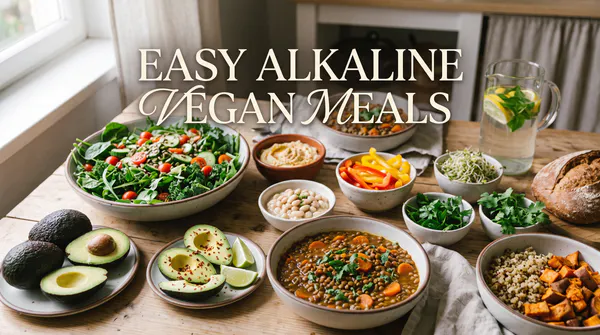
Lunch gives your body the fuel it needs for the second half of the day. Eating a heavy or processed midday meal can often lead to an afternoon energy crash. Choosing a plant-focused, alkaline-friendly lunch can help you feel full, energized, and light.
An alkaline diet focuses on fresh, minimally processed whole foods. These include leafy greens, vegetables, fruits, beans, seeds, and healthy plant fats. While popular claims suggest these foods “alkalize” your blood, science shows that your body already regulates its blood pH between 7.35 and 7.45 through your lungs and kidneys. Eating plant-rich foods simply lowers the dietary acid load on your body. It also provides essential nutrients like potassium and magnesium.
In this guide, you will find easy, healthy alkaline lunch ideas that you can prepare at home, bring to work, or assemble in minutes.
What Makes a Midday Meal Alkaline-Friendly?
An alkaline-friendly lunch is built around fresh whole foods that are gentle on digestion. Most versions of this eating pattern aim for about 60% to 80% alkaline-forming foods and 20% to 40% neutral or slightly acid-forming foods. This balance helps you enjoy nutritious meals without overly strict rules.
Core Plant Ingredients for Lunch
The foundation of an alkaline midday meal comes from colorful, nutrient-dense plant foods. Studies suggest that eating a wide variety of fresh produce supports heart health and overall wellness. Key lunch staples include:
- Leafy Greens: Spinach, baby kale, arugula, and Swiss chard provide fiber, folate, and iron.
- Hydrating Vegetables: Cucumbers, bell peppers, celery, and radishes add crisp texture and high water content.
- Cruciferous Vegetables: Broccoli, cauliflower, and cabbage contain beneficial antioxidant compounds.
- Plant Proteins & Legumes: Chickpeas, lentils, and black beans keep you feeling satisfied.
- Whole Grains: Quinoa and amaranth offer slow-digesting carbohydrates for steady afternoon energy.
Balancing Plant Proteins & Healthy Fats
Protein and healthy fats are essential for a complete lunch. Without them, a simple green salad might leave you hungry an hour later.
- Healthy Fats: Avocados, cold-pressed olive oil, and tahini (sesame paste) help your body absorb vitamins.
- Plant-Based Proteins: Steamed edamame, tofu, and tempeh supply clean plant protein.
- Nuts and Seeds: Pumpkin seeds, almonds, walnuts, and chia seeds add crunch, healthy omega fats, and magnesium.
Foods to Limit at Midday
To keep your meal light and lower dietary acid load, it helps to limit certain items at lunchtime:
- Processed Meats: Bacon, deli meats, and sausages are high in sodium and saturated fat.
- Refined Grains: White bread, pastries, and refined pastas can cause blood sugar spikes.
- Sugary Beverages: Carbonated sodas and sweetened drinks add empty calories and can trigger bloating.
- Heavy Dairy: Excess hard cheeses and heavy cream dressings can slow down digestion.
Refreshing & Filling Alkaline Salads
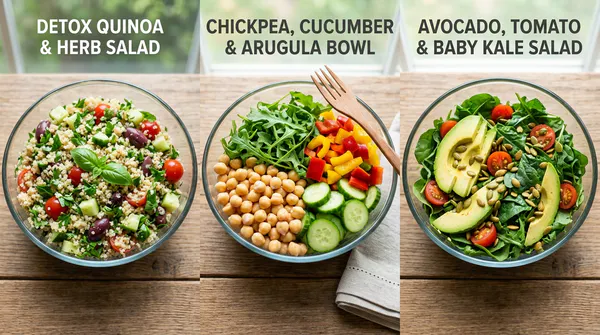
Salads are one of the easiest ways to enjoy an alkaline-friendly lunch. Combining crisp leafy greens with colorful vegetables, plant proteins, and light olive oil dressings provides fiber, potassium, and antioxidants without feeling heavy.
Detox Quinoa & Herb Salad
Quinoa is a gluten-free grain-like seed that provides clean plant protein and fiber while remaining gentle on digestion. This salad uses fresh green herbs for extra flavor and nutrients.
- Key Ingredients: Cooked quinoa, fresh parsley, basil, diced cucumber, cherry tomatoes, and Kalamata olives.
- Dressing: Cold-pressed extra virgin olive oil and fresh lemon juice.
- Why It Works: Lemons taste sour, but they leave behind alkaline mineral compounds like potassium after digestion. The fresh parsley and cucumber add hydration and crisp flavor.
Chickpea, Cucumber & Arugula Bowl
Chickpeas are a budget-friendly legume that adds satisfying plant protein to your midday meal. Combining them with peppery arugula makes a quick 10-minute lunch.
- Key Ingredients: Canned or cooked chickpeas (rinsed), baby arugula, diced bell peppers, and cucumbers.
- Dressing: Extra virgin olive oil, minced garlic, and a splash of raw apple cider vinegar.
- Why It Works: Chickpeas provide fiber and protein to keep you full through the afternoon. Arugula and cucumbers are water-rich vegetables that support easy digestion.
Avocado, Tomato & Baby Kale Salad
Kale is one of the most nutrient-dense greens you can eat, packed with magnesium, calcium, and vitamins. Pairing it with healthy fats from avocado creates a satisfying combination.
- Key Ingredients: Baby kale or spinach, sliced ripe avocado, ripe tomatoes, and toasted pumpkin seeds.
- Dressing: Lemon juice, Dijon mustard, and cold-pressed olive oil.
- Why It Works: Healthy fats from avocado help your body absorb fat-soluble vitamins from leafy kale. Pumpkin seeds supply extra magnesium and a pleasant crunch.
Nourishing & Warm Alkaline Soups
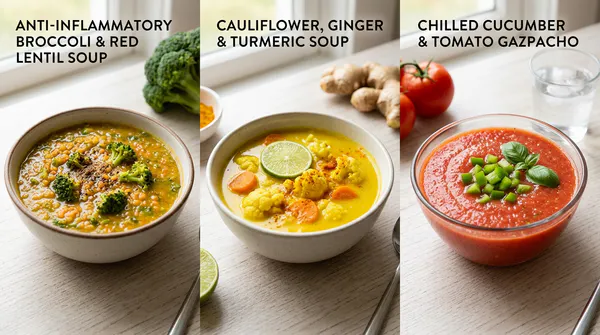
Warm soups are comforting, hydrating, and ideal for meal prep. Cooking vegetables in a broth keeps all their minerals and vitamins in the bowl.
Anti-Inflammatory Broccoli & Red Lentil Soup
This simple vegetable soup takes only about 30 minutes to make in one pot. Red lentils break down easily as they cook, creating a naturally creamy texture without dairy.
- Key Ingredients: Chopped broccoli florets, red lentils, diced carrots, celery, and garlic.
- Broth: Low-sodium vegetable broth spiced with cumin and black pepper.
- Why It Works: Broccoli is rich in potassium and antioxidants. Red lentils add clean plant protein and fiber to support steady energy levels.
Cauliflower, Ginger & Turmeric Vegetable Soup
This soothing soup features warm spices known for their comforting flavor and digestive support.
- Key Ingredients: Cauliflower florets, sliced carrots, minced fresh ginger, and ground turmeric.
- Broth: Light vegetable stock finished with a squeeze of fresh lime or lemon juice.
- Why It Works: Cauliflower is a non-starchy cruciferous vegetable that lowers the acid load of your meal. Ginger and turmeric provide soothing, plant-based compounds that support gut comfort.
Chilled Cucumber & Tomato Gazpacho
For hot summer days, a chilled gazpacho provides a refreshing, no-cook lunch option full of raw plant nutrients.
- Key Ingredients: Ripe tomatoes, seedless cucumbers, green bell pepper, garlic, and fresh basil.
- Preparation: Blend the fresh ingredients together with olive oil and a splash of apple cider vinegar until smooth, then chill before serving.
- Why It Works: Raw cucumbers and tomatoes have high water content, helping you stay hydrated and energized during busy workdays.
Quick & Easy Assembly Lunch Ideas (Under 15 Minutes)
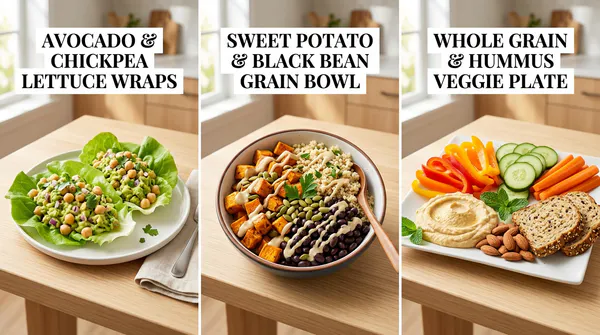
When you are short on time, preparing a healthy lunch can feel challenging. These quick assembly ideas require minimal cooking and can be put together in under 15 minutes using simple, raw, or pre-cooked ingredients.
Avocado & Chickpea Lettuce Wraps
Lettuce wraps are a light, low-carb alternative to traditional sandwich bread. They offer a refreshing crunch while keeping your meal plant-focused.
- Key Ingredients: Crisp butter lettuce or romaine leaves, mashed canned chickpeas, ripe avocado, diced red onion, and fresh cilantro.
- Preparation: Mash the chickpeas and avocado together in a bowl with a squeeze of lime juice and a pinch of salt. Spoon the mixture directly into clean lettuce leaves.
- Why It Works: Romaine and butter lettuce are hydrating, alkaline-friendly greens. Combining healthy fats from avocado with protein from chickpeas provides steady afternoon energy without heavy fullness.
Sweet Potato & Black Bean Grain Bowl
Grain bowls are versatile, satisfying, and easy to build using leftover cooked ingredients.
- Key Ingredients: Pre-cooked quinoa, roasted sweet potato cubes, rinsed black beans, pumpkin seeds, and a drizzle of tahini.
- Preparation: Combine the grains, sweet potatoes, and black beans in a bowl. Top with pumpkin seeds and tahini mixed with a little warm water and lemon juice.
- Why It Works: Sweet potatoes and black beans offer complex carbohydrates and dietary fiber. Tahini (made from ground sesame seeds) adds essential minerals like calcium and magnesium along with rich, creamy flavor.
Whole Grain & Hummus Veggie Plate
A Mediterranean-style platter is one of the easiest lunches to assemble when you do not want to cook at all.
- Key Ingredients: Traditional chickpea hummus, sliced bell peppers, cucumber coins, carrot sticks, celery, raw almonds, and a slice of sprouted whole-grain bread.
- Preparation: Arrange the raw vegetables, almonds, and sprouted bread on a plate with a generous scoop of hummus for dipping.
- Why It Works: Raw veggies are rich in potassium and water, while sprouted bread and hummus deliver clean plant protein and slow-digesting fiber.
Meal Prep & Storage Tips for Work & Travel
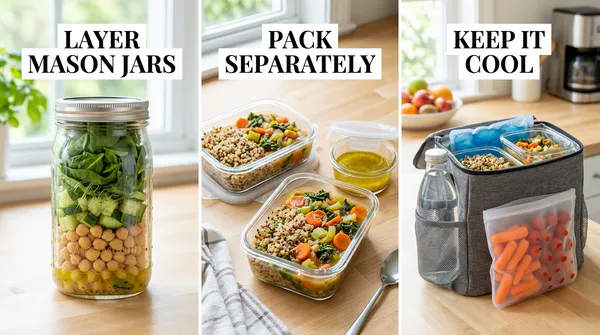
Preparing your lunches in advance saves time, reduces stress, and helps you stick to your healthy eating goals during busy weekdays.
- Pack Dressings Separately: Oil-based or lemon dressings can make tender salad greens soggy if mixed too early. Store dressings in small, airtight containers and toss them with your salad right before eating.
- Layer Mason Jar Salads: When packing salads in glass jars, put liquid dressings at the bottom. Next, add hard vegetables like cucumbers, carrots, and chickpeas. Place delicate greens like spinach or arugula at the very top so they stay dry and crisp.
- Batch-Cook Grains and Soups: Cook large portions of quinoa, lentils, or vegetable soup over the weekend. Divide them into individual glass containers for up to 3 to 4 days of easy lunches.
- Keep Produce Cold: If traveling or taking lunch to work, store your meal in an insulated bag with an ice pack to maintain food safety and keep raw vegetables crisp.
Side Effects, Safety Precautions & Who Should Avoid This Diet
While adding more fruits, vegetables, and legumes to your lunch is generally healthy, following an overly strict alkaline diet comes with health risks and side effects. Understanding these safety guidelines ensures you nourish your body without unnecessary restriction.
Medical Nuance: Blood pH vs. Urine pH
A common misconception is that eating alkaline foods changes your blood chemistry. In a healthy person, your blood pH is strictly maintained between 7.35 and 7.45 by your lungs and kidneys.
While eating plant-rich meals can temporarily change the pH of your urine, urine pH is simply a measure of waste being filtered by your kidneys—it does not reflect your blood pH or overall health. You do not need to “alkalize your blood” to enjoy the benefits of eating nutritious whole foods.
Who Should Exercise Caution or Avoid This Diet?
Certain individuals should be very cautious or avoid strict alkaline-style eating plans altogether:
- People with Chronic Kidney Disease (CKD): Alkaline diets are naturally high in potassium-rich foods (like spinach, avocados, sweet potatoes, and bananas). When kidneys are impaired, they cannot clear excess potassium efficiently. This can lead to hyperkalemia (dangerously high blood potassium), which can cause serious heart rhythm problems.
- Individuals on Certain Medications: People taking potassium-sparing diuretics, ACE inhibitors, or blood pressure medications should consult their doctor before significantly increasing potassium intake.
- People with a History of Eating Disorders: Categorizing foods rigidly as “good/alkaline” or “bad/acidic” can foster an unhealthy relationship with food or trigger restrictive eating patterns.
- Pregnant or Nursing Women and Children: Growing bodies and expecting mothers require adequate protein, calcium, iron, and vitamin B12, which can be difficult to get on an overly restrictive plant-only diet without proper medical supervision.
Potential Side Effects & Nutrient Deficiencies
Switching abruptly to an alkaline eating style or eliminating whole food groups can cause temporary or long-term issues:
- Digestive Adjustment: Rapidly increasing your fiber intake from raw vegetables and beans can lead to temporary gas, bloating, and stomach cramps. Increase your fiber intake gradually and drink plenty of water.
- Protein Deficiency: Completely cutting out animal protein without replacing it with adequate plant proteins (like lentils, tofu, and beans) can cause muscle loss, weakness, and fatigue.
- Key Nutrient Gaps: Unplanned, strict elimination diets can lead to deficiencies in essential nutrients, including calcium, vitamin D, vitamin B12, iron, and zinc.
Frequently Asked Questions (FAQs)
Conclusion
Preparing an alkaline-friendly lunch is a simple, effective way to enjoy more whole, nutrient-dense plant foods. By focusing on fresh salads, warm soups, and quick-assembly grain bowls, you provide your body with steady midday energy, essential vitamins, and fiber without relying on heavily processed ingredients.
Remember that the main benefit of this eating pattern comes from eating more vegetables and whole foods—not from trying to change your blood chemistry. Avoid extreme food restrictions, ensure you get enough protein and essential nutrients, and always consult a healthcare professional if you have underlying health conditions like kidney disease.
Explore More Healthy Alkaline Resources:
- Start with the Basics: Read our full Alkaline Diet for Beginners guide for foundational principles and science-backed reviews.
- Find Alkaline Ingredients: Check out our comprehensive Alkaline Foods List to explore everyday fruits, vegetables, and plant staples.
- Get More Recipe Inspiration: Browse our collection of Alkaline Recipes and Easy Alkaline Meals.
- Plan Your Evening Meal: Look ahead to dinner with our top-rated Alkaline Dinner Recipes.
4 Sources:
Noble Home Remedies relies on peer-reviewed studies, academic research institutions, and medical associations for accuracy and reliability while avoiding tertiary references. Our editorial policy provides more information about how we ensure our content is accurate and up-to-date.
- 15 Easy Alkaline Diet Recipes – https://www.beautybites.org/alkaline-recipes/
- Alkaline Diet Plan: A Science-Based Review – https://www.forbes.com/health/nutrition/diet/alkaline-diet-review/
- Alkaline Diet: Foods High in Alkaline – https://www.webmd.com/diet/alkaline-diets
- Alkaline Diet: Foods, Meal Plan & What Science Says – https://www.tuasaude.com/en/alkaline-diet/
- Alkaline meal plan for lunch – https://listonic.com/meal-plans/en/alkaline-meal-plan-for-lunch
- Health Claims: Letter of Denial – Alkaline and Earth Alkaline Citrates Minimizing the Risk of Osteoporosis – https://www.fda.gov/food/nutrition-food-labeling-and-critical-foods/health-claims-letter-denial-alkaline-and-earth-alkaline-citrates-minimizing-risk-osteoporosis
- What Is the Alkaline Diet, and Is It Safe? – https://health.clevelandclinic.org/alkaline-diet
- What Is the Alkaline Diet? Review, Research, Food List, and More – https://www.everydayhealth.com/diet-and-nutrition/diet/comprehensive-review-alkaline-diet-what-it-how-it-works-what-eat/