
Alkaline Dinner Recipes: 4 Easy Plant-Focused Meal Ideas
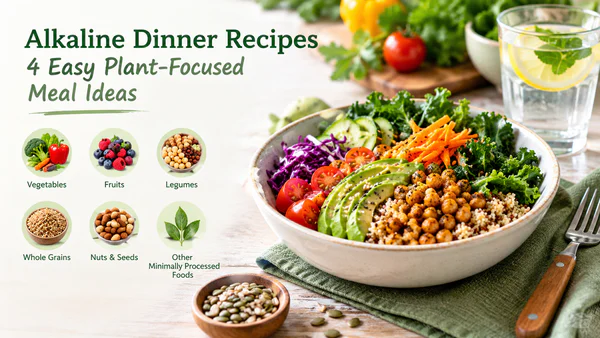
After a long day, dinner should be simple, filling, and easy to prepare. Many people who follow an alkaline-style diet choose meals built around vegetables, fruits, legumes, whole grains, nuts, seeds, and other minimally processed foods.
In this article, “alkaline-style” means a meal pattern that puts more plant foods on the plate. It does not mean that the meal will make your blood more alkaline. Your blood pH is kept within a very narrow range by your lungs and kidneys. Food can affect the acid load of the diet and urine pH, but that is different from changing blood pH.
The useful part of these meals is that they can help you eat more vegetables, fiber, whole grains, and plant-based protein. These are important parts of a healthy eating pattern. The American Heart Association’s 2026 dietary guidance recommends plenty of vegetables and fruits, mostly whole grains, healthy protein sources, and unsaturated fats while limiting highly processed foods, added sugars, and excess sodium.
What Makes a Healthy Alkaline-Style Dinner?
A healthy dinner does not need to follow strict food rules. Focus on a good mix of vegetables, protein, whole grains, and healthy fats.
Good choices include:
- Leafy greens such as spinach, kale, and Swiss chard
- Vegetables such as broccoli, peppers, carrots, zucchini, and sweet potatoes
- Beans, chickpeas, and lentils
- Whole grains such as quinoa, millet, brown rice, and wild rice
- Nuts and seeds
- Avocado and olive oil
- Fresh, frozen, or canned vegetables with little added sodium
These foods provide important nutrients such as fiber, vitamins, minerals, and protein. Plant-based protein foods such as beans, lentils, nuts, and seeds are also encouraged in healthy dietary patterns.
You do not need to remove every food sometimes called “acid-forming.” A balanced diet matters more than following strict food-pH rules.
4 Easy Alkaline Dinner Recipes
1. Roasted Sweet Potato and Quinoa Bowl
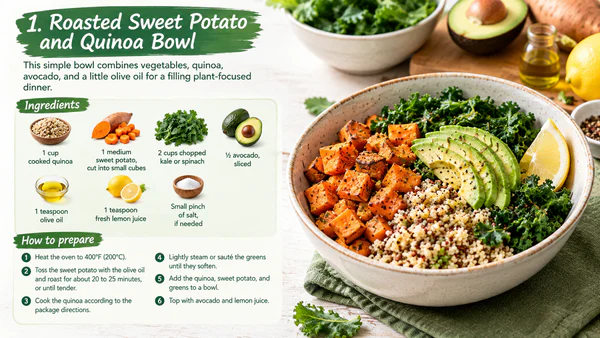
This simple bowl combines vegetables, quinoa, avocado, and a little olive oil for a filling plant-focused dinner.
Ingredients
- 1 cup cooked quinoa
- 1 medium sweet potato, cut into small cubes
- 2 cups chopped kale or spinach
- ½ avocado, sliced
- 1 teaspoon olive oil
- 1 teaspoon fresh lemon juice
- Small pinch of salt, if needed
How to prepare
- Heat the oven to 400°F (200°C).
- Toss the sweet potato with the olive oil and roast for about 20 to 25 minutes, or until tender.
- Cook the quinoa according to the package directions.
- Lightly steam or sauté the greens until they soften.
- Add the quinoa, sweet potato, and greens to a bowl.
- Top with avocado and lemon juice.
2. Mild Lentil and Vegetable Curry
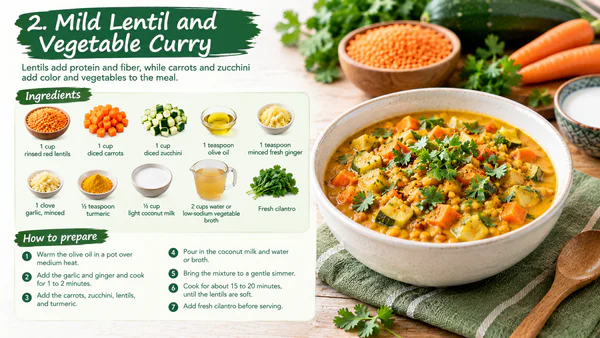
Lentils add protein and fiber, while carrots and zucchini add color and vegetables to the meal.
Ingredients
- 1 cup rinsed red lentils
- 1 cup diced carrots
- 1 cup diced zucchini
- 1 teaspoon olive oil
- 1 teaspoon minced fresh ginger
- 1 clove garlic, minced
- ½ teaspoon turmeric
- ½ cup light coconut milk
- 2 cups water or low-sodium vegetable broth
- Fresh cilantro
How to prepare
- Warm the olive oil in a pot over medium heat.
- Add the garlic and ginger and cook for 1 to 2 minutes.
- Add the carrots, zucchini, lentils, and turmeric.
- Pour in the coconut milk and water or broth.
- Bring the mixture to a gentle simmer.
- Cook for about 15 to 20 minutes, until the lentils are soft.
- Add fresh cilantro before serving.
3. Bell Pepper and Broccoli Stir-Fry With Millet
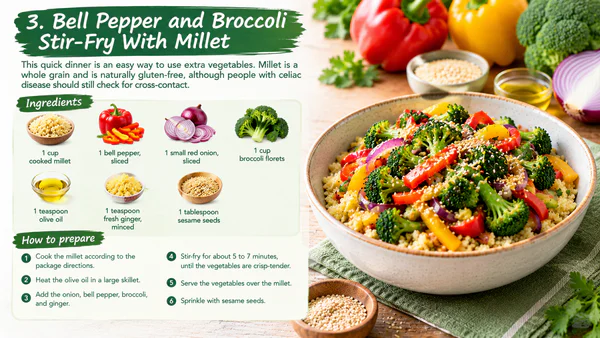
This quick dinner is an easy way to use extra vegetables. Millet is a whole grain and is naturally gluten-free, although people with celiac disease should still check for cross-contact.
Ingredients
- 1 cup cooked millet
- 1 bell pepper, sliced
- 1 small red onion, sliced
- 1 cup broccoli florets
- 1 teaspoon olive oil
- 1 teaspoon fresh ginger, minced
- 1 tablespoon sesame seeds
How to prepare
- Cook the millet according to the package directions.
- Heat the olive oil in a large skillet.
- Add the onion, bell pepper, broccoli, and ginger.
- Stir-fry for about 5 to 7 minutes, until the vegetables are crisp-tender.
- Serve the vegetables over the millet.
- Sprinkle with sesame seeds.
4. Chickpea and Vegetable Soup
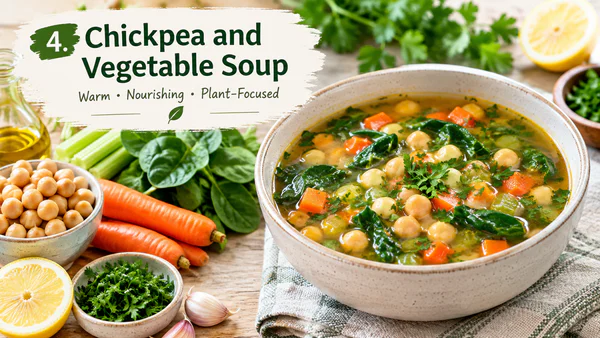
This warm soup combines chickpeas, vegetables, and greens in a simple one-pot meal.
Ingredients
- 1½ cups cooked chickpeas, rinsed
- 1 cup chopped carrots
- 1 cup chopped celery
- 2 cups fresh spinach
- 3 cups low-sodium vegetable broth
- 1 teaspoon olive oil
- 1 clove garlic, minced
- Fresh parsley
- A squeeze of lemon juice
How to prepare
- Heat the olive oil in a large pot.
- Add the carrots, celery, and garlic and cook for about 5 minutes.
- Add the chickpeas and vegetable broth.
- Bring the soup to a gentle boil, then reduce the heat.
- Simmer for about 15 minutes.
- Stir in the spinach and cook until wilted.
- Add parsley and a little lemon juice before serving.
How to Build a Balanced Dinner
You do not need to calculate the pH of every food.
For a simple guide, Health Canada’s Food Guide suggests making about half the plate vegetables and fruits, one-quarter whole grains, and one-quarter protein foods, with plant-based protein choices used more often.
For an alkaline-style dinner, that could look like:
- ½ plate: broccoli, spinach, carrots, peppers, zucchini, or other vegetables
- ¼ plate: quinoa, millet, brown rice, or another whole grain
- ¼ plate: lentils, chickpeas, beans, tofu, nuts, or seeds
Add a small amount of an unsaturated fat such as olive oil, avocado, nuts, or seeds.
Simple Meal-Prep Tips
A little preparation can make weeknight dinners much easier.
Cook a batch of quinoa, millet, or brown rice and store it in the refrigerator. You can also wash your greens and cut some vegetables ahead of time.
Keep useful pantry foods on hand, such as canned chickpeas, lentils, low-sodium broth, whole grains, nuts, seeds, and herbs.
Fresh food is not the only option. Frozen and canned vegetables can also fit a healthy eating pattern. When buying canned or packaged foods, look for options with little or no added sodium and sugar.
Safety and Nutrition Notes
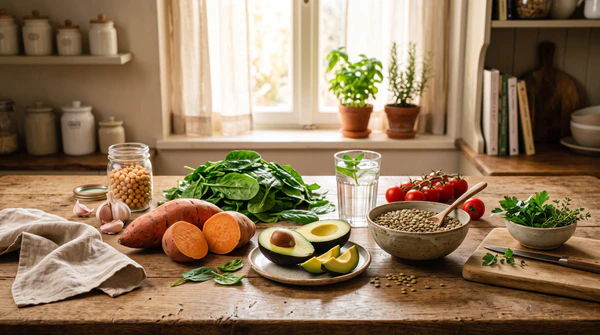
Eating more vegetables and plant foods is healthy for many people, but a major change in diet may not be right for everyone.
Kidney disease: Some foods used in these recipes, including sweet potatoes, spinach, avocado, and lentils, contain potassium. People with chronic kidney disease may need different amounts of potassium depending on their kidney function, blood tests, medicines, and treatment. Do not start a low- or high-potassium diet without guidance from your healthcare professional or kidney dietitian.
Warfarin: Leafy greens contain vitamin K. People taking warfarin are generally advised to keep their vitamin K intake consistent rather than suddenly making large changes. Speak with your healthcare professional before making major diet changes.
Fiber: If you suddenly eat much more beans, lentils, vegetables, and whole grains, you may notice gas or bloating. Increase high-fiber foods gradually and drink enough fluids.
Restricted diets: If you remove dairy, eggs, meat, or other food groups, make sure you still get enough protein and important nutrients. A registered dietitian can help you plan a balanced diet when needed.
Can an Alkaline Dinner Change Your Blood pH?
No. Your body works hard to keep your blood pH within a very narrow range. The lungs and kidneys are the main systems that control this balance. Diet can affect urine pH and dietary acid load, but that does not mean an alkaline meal can make your blood alkaline.
There is also no good evidence that an alkaline diet should be used to treat or cure disease. The National Cancer Institute, for example, states that there is no proof that an alkaline diet can slow, cure, or prevent cancer from returning.
The healthier takeaway is much simpler: use alkaline-style meals as a way to eat more whole plant foods, not as a medical treatment.
Should You Eat a Light Dinner Before Bed?
A very large meal close to bedtime may cause discomfort and can worsen reflux in some people. It may also make it harder to sleep.
You do not need a special “alkaline” meal for good sleep. Choose a meal that is comfortable for you, avoid overeating, and leave enough time between dinner and bedtime when possible.
Final Thoughts
Alkaline dinner recipes can be a simple way to add more vegetables, legumes, whole grains, nuts, and seeds to your meals.
You do not need strict food rules or complicated pH charts. Build balanced meals, choose mostly minimally processed foods, and include a good source of protein.
Most importantly, remember that the value of these dinners comes from healthy food choices and overall eating habits, not from changing the pH of your blood. A healthy diet should support your nutritional needs without unnecessary restrictions.
7 Sources:
Noble Home Remedies relies on peer-reviewed studies, academic research institutions, and medical associations for accuracy and reliability while avoiding tertiary references. Our editorial policy provides more information about how we ensure our content is accurate and up-to-date.
- 15 Delicious Alkaline-Rich Plant-Based Recipes! – One Green Planet: https://www.onegreenplanet.org/vegan-food/alkaline-vegan-recipes/
- 15 Easy Alkaline Diet Recipes – Beauty Bites: https://www.beautybites.org/alkaline-recipes/ 40 Easy Alkaline Diet Meal Plan Recipes for Beginners – Intentionally Eat: https://intentionallyeat.com/alkaline-diet-meal-plan-recipes/
- 5 easy alkaline dinner ideas | Dailey Foods: https://daileyfoods.com/easy-alkaline-dinner-ideas/
- Neura Health | 21-Day Alkaline Diet Meal Plan: Complete Recipes & Food List: https://neura.health/insight/alkaline-diet-meal-plan-with-recipes
- The 21-Day Alkaline Diet Plan by Laura Rimmer (Ebook) – Read free for 30 days: https://www.everand.com/author/826352424/Laura-Rimmer