
Alkaline Meal Plan: 7 Days of Meals + Grocery List
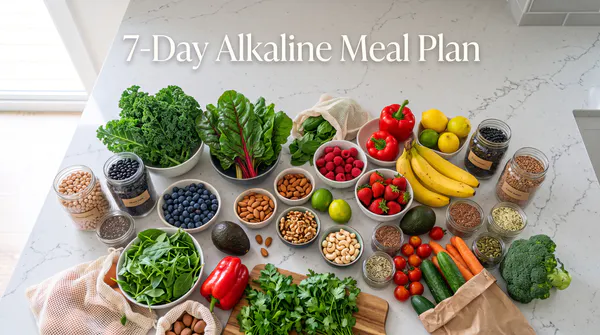
Starting a healthier way of eating can feel overwhelming when there are too many rules. An alkaline diet simplifies things by focusing on whole, plant-based foods. This eating pattern encourages you to eat more leafy greens, fresh fruits, legumes, nuts, and seeds while reducing heavily processed items, refined sugars, and high-sodium foods.
Many claims on the internet suggest that alkaline foods can change the pH level of your blood. However, general scientific consensus clarifies that food does not alter blood pH. Your lungs and kidneys work constantly to keep your blood pH strictly balanced in a healthy, narrow range. While eating plant-rich foods can alter the pH of your urine, it does not change your blood chemistry.
The genuine health benefits of an alkaline meal plan come from its nutrient-dense ingredients. By adding more vegetables, fruits, and fiber to your daily plate, you provide your body with essential vitamins, minerals, and antioxidants. This supports natural digestion, daily energy, and overall health without requiring extreme restrictions.
This 7-day meal plan provides a realistic, week-long routine to help you organize your grocery trips and daily prep. If you are brand new to this approach and want to understand the foundational principles first, take a look at our complete Alkaline Diet for Beginners guide.
2. Essential Tips Before You Begin Your Alkaline Week
Preparing for a full week of healthy eating is much easier when you have a clear strategy. You do not need to overhaul your entire pantry overnight or aim for perfection. A successful meal plan is built on manageable daily habits and simple organization.
The 80/20 Rule for Stress-Free Balance
Trying to eat 100% alkaline-forming foods can be stressful, restrictive, and unnecessary. A far more realistic approach is the 80/20 principle:
- 80% Plant-Based Alkaline Foods: Fill most of your plate with fresh vegetables, leafy greens, low-sugar fruits, legumes, nuts, and seeds.
- 20% Neutral or Mildly Acidic Whole Foods: Reserve a small portion of your plate for other healthy, whole foods like oats, quinoa, wild rice, or lean protein sources.
This flexible approach ensures you get a wide variety of essential nutrients without feeling isolated or restricted during social meals or busy workdays.
Simple Meal Prep Strategies
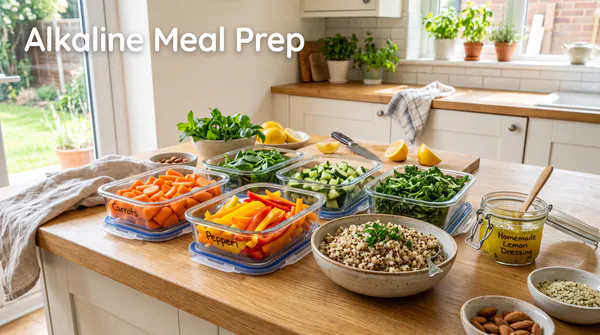
A little preparation on the weekend saves time and prevents impulse eating during busy weekdays. Here are four practical alkaline meal prep steps you can complete in under an hour:
- Batch Cook Base Grains: Cook a large container of quinoa, wild rice, or millet. Storing pre-cooked grains in the refrigerator gives you a quick base for lunches and dinner bowls.
- Wash and Prep Fresh Veggies: Chop hardy vegetables like carrots, bell peppers, cucumbers, and broccoli in advance. Keep them in airtight glass containers with a damp paper towel to preserve freshness.
- Make Homemade Salad Dressings: Store-bought dressings often contain hidden sugars, artificial preservatives, and high amounts of sodium. Whisk extra virgin olive oil, fresh lemon juice, minced garlic, and dried herbs in a small jar. Keep dressings separate until right before serving to keep greens crisp.
- Pre-Portion Healthy Snacks: Place raw almonds, pumpkin seeds, and dried fruit into small, reusable snack bags so you always have a wholesome option ready when hunger strikes.
By keeping whole ingredients chopped, cooked, and ready to assemble, sticking to your meal plan becomes natural and effortless.
3. Your Complete 7-Day Alkaline Diet Meal Plan

This 7-day meal plan focuses on simple, whole, plant-based foods that deliver high fiber, vitamins, and minerals. You can adjust portion sizes based on your individual energy needs and daily activity. Stay well-hydrated throughout the week by drinking plenty of plain water or water with a fresh slice of lemon.
Day 1: Green Power & Fiber Start
- Breakfast: Warm lemon water followed by a bowl of warm rolled oats topped with fresh blueberries and sliced raw almonds.
- Lunch: Spinach and quinoa salad tossed with cherry tomatoes, diced cucumbers, extra virgin olive oil, and fresh lemon juice.
- Dinner: Baked tofu or cooked lentils served alongside steamed broccoli florets and a roasted sweet potato.
- Snack: Fresh cucumber slices paired with a small handful of raw pumpkin seeds.
Day 2: Nourishing Quinoa & Plant Bowls
- Breakfast: A green smoothie made with fresh spinach, half a ripe banana, unsweetened almond milk, and one tablespoon of chia seeds.
- Lunch: Chickpea and avocado salad mixed with chopped parsley, celery, and a light olive oil dressing.
- Dinner: Vegetable stir-fry featuring bok choy, bell peppers, carrots, and snap peas cooked lightly in sesame oil and served over brown rice.
- Snack: One small apple served with a tablespoon of natural almond butter.
Day 3: Colorful Whole Foods & Warm Teas
- Breakfast: Overnight chia seed pudding prepared with unsweetened almond milk and topped with fresh raspberries.
- Lunch: Hearty lentil and vegetable soup served with a simple side salad of mixed baby greens.
- Dinner: Baked salmon (or roasted cauliflower steaks for a fully plant-based option) served with asparagus and wild rice.
- Snack: Crunchy carrot and celery sticks served with two tablespoons of homemade hummus.
Day 4: Root Vegetables & Hearty Greens
- Breakfast: Warm lemon water and mashed avocado served on a slice of toasted sprouted whole-grain bread.
- Lunch: Kale and quinoa power bowl mixed with roasted beetroot, shredded carrots, and toasted sunflower seeds.
- Dinner: Spiralized zucchini noodles tossed with fresh basil pesto (made with garlic, olive oil, and pine nuts or walnuts).
- Snack: Fresh pear slices paired with a small handful of raw walnuts.
Day 5: Hydration & High-Fiber Focus
- Breakfast: Berry-spinach smoothie blended with flaxseed meal and unsweetened coconut water.
- Lunch: Mediterranean cucumber and tomato salad with black-eyed peas, red onion, and fresh oregano.
- Dinner: Roasted butternut squash paired with sautéed kale in olive oil and steamed tempeh or black beans.
- Snack: Fresh watermelon or cantaloupe slices.
Day 6: Light Whole Grains & Cozy Vegetable Soups
- Breakfast: Warm oatmeal topped with pumpkin seeds and ground cinnamon.
- Lunch: Collard green wraps filled with shredded red cabbage, grated carrots, avocado, and spreadable hummus.
- Dinner: Vegetable minestrone soup prepared with zucchini, green beans, tomatoes, and white kidney beans.
- Snack: Sliced red and yellow bell peppers with fresh guacamole.
Day 7: Refreshing Citrus & Roasted Veggie Wrap-Up
- Breakfast: Fresh grapefruit halves paired with a small handful of raw almonds.
- Lunch: Leftover vegetable minestrone soup or a warm quinoa bowl with leftover roasted vegetables.
- Dinner: Sheet-pan roasted vegetables (Brussels sprouts, carrots, red onions) served alongside crisp roasted chickpeas.
- Snack: A warm cup of chamomile or peppermint tea with a handful of sunflower seeds.
4. Printable Alkaline Grocery List by Category
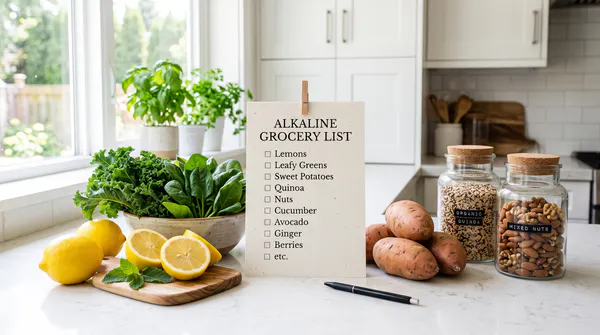
To make your trip to the supermarket as efficient as possible, here is a complete weekly grocery list organized by department. This list includes all the whole-food ingredients needed to prepare the 7-day meal plan above.
Fresh Produce
- Leafy Greens: Spinach, kale, bok choy, mixed baby greens, collard greens.
- Non-Starchy Vegetables: Cucumbers, celery, bell peppers (red, yellow, green), broccoli, zucchini, snap peas, red and green cabbage.
- Root Vegetables: Sweet potatoes, beets, carrots, red and yellow onions, garlic.
- Fruits: Lemons, limes, blueberries, raspberries, apples, pears, avocados, bananas, grapefruit, cantaloupe or watermelon.
- Fresh Herbs: Basil, parsley, oregano.
Whole Grains & Legumes
- Grains: Rolled oats, quinoa, wild rice, brown rice, sprouted whole-grain bread.
- Legumes: Dried or low-sodium canned chickpeas, lentils (green or red), black beans, white kidney beans, black-eyed peas.
- Plant Proteins: Firm tofu, organic tempeh.
Nuts, Seeds & Healthy Fats
- Raw Nuts: Almonds, walnuts, pine nuts.
- Seeds: Chia seeds, flaxseed meal, raw pumpkin seeds, sunflower seeds.
- Oils: Extra virgin olive oil, cold-pressed sesame oil.
Pantry Staples & Beverages
- Milks & Liquids: Unsweetened almond milk, unsweetened coconut water.
- Condiments & Spreads: Natural almond butter, tahini or store-bought hummus (low sodium), fresh guacamole.
- Teas & Spices: Chamomile tea, peppermint tea, ground cinnamon, sea salt, black pepper.
5. Side Effects, Safety Precautions & Who Should Avoid This Plan
While eating more fruits, vegetables, and whole grains is beneficial for most people, drastic dietary changes are not suitable for everyone. Medical experts emphasize that dietary plans should always be tailored to your unique health profile.
Who Should Be Cautious or Avoid This Plan
Certain individuals should consult a physician or registered dietitian before starting an alkaline meal plan:
- People with Kidney Disease: Individuals with Chronic Kidney Disease (CKD) or impaired kidney function must monitor their intake of minerals like potassium, phosphorus, and magnesium. Plant-heavy diets are often naturally high in potassium, which can accumulate to dangerous levels if your kidneys cannot filter it properly.
- Individuals Taking Specific Medications: People using potassium-sparing diuretics, ACE inhibitors, or heart medications should seek medical guidance. High-potassium foods can interact with these treatments and affect heart rhythms.
- People with a History of Eating Disorders: Strict food categories (“alkaline” vs. “acidic”) can sometimes encourage unhealthy fixations on food purity or unnecessary restriction.
Nutrient Considerations to Keep in Mind
Shifting toward a plant-focused diet requires intentional planning to avoid nutritional gaps:
- Protein: Ensure you include enough plant-based protein sources like lentils, chickpeas, beans, tofu, and quinoa across your daily meals.
- Vitamin B12, Calcium, and Iron: If you significantly reduce animal products, monitor your intake of these key nutrients. Studies suggest working with a doctor to check your blood levels and determine if targeted supplements are necessary.
Potential Temporary Side Effects
If you currently eat a diet low in plant foods, suddenly increasing your intake of leafy greens, legumes, and whole grains introduces a large amount of dietary fiber. This rapid change can lead to temporary digestive symptoms, including:
- Mild abdominal bloating
- Increased intestinal gas
- Changes in bowel movement frequency
Safety Tip: Increase your fiber intake gradually over one to two weeks, and drink plenty of plain water throughout the day to help your digestive system adapt smoothly.
6. Frequently Asked Questions About Alkaline Meal Planning
Can I substitute ingredients in the 7-day plan?
Yes, absolutely. This meal plan is designed to be flexible. If you do not like a specific vegetable or have a food allergy, swap it for a similar whole plant food. For example, you can replace spinach with kale or Swiss chard, or swap quinoa for wild rice or brown rice. The goal is to focus on whole, nutrient-dense foods that you enjoy eating.
Is this meal plan suitable for weight management?
Eating a diet rich in whole, plant-based foods can support healthy weight management. Scientific reviews explain that any weight loss associated with an alkaline diet comes from eating more fiber, reducing processed foods, and lowering overall calorie intake—not from shifting your body’s pH levels. High-fiber foods like legumes, vegetables, and whole grains help you feel full and satisfied for longer.
Do I need to buy expensive alkaline water for meal prep?
No, you do not need to purchase specialized or bottled alkaline water to follow this meal plan. Plain tap or filtered water is completely sufficient for daily hydration and cooking. Research shows that your body naturally regulates its internal pH balance regardless of the pH level of the water you drink.
7. Final Takeaways for Sustainable Meal Planning
Eating well does not have to be complicated, rigid, or stressful. Following a plant-rich alkaline meal plan is simply about adding more nutrient-dense whole foods to your daily routine—like leafy greens, colorful vegetables, fruits, legumes, nuts, and seeds.
Remember, you do not need to aim for 100% perfection. Focusing on a flexible 80/20 balance allows you to nourish your body with essential fiber, vitamins, and minerals while still enjoying your daily life without unnecessary restriction.
Always listen to your body, increase your dietary fiber intake gradually, and stay well-hydrated with fresh water. If you have underlying health conditions—such as kidney disease—or take regular medications, always consult your physician or a registered dietitian before making major changes to your diet.
To keep your daily routine simple, exciting, and full of flavor, explore our related recipe hubs and food guides across Noble Home Remedies:
- Alkaline Breakfast Recipes
- Alkaline Lunch Ideas
- Alkaline Dinner Recipes
- Complete Alkaline Foods List
4 Sources:
Noble Home Remedies relies on peer-reviewed studies, academic research institutions, and medical associations for accuracy and reliability while avoiding tertiary references. Our editorial policy provides more information about how we ensure our content is accurate and up-to-date.
- 7-Day Alkaline Diet Meal Plan for Women | Balance & Energize – https://reverse.health/blog/7-day-alkaline-diet-meal-plan-for-women
- 7-Day Alkaline Diet Plan: What to Eat and What to Avoid – BetterMe – https://betterme.world/articles/7-day-alkaline-diet-plan/
- Alkaline Diet: A Scientific Review | WW USA – https://www.weightwatchers.com/us/blog/alkaline-diet
- Alkaline Meal Plan: 7-Day & 21-Day Plans for Bone Health + Free PDF | Better Bones – https://betterbones.com/alkaline-balance/alkaline-meal-plan/
- Frontiers | The health benefits of alkaline water: is it a fact or marketing myth? – https://www.frontiersin.org/journals/medicine/articles/10.3389/fmed.2026.1849818/full
- Metabolic Acidosis Diet Plan: Quick, Practical Guide | NPIbase.org – https://npibase.org/nutrition/metabolic-acidosis-diet-plan/
- Systematic review of the association between dietary acid load, alkaline water and cancer | BMJ Open – https://bmjopen.bmj.com/content/6/6/e010438