
Alkaline Water Benefits: What Research Actually Shows
Water is essential for human life and daily wellness[6]. Staying well-hydrated supports cognitive function, heart health, digestion, and physical energy[6]. However, when you browse the beverage aisle or search online, you will encounter many bottled water products making bold health claims
One of the most widely promoted choices is alkaline water. Advertisements often claim that drinking water with a higher pH can boost energy, slow aging, improve digestion, and neutralize acid throughout your body.
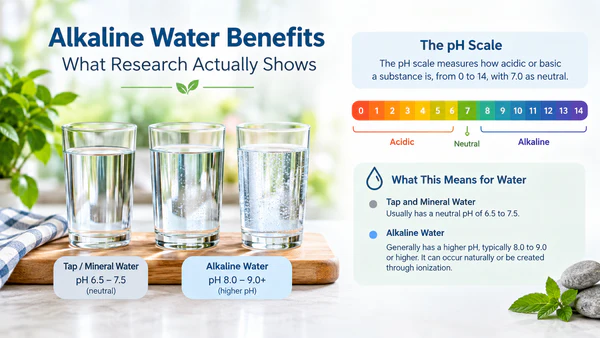
To evaluate these claims, it helps to understand what pH means:
- The pH Scale: The pH scale measures how acidic or basic a substance is on a scale from 0 to 14, where 7.0 represents neutral.
- Regular Tap and Mineral Water: Safe tap water and standard bottled mineral water usually have a neutral pH ranging between 6.5 and 7.5.
- Alkaline Water: Alkaline water generally has a higher pH, typically between 8.0 and 9.0 or higher. It can occur naturally when water absorbs minerals from rocks, or it can be created artificially through an electrical process called ionization.
How Your Body Handles pH
Many marketing campaigns suggest that drinking high-pH water helps “neutralize” body acidity. However, medical experts and scientific research explain that your body already regulates its internal pH balance automatically.
Your lungs and kidneys work continuously to keep your blood pH tightly controlled within a slightly alkaline range of 7.35 to 7.45. When you consume any beverage, it enters your stomach, which naturally contains highly acidic gastric juice (pH 1.5 to 3.5) that quickly neutralizes high-pH liquids.
Because your internal organ systems manage acid-base balance so effectively, health experts emphasize that alkaline water is unnecessary to keep your body balanced. If you want to explore how diet relates to overall body chemistry, read our complete guide on the Alkaline Diet for Beginners.
3. Evaluating Popular Health Claims: Myth vs. Scientific Evidence
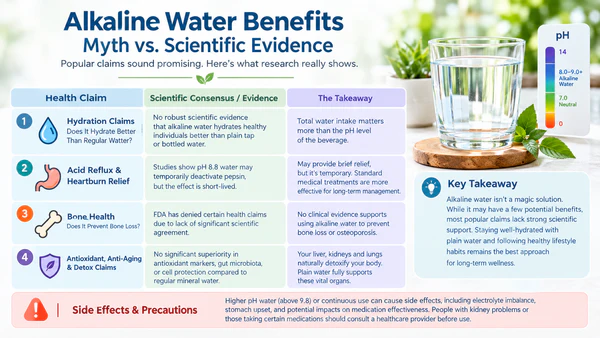
Many bottled water brands promote various alkaline water benefits to encourage consumers to buy their products. However, systematic literature reviews and medical organizations have thoroughly evaluated these health claims against scientific research.
  Health Claim               Scientific Consensus / Evidence
 ──────────────             ──────────────────────────────────
 1. Hydration Claims        ➔ Equal to regular water; total fluid intake matters most.
 2. Acid Reflux Relief      ➔ Brief, temporary pepsin neutralization; not a cure.
 3. Bone Health             ➔ FDA banned health claims due to lack of proof.
 4. Detox & Anti-Aging  ➔ Unsubstantiated; liver & kidneys handle detox naturally.
1. Hydration Claims: Does It Hydrate Better Than Regular Water?
- The Claim: Promoters claim that ionized alkaline water benefits include superior cellular hydration because smaller water clusters are absorbed more rapidly.
- What Research Shows: Medical institutions and health specialists note that there is no robust scientific evidence showing that alkaline water hydrates healthy individuals better than plain tap or bottled water. While a few small studies have looked at blood viscosity after exercise, systematic reviews confirm that standard drinking water is completely sufficient for daily hydration needs.
- The Takeaway: When it comes to daily hydration, the total volume of water you consume is far more important than the pH level of the beverage.
2. Acid Reflux and Heartburn Relief
- The Claim: Drinking high-pH water neutralizes stomach acid and deactivates digestive enzymes in the esophagus to prevent heartburn.
- What Research Shows: Laboratory studies indicate that water with a pH of 8.8 can temporarily deactivate pepsin, an enzyme involved in acid reflux. Because of this, drinking alkaline water may offer brief, temporary symptom relief for heartburn.
- The Takeaway: While a glass of alkaline water might provide short-term comfort during heartburn, the effect is temporary because stomach acid quickly neutralizes the liquid. Standard medical treatments recommended by a healthcare provider remain much more effective for long-term management.
3. Bone Health and Dietary Acid Load
- The Claim: High-acid diets leach calcium from bones, and drinking alkaline water prevents bone loss and osteoporosis.
- What Research Shows: The FDA has previously denied a petition seeking authorization for certain health claims involving alkaline/earth-alkaline citrate salts and osteoporosis because the evidence did not meet its significant-scientific-agreement standard.
- The Takeaway: Clinical evidence does not support using alkaline water as a strategy to prevent bone loss.
4. Antioxidant, Anti-Aging, and Detoxification Claims
- The Claim: Benefits of drinking alkaline water include acting as an antioxidant that neutralizes free radicals, slows aging, and detoxifies organs.
- What Research Shows: Exaggerated claims about “detoxifying” the body or reversing cellular aging lack properly controlled clinical trials. Comprehensive systematic reviews comparing alkaline water to regular mineral water concluded that alkaline water shows no significant superiority in antioxidant markers, gut microbiota, or cell protection.
- The Takeaway: Your liver, kidneys, and lungs naturally filter waste and detoxify your body every day. Plain water fully supports these vital organs without requiring high-pH water.
4. Side Effects & Precautions: Who Should Avoid Alkaline Water?

While consuming mild alkaline water in moderation is generally safe for most healthy adults, medical experts emphasize that higher pH water (pH above 9.8) or continuous use carries real health risks and side effects.
1. Digestion Disruption
Your stomach relies on a strongly acidic environment (pH 1.5 to 3.5) to break down food, absorb key minerals like iron and calcium, and kill ingested microbes. Regularly drinking high-pH water—especially during or right after meals—can temporarily dilute stomach acid, which may slow digestion and lead to bloating or stomach upset.
2. Risks for Individuals With Kidney Disease
Healthy kidneys continuously manage minerals like potassium and sodium in your bloodstream. However, impaired kidneys cannot filter excess minerals efficiently. Drinking highly mineralized or ionized alkaline water can trigger hyperkalemia (dangerously high blood potassium levels), which can affect heart rhythm.
3. Interactions With Acid Reflux Medications (PPIs)
Many individuals take Proton Pump Inhibitors (PPIs) or antacids to lower stomach acid. Combining acid-reducing medications with high-pH alkaline water can raise stomach pH excessively. Medical editors at Harvard Health caution that this combination can alter blood chemical balances and impair organ function.
Summary Table: Who Should Exercise Caution?
| Health Condition / Scenario | Potential Risk | Medical Recommendation |
|---|---|---|
| Kidney Disease or Impaired Function | Mineral accumulation and high blood potassium (hyperkalemia). | Stick to plain tap or mineral water unless cleared by a doctor. |
| Taking Acid Blockers (PPIs or Antacids) | Unsafe elevation of stomach pH and altered blood chemical levels. | Consult your physician before drinking high-pH water regularly. |
| Drinking During Main Meals | Dilution of gastric acids needed for proper food breakdown. | Drink plain water during meals; avoid high-pH liquids 30 minutes before/after eating. |
| Water pH above 9.8 | Bitter taste, GI distress, and mucosal irritation. | Avoid consuming water with excessively high or uncontrolled pH. |
5. How Alkaline Water Fits Into an Alkaline Diet
Many people assume they need to drink alkaline water when starting an alkaline eating pattern. However, health experts explain that alkaline water is not required to follow an alkaline diet.
The main goal of an alkaline diet is to increase whole, nutrient-dense plant foods—such as fresh vegetables, fruits, legumes, nuts, and seeds. These foods provide fiber, vitamins, and minerals that support health.
┌────────────────────────────────────────────────────────────────────────┐
│                   ALKALINE DIET vs. ALKALINE WATER                     │
├────────────────────────────────────────────────────────────────────────┤
│ • Alkaline Diet: Focuses on eating whole plant foods (vegetables,      │
│   fruits, nuts, legumes).                                              │
│ • Alkaline Water: Higher pH drinking water; NOT necessary for diet     │
│   success.                                                             │
│ • Bottom Line: Regular mineral or tap water is completely suitable     │
└────────────────────────────────────────────────────────────────────────┘
When it comes to daily hydration, plain tap water or standard bottled mineral water is completely suitable. The health benefits associated with an alkaline eating pattern stem from choosing nutrient-rich foods, not from altering the pH of your water.
To explore plant-focused nutrition further, read our foundational guide on the Alkaline Diet for Beginners. For a deeper breakdown of bottled vs. machine options, see our upcoming Alkaline Water Guide.
6. Frequently Asked Questions (FAQ)
7. Conclusion & Key Takeaways
While alkaline water is widely marketed for its higher pH, scientific research shows that it provides no special health advantages over standard drinking water. Your body’s internal organ systems naturally keep your blood pH tightly controlled within a safe, slightly alkaline range on their own.
Key Takeaways:
- Hydration Volume Comes First: Drinking an adequate volume of plain water daily is far more important for wellness than the pH level of the liquid.
- Digestion Requires Acid: High-pH water can temporarily neutralize stomach acid, which may slow digestion if consumed in excess or during meals.
- Safety Considerations: Individuals with kidney disease or those taking acid-blocking medications (PPIs) should consult a doctor before consuming high-pH water regularly.
> Final Health Reminder: Always consult a primary care physician or qualified healthcare provider before making major dietary changes or using specialized health products.
4 Sources:
Noble Home Remedies relies on peer-reviewed studies, academic research institutions, and medical associations for accuracy and reliability while avoiding tertiary references. Our editorial policy provides more information about how we ensure our content is accurate and up-to-date.
- EFFECTS OF ALKALINE WATER INTAKE ON HEALTH: A SYSTEMATIC LITERATURE REVIEW – https://journals.iium.edu.my/ijahs/index.php/IJAHS/article/view/487
- Extension experts share science behind electrolyte, alkaline water: what are the health benefits? – https://www.uaex.uada.edu/media-resources/news/2026/august/08-07-2026-ark-electrolyte-alkaline-water.aspx
- Health effects of alkaline, oxygenated, and demineralized water compared to mineral water among healthy population: a systematic review – https://doi.org/10.1515/reveh-2022-0057
- Is Alkaline Water Better for You? – https://health.clevelandclinic.org/alkaline-water-dont-believe-the-marketing-hype
- Is alkaline water better? – Harvard Health – https://www.health.harvard.edu/healthy-aging-and-longevity/is-alkaline-water-better